



White line along the fold after folding the cover: is the paper gsm too high, or was it folded without creasing?
A white line at the fold after folding a cover is usually not a choice between paper gsm and the printer's folding method; it is usually because four things are not aligned: paper gsm, grain direction, crease line, and workshop humidity. Based on 2026 project delivery practice, covers of coated paper above 200 gsm should be creased before going onto the folding machine, which can reduce most fold rework; if there is no lamination and it is a dry season, the chance of coating cracking at the fold increases. What the client should do is not rush to change printers, but confirm paper, crease, and fold parameters together during proofing and keep a folded sample.
Crease whitening, edge cracking, and exposed white: identify which one first
Crease whitening means the coating or ink at the fold line cracks after folding and reveals the paper base color; edge cracking mostly happens at die-cutting or folding edges, where fibers are torn; exposed white means the printing did not cover the paper base. The three have different causes: crease whitening is mostly related to paper coating and creasing, edge cracking is often related to the die and paper grain, and exposed white requires checking print registration and bleed first. During acceptance, if the client only says the fold does not look good, it is hard for the printer to pinpoint the issue; it is best to circle the exact position on the proof.
The judgment standard can be set by whether a white line is clearly visible within 50 cm after folding: brochure covers and packaging box faces are high-visibility surfaces, so the fold line should not have obvious white marks; inner pages and structural folds can be more relaxed. If the crease already shows white but has not broken, the common approach is to add a crease line or switch paper and retest, rather than directly mass-fold.
- Crease whitening: coating cracks at the fold line, often seen in high-gsm coated paper and folding after lamination.
- Edge cracking: edge fibers tear, commonly from a blunt die or paper grain cut across the direction.
- Exposed white: printing leaves the base exposed; check bleed, registration, and paper whiteness first.
Why cover folds whiten more easily than inner pages
Covers usually use high-gsm paper, lamination, or special processes, so the coating experiences far greater tensile stress during folding than inner pages. Coated paper coating itself is brittle; the thicker the paper, the larger the fold radius, and the more easily the coating is pulled apart. In addition, many cover folds run perpendicular to the paper grain, leaving almost no room for fiber extension, so the probability of whitening is naturally higher. Based on common 2026 practice, creasing the cover before folding is like making a buffer groove for the fold line in advance.
Another easily overlooked factor is humidity. In winter, low workshop humidity makes paper brittle; the same batch of paper that folds without issues in summer may crack in winter. Therefore, crease whitening is not a single-process problem, but the result of material, process, and environment stacking together. If the client only focuses on the printer's folding machine, they often end up with repeated trial and error, ultimately paying more and causing delays.
Check order: paper, grain, crease, moisture — the four checks
This order comes from on-site delivery troubleshooting practice: check material first, then direction, then process, and finally environment. The order should not be scrambled: if the paper itself is wrong, deeper crease lines later only relieve the issue, not solve it. Each step should leave a verifiable record to avoid disputes after verbal communication.
- Check paper: confirm paper type, gsm, and coating. From experience, coated paper below 200 gsm has fewer issues when folded directly; above 250 gsm, crease lines are recommended; above 300 gsm, covers should preferably be laminated or switched to a different paper.
- Check grain: confirm whether the grain direction is parallel to the fold direction. Folding parallel to grain is smoother; folding perpendicular to grain tends to whiten. The printer can confirm grain direction with a tear test or by looking at the paper grain.
- Check crease: confirm crease line position, depth, and steel rule specification. If the crease line is too shallow or too narrow, the coating can still be pulled apart during folding; if the crease line is too deep, it may crush through the paper base.
- Check moisture: confirm workshop temperature and humidity. In dry seasons, the printer can recondition the paper in advance or shorten storage time before folding to reduce brittle cracking.
What counts as passing: after folding, the fold line does not break, does not show white through, and has no obvious burrs to the touch; after opening and closing a few times, the crease does not continue to grow. If the proof passes but mass production whitens, check the paper batch and workshop humidity first, not the design file.
Applicable and non-applicable boundaries: which folds need creasing, and which can be test-folded first
Situations suitable for crease lines include: brochure covers, packaging box faces, folded cards, cover folding after lamination, and higher-gsm coated paper and cardstock. For these jobs, crease lines are a common prepress process, not an extra trick added by the printer. Conversely, ordinary folds on thin inner pages, newsprint, and lightweight paper usually do not need separate crease lines; forcing a crease line may instead make the fold line fuzzy and increase cost.
The boundary is clear: thin paper and short-edge folds can be test-folded first; high-gsm covers and laminated folds should be creased by default. If the product itself requires a completely mark-free fold line, such as some high-end packaging, crease lines will not solve it either; you need to change paper, change the structure, or switch to a rounded crease design. The client should ask the printer clearly before proofing: does this batch of paper need creasing for folding, and how is the crease fee calculated?
- Recommended to crease: coated paper covers above 250 gsm, laminated covers, packaging box flaps, folded cards.
- Can test-fold first: lightweight paper inner pages, thin writing paper, saddle-stitched inner pages.
- Creasing may not help: requires a completely mark-free fold line, extremely brittle paper coating, or too small fold radius.
On-site delivery experience: the cost of rework when problems are found too late
In one brochure cover delivery, the constraints were: the cover used around 250 gsm coated paper, matte lamination, the fold direction was perpendicular to the paper grain, and the lead time was only a few days. The prepress confirmation sheet only listed the fold size, did not mention crease lines, and no folded sample was made. The flat proof looked fine, but after mass production folding, the fold line whitened. The final approach was to reprint the covers, re-laminate, and re-fold; the result was several extra days in the schedule, costs charged separately based on cover quantity, and inner page collating also had to wait. Later, for this type of job, paper gsm, grain direction, fold direction, and whether to crease were written as checkboxes, and mass folding only started after the folded sample passed. Similar rework typically adds a few days to the schedule, with costs stacking up according to cover quantity and processes.
This experience shows that the cost of crease problems is not the crease line itself, but finding out too late. The typical range for crease line cost is a few hundred yuan per design, while rework affects multiple stages: printing, lamination, folding, and collating.
Comparison of three options: how to choose between changing paper, adding crease lines, and lamination
After identifying whitening risk, there are three common paths: change paper, change the folding process, or add lamination. None is simply better than the others; it depends on budget, quantity, and finished product requirements. Changing paper usually means switching from high-gsm coated paper to matte coated paper or light-coated paper, with a noticeable change in hand feel; changing the process means adding crease lines, adjusting grain direction, or reducing folding speed; lamination adds a film layer to the paper surface, increasing extensibility during folding, but it increases cost and lead time.
- Change paper: suitable for jobs where paper hand-feel requirements can be adjusted. Schedule impact is usually small, but color reproduction and thickness may change, so re-proofing is needed.
- Change process: suitable for jobs where paper is already decided and the goal is only to reduce whitening. For adding crease lines, the experience range is a few hundred yuan per design in setup fees, depending on the printer and quantity. Lead time commonly increases by half a day to a day.
- Add lamination: suitable for covers that need wear resistance and water resistance. Matte and gloss lamination improve whitening differently, and soft-touch lamination costs more. Note that folding after lamination may still whiten, and crease lines usually cannot be skipped.
Comparison conclusion: with a tight budget and small quantity, prioritize changing the process and adding crease lines; with large quantity and high cover requirements, changing paper or adding lamination is more reliable. But whichever path you choose, it is recommended to make a folded sample first and not just look at a flat proof. A folded sample directly exposes crease whitening and is the key basis for judging whether a solution is acceptable.
Frequently asked questions
Is cover crease whitening a paper problem or a printer problem?
Most often it is both combined. High-gsm coated paper is itself brittle, and if the printer did not crease or the crease is too shallow, folding easily whitens. Check gsm and grain first, then check the crease; this usually identifies the main cause.
Are crease lines charged separately as a die/plate fee, and what is the typical range?
Yes. Crease lines require making a steel rule or crease die according to fold line length and position. They are commonly charged per design or per plate. The experience range is a few hundred yuan per design, depending on the printer and quantity. The larger the batch, the lower the cost per piece.
Does matte lamination mean it will not whiten?
No. Lamination increases paper surface extensibility and reduces the probability of whitening, but the coating on high-gsm paper can still crack during folding. Folding after lamination usually still requires crease lines, especially in dry environments.
Do brochure inner pages also need crease lines?
Ordinary thin inner pages generally do not need them; direct folding is fine. If inner pages use high-gsm paper or have special folds, such as a folded card-style inner page, it is recommended to test-fold first, then decide whether to add crease lines.
What if whitening is not visible during proofing but appears in mass production?
First check whether the mass production paper batch and workshop humidity match the proofing. If the batch is different or humidity is low, ask the printer to recondition the paper and retry folding, while adding crease lines, then confirm with a small batch.
In action: before placing an order, the client should write the cover paper, gsm, fold direction, and whether lamination is used into the prepress confirmation sheet, and require a folded sample first; mass folding should start only after the folded sample passes. Applicable boundaries are: high-gsm covers, laminated covers, and packaging flaps should have crease lines by default; thin paper inner pages and ordinary folds do not need to be forced, to avoid extra cost and processes. If the finished product requires a completely mark-free fold line, it is necessary to go back and re-evaluate the paper and structural solution.
-
 Booth Poster Design for Professional Monitor Product Suppliers
The standard exhibition booth poster projec ...
-
 Design of Standard Exhibition Booth Posters for Beauty Instruments
Carefully designed a standard exhibition bo ...
-
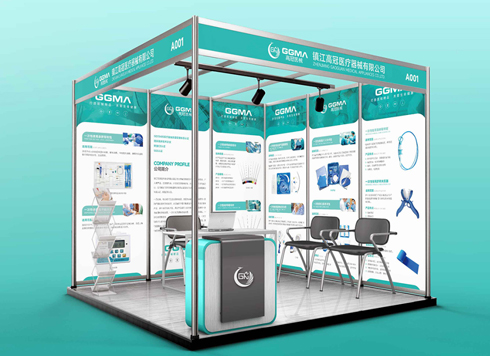 Design of Exhibition Posters for Medical Device Standards
XiYue is designing an exhibition booth post ...
-
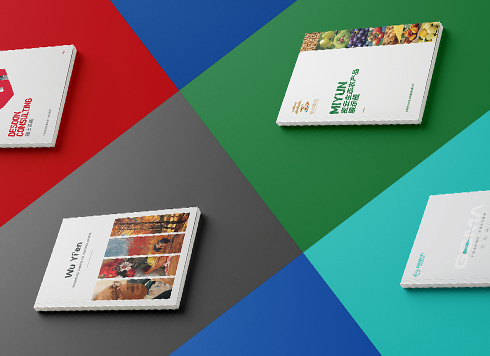 Collection of Brochure Design Cases in 2024 (Cover Series 02)
Our brochure design projects focus on diver ...
-
After a VI upgrade, old packaging still has two or three months of stock: will stickers covering the old logo be blocked by channels?
Date: Sep 22, 2026 Read: 5
-
When a logo includes both Chinese and English brand names and looks cramped on small items, should you adjust type height or split the lockup first?
Date: Sep 21, 2026 Read: 8
-
Same Packaging with Three Flavors, Only the Color Band and Flavor Text Changed: Is It Reasonable for a Design Company to Charge as New Work?
Date: Sep 19, 2026 Read: 15
-
A horizontal key visual needs to run on vertical screens, and the cropped vertical version keeps feeling off-center—which version should be reviewed first?
Date: Sep 18, 2026 Read: 23
-
After a magazine layout vendor switch, headers, page numbers, and captions still don’t line up—which file should acceptance review first?
Date: Sep 17, 2026 Read: 24