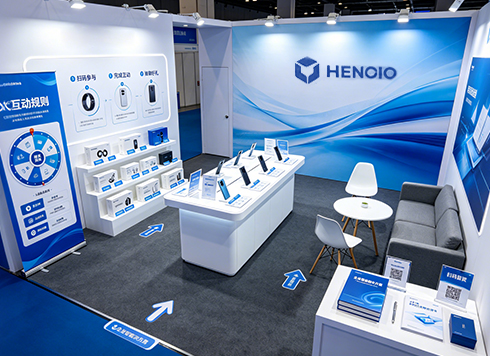




Storefront is installed and packaging is printed—will newly added supporting graphics still match the earlier materials?
Bottom line first: Supporting graphics can be skipped for now, but “not doing them yet” and “easy to add later” are two different things. Based on typical 2026 delivery experience, when fewer than 5 types of materials are produced in a year, the business is a single store, and the production vendor is fixed, starting with only the Logo, standard typeface, standard colors, and 3–5 high-frequency application rules is usually enough to hold brand recognition together. Once there are multiple stores, 3 or more production vendors, and more than 8 types of materials a year, the schedule saved by skipping them often comes back later as “does not match the materials already printed.” Whether adding them later goes smoothly mostly depends on whether the original thinking behind breaking down the Logo form, color codes, retained samples, minimum sizes, and single-color versions were documented—not on how fast the new drawings can be made.
1. The real trouble with adding later is mismatch with materials already printed
An installed storefront, printed packaging, and workwear already handed out are facts on the ground. Supporting graphics added later cannot change them; they can only move toward them: color-block proportions, line weights, and the spacing ratio between graphics and the Logo all have to be reverse-engineered from the old materials. If no records were kept at the time, adding them later means measuring physical samples, and each measurement is slightly off; across different materials, the deviations accumulate.
Before adding later, it is advisable to gather the following items first; missing any one will delay the work:
- An editable vector source file of the Logo, not just a PDF or image;
- The actual approximate color matches for standard colors on paper, fabric, and inkjet printing, plus the proof samples kept at the time;
- The paper stocks, processes, and list of outsourced production vendors already used;
- The actual viewing distance, orientation, and nighttime lighting conditions of the storefront and light boxes.
These four items add up to less than one page. Among the later-add requests we received in 2026, most got stuck not on design capability but on being unable to say clearly which inkjet vendor was used or which color-code version was applied.
2. Three decision points: viewing distance, reuse frequency, and number of vendors
Whether to do them and when to add them should not be decided by whether the manual “looks complete.” Three questions are enough to define the scope. If two or more lean toward “more,” the value of supporting graphics goes up; if all three lean toward “less,” keeping the basic system first is more stable.
- Recognition distance: When the typical viewing distance for storefronts, light boxes, and booths is 3–10 meters, internal Logo details are lost, and color blocks or lines that reinforce the outline are useful; for close-view materials only, such as business cards, letterhead, and forms, priority drops.
- Reuse frequency: With fewer than 5 types of materials in the coming year, supporting graphics easily become idle pages in the manual; with 8–10 or more types and repeated outsourcing, a reusable extension rule set saves re-layout each time.
- Number of production vendors: With one fixed vendor familiar with the brand, verbal instructions can get by; when inkjet printing, offset printing, embroidery, and engraving are spread across 3 or more vendors, without a parameter page each vendor does its own thing.
Schedule also has to be counted. In terms of experience range, developing supporting graphics separately typically takes 1–3 weeks, and when included in a full VI system it typically adds 2–4 rounds of revisions; if only two weeks remain before storefront installation and molds must also be opened for packaging printing, doing the basic version first is more realistic, and supporting graphics can be added before the second batch of materials.
3. At delivery: opening in four weeks with only a Logo and one reference storefront photo
A fairly typical case: a limited budget, an opening date four weeks away, and the client had only a Logo file and a photo of another company’s storefront, yet wanted the storefront, takeout bags, menus, and workwear to look like one set. In this situation, drawing a pile of graphics first would miss the schedule; what we did was break the Logo into “one form, three uses”—color-block cutting, line extension, and local enlargement—produce three minimal test versions first, and then compress the minimum size, single-color version, and embroidery line-weight lower limit into a one-page parameter sheet.
The result is usually that storefront inkjet printing and takeout packaging can share the same form set, vendors use it page by page, and one round of back-and-forth confirmation is saved. The cost shows up in workwear embroidery: the first version often needs rework because the line weight is too thin, requiring 0.5–1 mm more line weight, with delivery extended by 3–5 days; this typical range appears fairly often on fabric embroidery. So in projects like this, the acceptance page matters more than the mockup page—whether the graphics are still recognizable at 10–15 mm small sizes, in single color, in reverse white, and on paper, fabric, and inkjet printing, must be checked on the spot.
4. Comparing the two versions and the boundaries: when it is fine to skip for now
Putting “only basic Logo standards” and “Logo plus supporting graphic extensions” side by side makes it easier to judge where the money goes:
- Option A (basic standards only): Typically 1–3 weeks, with 2–3 rounds of revisions; suitable for a single store, fewer than 5 types of materials a year, and a fixed production vendor. The cost is that when a layout feels empty, it is easy to solve by enlarging the Logo, long-distance recognition is weaker, and later additions must be realigned with old materials.
- Option B (Logo plus supporting graphic extensions): Typically 3–6 weeks, with 3–4 rounds of revisions; budget use is typically 10%–25% higher than the basic version (experience range); suitable for multiple stores, 3 or more production vendors, and more than 8 types of materials a year. The cost is that process testing is needed early, manual pages increase, and production vendors need one training session.
Applicability and non-applicability should be stated clearly: suitable for brands with multiple stores, multiple production vendors, repeatedly outsourced materials, and a need for long-distance recognition; not suitable for projects where the brand direction is not yet set, the budget only covers the Logo, or only one-off event materials are needed—in the latter case, the graphics are often printed once and then sit idle. Boundary statement: if the supporting graphics can only sit in the manual for viewing and production vendors still have to redesign each time, then they have not formed an effective delivery.
FAQ
Are supporting graphics the same as the graphic elements inside the Logo?
No. The graphic inside the Logo is part of the fixed mark and does not change; supporting graphics are recognizable parts broken out from it that can be extended, used to fill layouts and support long-distance recognition, and cannot replace the Logo and brand name.
Is a JPG enough for supporting graphics in a VI manual?
Usually not. Inkjet printing, offset printing, and embroidery need vector files and single-color versions; JPGs blur when enlarged, and edges are hard to separate into colors. At delivery, provide at least editable vectors, along with single-color and reverse-white versions.
Can patterns from free commercial stock libraries be used directly as supporting graphics?
Be careful. First confirm whether the license covers printing, outdoor use, and product packaging, then check whether the pattern can be extended in single color and vector form; stock patterns often lack editable paths, limiting later shape and color changes.
If the budget only covers a basic VI, should supporting graphics or application rules be cut first?
Usually cut supporting graphics first and keep the Logo, standard typeface, standard colors, and 3–5 high-frequency application rules. Application rules are what production vendors follow every day; supporting graphics can wait until the materials list is clear and then be added.
If supporting graphics are added later, do already printed packages need to be reprinted?
Mostly no. The approach is to reverse-extract color-block proportions and line weights from the old materials, let the new graphics adapt to the old pieces, and make unified minor adjustments on the next print run; rushing to reprint everything is usually not cost-effective.
If you are about to start VI system design, do not rush the design team into drawing graphics: list the materials to be produced in the coming year, the number of production vendors, and the farthest viewing distance, then decide whether to do them and when to add them. With a single store, few materials, and a tight budget, keep the Logo, standard typeface, standard colors, and high-frequency application rules first; if supporting graphics are skipped, record the color codes, retained samples, minimum sizes, and form-breakdown thinking in a one-page document so that later additions can connect.
-
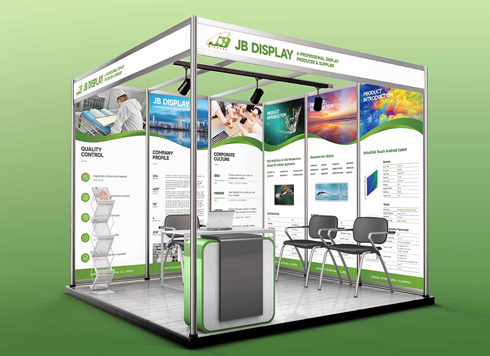 Booth Poster Design for Professional Monitor Product Suppliers
The standard exhibition booth poster projec ...
-
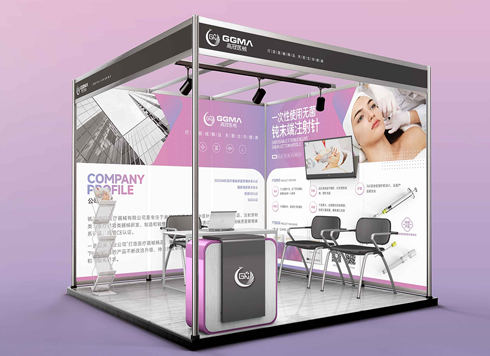 Design of Standard Exhibition Booth Posters for Beauty Instruments
Carefully designed a standard exhibition bo ...
-
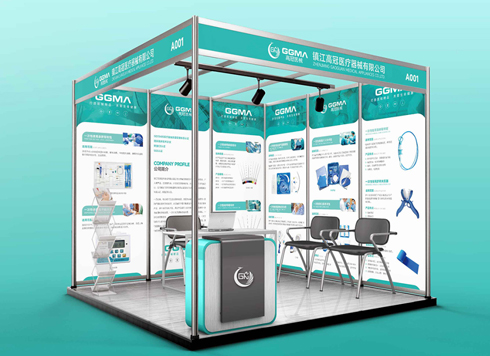 Design of Exhibition Posters for Medical Device Standards
XiYue is designing an exhibition booth post ...
-
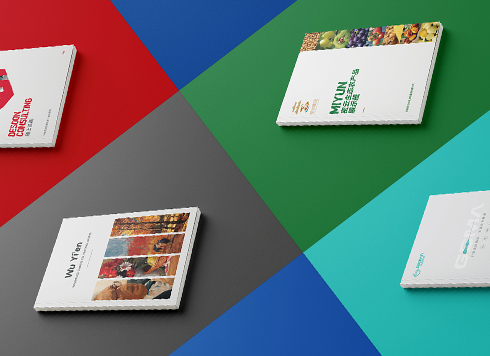 Collection of Brochure Design Cases in 2024 (Cover Series 02)
Our brochure design projects focus on diver ...
-
Switching embroidery factories means the logo has to be redrawn—is the grid construction page the problem?
Date: Oct 10, 2026 Read: 56
-
The same brand red looks different on a storefront print and a packaging box—is one color code in the manual enough?
Date: Nov 15, 2026 Read: 34
-
Six months after the brand red was signed off, the reprint packaging still doesn’t match—is the issue the retained sample or the printer?
Date: Nov 9, 2026 Read: 23
-
The sub-brand is still internal-only—should the VI system include the master–sub relationship in advance?
Date: Oct 16, 2026 Read: 46
-
Brand logo has only one horizontal version—when hang tags, ID badges, and packaging frames won't fit, should you add versions or force-scale?
Date: Oct 4, 2026 Read: 57