



Only Printing a Few Hundred Copies: Is the Printer Steering Me Away From Offset Because the Run Is Too Small, or Because the Costs Really Don’t Spread? If I’m in a Hurry, Should I Just Switch to Digital?
When a printer says “a few hundred copies isn’t worth running on an offset press,” most of the time it isn’t cherry-picking the job. Offset printing carries fixed costs that have nothing to do with run length: platemaking, press setup and color calibration, make-ready waste sheets, wash-up when changing colors, and post-press die or plate setup. That money doesn’t shrink with the number of copies; the fewer the copies, the thinner it is spread. Based on common 2026 delivery practice, runs within a few hundred copies should look at digital printing first; for a single version in the thousands, with hard requirements for color consistency and paper, consider offset; for jobs stuck in the middle, compare the two total prices and lead times side by side—that is more reliable than only asking the unit price per sheet.
The Difference Between Offset and Digital Isn’t Whether the “Unit Price” Is Higher
Offset printing transfers text and images to paper via a printing plate. A four-color run goes through platemaking, inking, ink-water balance control, and color calibration; every plate change and every paper change means re-setting the press. Digital printing has no plate: the file is imaged directly onto the paper, skipping platemaking and press startup altogether, but it also loses the cost advantage at large volumes.
The two cost curves run in opposite directions: offset has a high starting point and a low slope—the larger the volume, the cheaper each copy; digital has a low starting point and a high slope—the first few hundred copies are cost-effective, but once volume rises, the unit price cannot come down much. The question isn’t which printing method is “better”; it’s which segment of which curve this job’s run length falls into.
- Minimum order quantity: Digital printing often starts from a few dozen copies or even one; most offset printers have a minimum run threshold, commonly around a few hundred copies. Below that, their enthusiasm to quote drops noticeably.
- Fixed costs: Offset has fixed platemaking, platemaking output, and press setup costs; digital basically has none of that.
- Color performance: Offset uses ink overprinting, so large solid areas and spot colors are more stable; digital printing has limited reproduction for large gradient backgrounds and high-saturation spot colors.
- Paper compatibility: Offset offers a wider range of paper types and grammages; digital printing is limited by its imaging method, and some specialty papers are not suitable.
- Post-press compatibility: Lamination, foil stamping, die cutting, and spot UV usually involve separate die or plate fees or setup fees. Both processes must be calculated separately; this is not unique to offset.
When a Few Hundred Copies Get Talked Down, Where Exactly Does the Money Get Stuck?
Break down an offset quote and you’ll find one category that is billed by “job,” not by “sheet”: platemaking and output fees, press startup, make-ready waste sheets during color calibration, wash-up for color changes, and post-press startup and die setup. These costs have little to do with whether you print 300 or 3,000 copies, so the lower the run, the more expensive each copy becomes—this is the direct reason a printer immediately suggests changing processes.
A frequently overlooked counterexample: when this job has 8 versions at 200 copies each, offset platemaking and press setup are repeated several times over, often making it more expensive than “1,600 copies of a single version.” For this kind of small-volume, many-version job, printers discourage offset fastest—and it may not be because they think the money is too little.
- Platemaking and output: Billed by the number of color plates; four-color is one set, and each extra spot color adds another set.
- Press startup and color calibration: Every press run has a stretch of make-ready waste sheets. At small volumes, this portion can account for more of the quote than the paper itself.
- Post-press die setup: Foil stamping, die cutting, and spot UV often have separate die or plate fees that cannot be spread at small volumes.
- Version change cost: With many small-volume versions, offset must re-set the press for each version; digital printing has much lower switching costs.
To Compare Clearly, Calculate the Two Quotes Separately
The easiest way to compare: using the same file, same paper, and same finishing, ask the printer for one total price including platemaking, press setup, and post-press fees for offset and one for digital printing—not just the unit price per sheet. For a common A4 double-sided color flyer on regular coated paper with no special finishing, the experience range is roughly as follows:
- A few hundred copies (300–500 range): Digital printing usually has a lower total price, with lead times commonly 1–3 working days; offset cannot spread platemaking and setup, so the total price easily ends up higher, plus you wait longer for scheduling.
- One to two thousand copies: The two start to converge. Offset’s per-copy advantage has just appeared, and whether to switch processes mainly depends on whether color and finishing have hard requirements.
- Three thousand copies or more, single version: Offset’s per-copy cost advantage is clearer, and digital printing has limited room to lower its unit price.
- Many small-volume versions: Even if total volume is large, recalculate by “number of versions.” Each extra version adds another round of platemaking and press setup, so digital printing’s advantage is often clearer than looking at total volume alone.
The above is an experience range. Specific figures will vary with finished size, paper grammage, number of spot colors, post-press processes, and local scheduling. The basis for judgment should be the two total prices quoted by the printer for the same file.
On-Site Handling for One Job With Multiple Small-Volume Versions on a Tight Deadline
Recently we took on a job: 8 versions, about 200 copies each, budget in the ten-thousands-of-RMB range, customer requiring delivery within one week, with two versions carrying brand spot colors. The constraints were clear—the budget could not absorb 8 rounds of platemaking, and the lead time did not allow version-by-version press trials. The approach was to first ask the printer for a total digital printing quote, and at the same time for an offset quote listing platemaking, press setup, and post-press plate fees separately, then compare the two side by side. After confirming the total price gap was sizable, we went with digital printing, running all versions in one pass on the same press with the same batch of paper, and keeping an extra 10% spares. Spot colors were proofed and signed off in advance for approximate reproduction. The result: within-batch color consistency was fine; the saturation of the two spot colors was slightly weaker than the offset proof, and the customer accepted it. The savings came mainly from not having to make plates once for each of the 8 versions. If we had forced offset at that point, platemaking and press setup alone would have repeated 8 rounds—within the common range, that budget basically could not absorb it.
Four Common Pitfalls in Small-Batch Printing and Acceptance Criteria
Most small-batch failures are not in print quality itself but in how prices are compared and how proofs are signed off. Comparing only unit prices makes it easy to pick an option that looks cheap but has a higher actual total; skipping proof sign-off leaves room for disputes at final acceptance.
- Pitfall 1: Comparing only unit price—Offset’s per-sheet price is low, but after adding platemaking and press setup, the total for a few hundred copies may exceed digital printing.
- Pitfall 2: Digital first, then offset for a reprint—If the first batch is digital and the second switches to offset, the colors will almost certainly not match exactly; rework often starts here.
- Pitfall 3: Ignoring paper sheet size—Digital printing has a narrow paper range, so the originally specified specialty paper may need to be substituted.
- Pitfall 4: Adding finishing at the last minute—If foil stamping or die cutting is added midway, the die fees can make the previously calculated per-copy cost spiral out of control.
On acceptance criteria, a common practice is to require the printer to provide a digital proof or a press proof, and after both sides confirm it, check colors against the signed proof. Color difference can be read with an instrument as ΔE; a common range is to agree on an acceptable range of ΔE 2–4, and to specify clearly whether it is “consistent within the same batch” or “consistent with the signed proof”—these two criteria differ considerably in strictness, and writing them down clearly can save a lot of back-and-forth later.
Where This Applies and Where It Does Not
The boundary can be stated as a conclusion first: For a single batch within a few hundred copies and more than one version, digital printing is usually the more suitable choice; for a single version in the thousands, with hard requirements for color consistency and post-press processes, offset’s stability is more worth considering. Forcing a choice across this range often leaves both sides unsatisfied.
- Suitable for digital printing: Flyers within a few hundred copies, multi-version sample books, short-term event materials, materials requiring variable data (numbering, names), and rush jobs.
- Suitable for offset: Regular materials in the thousands or more for long-term supply, brand materials with many spot colors, and brochures or packaging requiring fine finishing.
- No need for offset: For a few dozen copies only for internal review or proofing, digital quick printing or on-demand output is enough; discussing offset minimum order quantity is not very meaningful.
- No need for digital printing: When the run is very large and low per-copy cost is required, digital printing’s unit price will rise noticeably—unless the lead time is extremely tight.
- Cases where this article’s judgment does not apply: Screen-only materials, single-piece proofs, and variable-data tasks focused on item-level codes can simply use on-demand output; there is no need to apply the comparison framework of minimum order quantity and press setup.
There is another easily overlooked boundary: Mixing processes carries higher risk than mixing batches. If half of the same item is digital printed and half is offset, even with the same file and correct proofs, when the finished pieces are placed side by side you can often see differences in gloss and solid areas. For such materials, it is better to print the whole batch in one run and reserve spare copies.
FAQ
At what print run does offset’s per-copy price become cheaper than digital printing?
There is no universal number. The common crossover point is between a few hundred and just over a thousand copies, and it varies with size, paper, spot colors, and finishing. A more reliable approach is to ask the printer to quote a total price for the same file and same processes, and then compare.
For the same file, will digital printing and offset printing produce different colors?
They will differ. Offset relies on ink overprinting, while digital printing mostly uses toner or electronic ink, so gloss and solid-area performance differ. Within the same batch it is usually stable, but across processes it is not easy to match completely; before mixing, sign off a proof to confirm.
For a few hundred copies, is it worth adding foil stamping and spot UV?
These two usually require separate platemaking or die cutting, with a fixed fee. At small volumes, that noticeably raises the per-copy price. If the goal is only to give the cover some depth, first consider alternatives with lower fixed costs, such as lamination or embossing.
If I print a small batch digitally first and reprint later, will it fail to match?
This is a common source of rework. Reprinting across processes, across equipment, or after a long gap can cause color differences. A more reliable approach is to reserve spare copies from the same batch, use the same process and equipment for reprints, and keep the signed proof.
Next time you hear a printer say “it’s not worth it,” don’t rush to switch vendors. Ask a few questions back: What is the minimum order quantity? Does the quote include platemaking and press setup? How are post-press plate fees calculated? What is the lead time? Can you provide a sample first? Getting two total prices and then deciding is usually less trouble than comparing only unit prices. This judgment applies to batch printing materials; screen display, single-piece proofs, or item-level variable-data tasks do not need to apply it.
-
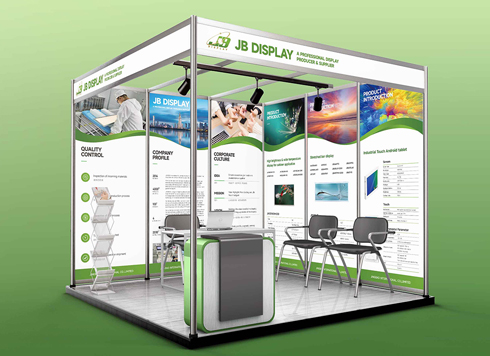 Booth Poster Design for Professional Monitor Product Suppliers
The standard exhibition booth poster projec ...
-
 Design of Standard Exhibition Booth Posters for Beauty Instruments
Carefully designed a standard exhibition bo ...
-
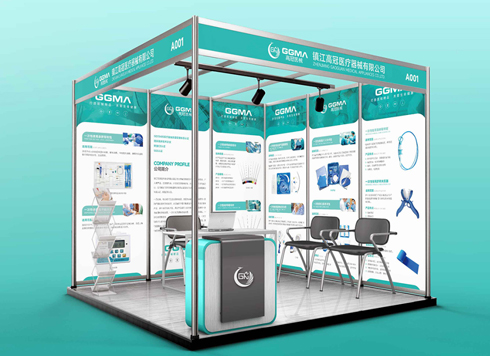 Design of Exhibition Posters for Medical Device Standards
XiYue is designing an exhibition booth post ...
-
 Collection of Brochure Design Cases in 2024 (Cover Series 02)
Our brochure design projects focus on diver ...
-
Storefront sign faded in less than a year—was indoor photo printing used as outdoor inkjet printing?
Date: Sep 22, 2026 Read: 5
-
Does a catalog cover look cheap without lamination and with only a varnish coat? Can this step be skipped when the budget is tight?
Date: Sep 20, 2026 Read: 8
-
Inner pages switched from 80g to 105g—does the spine width need recalculating? Is there still time if the cover is already laid out?
Date: Sep 19, 2026 Read: 19
-
Brand Color Doesn't Match Between Two Packaging Print Runs—Will Paying Extra for a Spot Color Keep It Consistent?
Date: Sep 18, 2026 Read: 24
-
Brochure stuck at 48 pages: saddle stitch or perfect binding?
Date: Sep 17, 2026 Read: 22