




Does a catalog cover look cheap without lamination and with only a varnish coat? Can this step be skipped when the budget is tight?
A catalog cover that is not laminated and only has one coat of varnish will not automatically look cheap just because the plastic film is missing. What really determines appearance and durability is the paper itself, the type of varnish, the printing process, and the usage intensity the cover will face. Based on 2026 project delivery practices, the recommended order of judgment is: first check whether the cover needs foil stamping, UV, or embossing; then consider how long the catalog will be handled and how it will be distributed; and only then compare prices. Lamination leans toward protection, while varnish leans toward brightening and light protection. The two are not a hierarchy of premium versus cheap.
What is the difference between lamination and varnish? Do not judge by premium or cheap labels
Lamination heat-bonds a layer of plastic film onto the printed surface. Common types include gloss lamination and matte lamination, as well as soft-touch lamination and anti-scratch lamination. Varnishing, also called coating, applies a coating layer to the printed surface and then cures it. Common types include water-based varnish and UV varnish. Both add a layer of texture to the cover, but their structures are completely different: the former physically applies a film layer, while the latter chemically applies a coating. This also determines their differences in rub resistance, recyclability, and finishing compatibility.
- Wear and scratch resistance: Lamination usually withstands rubbing better; varnish offers lighter protection, and if the piece is kept in a bag and rubbed over time, it can show scuffs more easily.
- Moisture and fingerprint resistance: Lamination, especially matte lamination, tolerates fingerprints and humidity better; water-based varnish can still leave marks if soaked in water for a long time.
- Thickness and recyclability: After lamination, paper and plastic are combined, making recycling sorting harder; most varnished pieces can still be handled as paper, which is a notable difference.
- Finishing compatibility: Lamination changes surface energy, which affects adhesion and creasing performance for foil stamping, UV, and embossing; finishing on a varnished surface also needs testing, especially on UV varnish.
So when someone says lamination looks premium, they usually mean the reflective or soft-gloss look, not that lamination itself is high-end. Appearance comes from gloss and touch; protection comes from the film layer. The two should be viewed separately.
When is lamination worth it, and when is varnish enough?
Lamination is better for items whose covers are handled often, distributed externally, and need moisture and fingerprint resistance, such as brand catalogs, product catalogs, packaging boxes, and cards. Varnish is better for items with a short use cycle, a relatively tight budget, and environmental or recyclability requirements, such as one-off promotional booklets, event handbooks, and internal documents.
The boundaries where it does not apply should also be clear: most catalog inner pages are not surface-treated; laminating them increases cost and weight and may affect the feel when flipping through. Do not laminate items that will be written on or stamped later, because laminated surfaces do not take ink easily. For projects with clear recyclability or biodegradability requirements, confirm whether paper-plastic composite is acceptable before laminating. If the cover itself is specialty paper or has a tactile coating, additional lamination may cover up the paper's feel and be a poor trade-off.
There is another easily overlooked case: covers with a large full-page dark solid background. Dark gloss lamination easily shows fingerprints and fine scratches, and dark matte lamination can also become shiny after contact with oil. For these covers, it is best to look at a physical sample before deciding, not just the screen.
How to compare gloss lamination, matte lamination, and varnish: check finishing first, then the use case
In 2026 projects, I usually decide in this order: finishing checklist, use case, and budget, because when finishing is incompatible, changing the plan costs the most.
- Gloss lamination: Strong reflection and more vivid color; often acceptable for short-term external distribution and promotional materials; foil stamping and UV adhesion are relatively difficult, and large areas especially need testing first.
- Matte lamination: Understated look and relatively fingerprint-resistant; commonly used for brand catalogs and gift boxes; dark matte lamination can also become shiny after oil contact, so watch for that.
- Varnish: More natural feel and better recyclability, with weaker protection; suitable for materials with limited budget and short use cycles.
- Cost experience range: For common single-sided catalog cover treatment, the unit price difference between varnish and lamination is usually from a few tenths of a yuan to a few yuan per square meter; matte lamination is generally slightly higher than gloss lamination; the larger the quantity, the smaller the difference, but the exact price still depends on the local printer's quote.
- Lead time experience range: Lamination plus resting commonly requires half a day to one day; varnish curing is usually faster, but it depends on equipment and varnish type, with a typical range of a few hours to half a day.
You can check finishing compatibility like this: if foil stamping or embossing is required, give priority to matte lamination, or test on the machine before full production; spot UV on matte lamination gives clearer light-dark contrast; UV on gloss lamination can lose contrast, so the design should intentionally increase the difference; foil stamping on a varnished surface also needs testing, because poor adhesion on varnished surfaces is not uncommon.
On the delivery floor: how soon after lamination can folding and shipping happen?
A common constraint: the catalog cover needs both lamination and folding, and the client gives only three days. The usual approach is to let it rest after lamination, then crease, then fold, leaving the printer room to adjust at the fold line, and test-folding a dozen or so sheets before full production to check for cracking. The cost is that the cover stage takes an extra half a day to one day, making the schedule look slower; but if you fold immediately after lamination, the probability of fold-line cracking on a saddle-stitched cover rises noticeably, and reprinting the cover takes far more than a day. Based on our experience range for catalog and gift box projects, it is safer to allow half a day to one day between lamination and folding; in humid weather, with thicker film, or with higher paper grammage, allow a bit more.
What to check at inspection, and what counts as a failure
Lamination failures mainly involve bubbling, wrinkling, white spots, and color deviation; varnish commonly shows mottling, uneven gloss, and uncured spots. Most are not caused by a single step, but inspection needs checkable criteria.
- Viewing distance: Under natural or standard light, at a distance of 30-40 cm, the film or varnish surface should not show obvious bubbles, wrinkles, scratches, or white spots from foreign matter.
- Color deviation check: Compare with the approved proof; slight color variation is allowed; for color-sensitive materials, the approved proof should be made from a sample that has already been surface-finished, not a digital proof.
- Folding test: Fold back and forth two or three times at the fold line and check for color cracking and white marks; if present, the creasing or film type needs adjustment.
- Adhesion test: For foil-stamped or UV parts, lightly apply ordinary tape and pull it off quickly to see whether large areas come off; this is only a rough check, and machine testing remains the formal standard.
- Edges and trimming: Finished edges should not show obvious lifted film layers or burrs, especially on die-cut pieces.
FAQ
Will a cover that is only varnished and not laminated turn yellow or sticky over long-term storage?
Water-based varnish may turn slightly yellow under long-term light and moisture, while UV varnish is relatively stable; under normal indoor use, it is usually not obvious within one year, and storing it away from sunlight and moisture is safer.
Will a catalog cover without lamination get scuffed during courier shipping?
It will show scuffs more easily than a laminated cover, especially large dark areas. For projects shipped by courier and stacked in multiple copies, lamination is usually recommended, or at least a thicker coat of varnish.
Can a varnished cover still be foil-stamped?
Yes, but test first. Adhesion on a varnished surface is greatly affected by the varnish type and curing degree; for large-area foil stamping especially, do not go straight to full production.
How much does lamination cost compared with varnish?
As an experience range, the price difference for single-sided cover treatment is often a few tenths of a yuan to a few yuan per square meter; for an ordinary catalog, the per-copy difference is usually only a few tenths of a yuan to one or two yuan, depending on quantity and region.
Should inner pages be laminated along with the cover?
Most of the time, no. Laminating inner pages increases cost and weight and may affect the feel when flipping through, unless the inner pages are frequently touched or need waterproofing.
One-sentence boundary: lamination is a protective measure, and varnish is a brightening and light-protection measure; neither should be a default option. The more complex the finishing process and the more often the cover is handled, the more you should give the checklist to the printer and test one sheet before full production. If your catalog cover involves any of foil stamping, UV, or embossing, it is advisable to use a sample that has already been surface-finished for proof approval and inspection at the proofing stage.
-
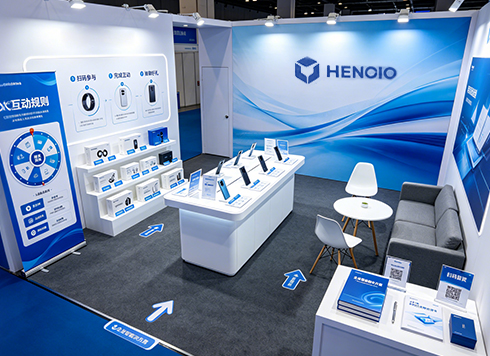
 Booth Poster Design for Professional Monitor Product Suppliers
The standard exhibition booth poster projec ...
-
 Design of Standard Exhibition Booth Posters for Beauty Instruments
Carefully designed a standard exhibition bo ...
-
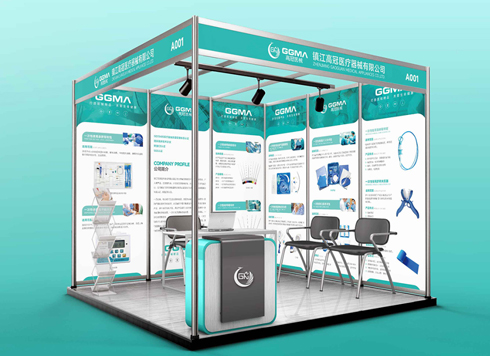 Design of Exhibition Posters for Medical Device Standards
XiYue is designing an exhibition booth post ...
-
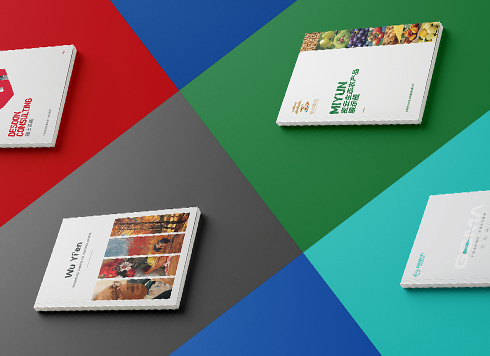 Collection of Brochure Design Cases in 2024 (Cover Series 02)
Our brochure design projects focus on diver ...
-
Storefront sign faded in less than a year—was indoor photo printing used as outdoor inkjet printing?
Date: Sep 22, 2026 Read: 5
-
Only Printing a Few Hundred Copies: Is the Printer Steering Me Away From Offset Because the Run Is Too Small, or Because the Costs Really Don’t Spread? If I’m in a Hurry, Should I Just Switch to Digital?
Date: Sep 21, 2026 Read: 10
-
Inner pages switched from 80g to 105g—does the spine width need recalculating? Is there still time if the cover is already laid out?
Date: Sep 19, 2026 Read: 19
-
Brand Color Doesn't Match Between Two Packaging Print Runs—Will Paying Extra for a Spot Color Keep It Consistent?
Date: Sep 18, 2026 Read: 24
-
Brochure stuck at 48 pages: saddle stitch or perfect binding?
Date: Sep 17, 2026 Read: 22