


How to Run a Graphic Design Project: The Complete Workflow from Requirements to Delivery and Acceptance
To achieve qualified results in a graphic design project, the key is to turn "feelings" into "standards." In 2026, the common approach is to first clarify business goals, then define the visual direction, and then deliver in phases. Each step produces a verifiable output. This workflow applies to most graphic design needs such as brand visual identity (VI), posters, packaging, e-commerce product pages, and effectively reduces rework while facilitating collaboration and acceptance.
Why Graphic Design Projects Go Off the Rails
Most projects run into trouble not because of designers' lack of ability, but because the client and the designer have different standards for what "good" means. The client says "make it grand," the designer interprets it as "more whitespace," and the results naturally don't match. Another common cause is mid-project requirement changes without anyone updating the timeline and costs accordingly, leading to delayed delivery.
To avoid losing control, every vague description must be converted into verifiable conditions. For example, "grand" can be defined as "use a dark background, add more whitespace, and use a serif font for headlines." This gives both sides a consistent yardstick.
- Clarify business goals: Is the goal to increase click-through rates, strengthen brand awareness, or drive direct conversions? Different goals lead to different design directions.
- Agree on review criteria: Break "looks good" down into specific dimensions such as layout, color, typography, and information hierarchy.
- Set change rules: More than two major revisions require re-evaluating the schedule and budget.
The Five Key Stages of a Graphic Design Project
Based on 2026 delivery practices, the workflow can be divided into: requirement gathering, creative concepts, design execution, feedback and revisions, and delivery and acceptance. Each stage has clear inputs and outputs, preventing necessary steps from being skipped.
1. Requirement Gathering: Clarify the Background
Before starting, a design brief must be filled out, including project background, target audience, usage scenarios, delivery formats, and deadlines. The most overlooked part here is "usage scenarios." For example, the same poster requires completely different dimensions and resolutions for online use versus offline printing.
2. Creative Concepts: Direction First, Details Later
Before producing final artwork, provide 2–3 visual directions, each described with keywords, reference images, and a brief explanation. Don't ask the designer to go directly into fine detail on one direction, as the cost of trial and error is high. The qualifying standard is that both sides agree on a general direction, not get hung up on specific color values.
3. Design Execution: Produce According to Agreed Specifications
Based on the confirmed direction, create a draft with attention to the overall composition, not nitpicking details. The execution phase must follow previously agreed specifications, such as canvas size, bleed lines, font licenses, and color mode. In 2026, many teams use collaboration tools for online reviews, but the core principle remains: every revision should be documented.
4. Feedback and Revisions: Address All Issues in One Go
This is the stage that most affects efficiency. The right approach is to consolidate everyone's feedback, categorize it as "must change," "suggested change," and "personal preference," and cite reference examples. The wrong approach is piecemeal feedback—raising a new point after each revision—which drags out the process indefinitely.
5. Delivery and Acceptance: Check Against the Delivery Checklist
When delivering, in addition to source files, include a PDF preview, font file documentation, and usage guidelines (e.g., safe distance, minimum size). During acceptance, first verify that every item on the design brief is met, then inspect details. Here is an acceptance checklist:
- Are dimensions and formats appropriate for the intended use?
- Is the text accurate, with no typos?
- Is the color mode correct (CMYK for print, RGB for screens)?
- Does image resolution meet 300 dpi (print) or 72 dpi (screen)?
- Is a font list included, or are fonts outlined?
A Four-Dimensional Decision: In-House Team or Outsourced Design
For graphic design projects, you can hire your own team, or you can work with an outsourced team or independent designer. There is no absolutely good solution—only what fits. Judge it using four dimensions:
- Workload: If you have more than 20 design requests per month, an in-house team is more cost-effective; below 5, outsourcing offers more flexibility.
- Response speed: When campaign materials need same-day output, in-house staff has the advantage; outsourced teams typically need 2–3 days.
- Style maturity: For startups in an exploratory phase, outsourcing can provide a variety of styles; for mature brands that need consistent standards, an internal team is more stable.
- Management cost: Outsourcing saves you from interviews, training, and social insurance, but communication costs are high; in-house management is simpler but has higher fixed costs.
Based on 2026 market rates, a mid-level designer's monthly salary is around 10,000–20,000 RMB, while outsourced poster design costs around 500–2,000 RMB per piece, depending on complexity and copyright ownership. If your project only has a dozen or so design needs a year, outsourcing is clearly less expensive; if you have daily needs, an in-house team is more appropriate.
Common Misconceptions and Judgment Criteria
The most common misconception is judging design by "aesthetics" while ignoring strategy and technique. For example, a poster may be beautifully laid out, but if the promotional message isn't prominent and the click-through rate is low, it's not qualified. To judge whether a design is good, see if it solves the originally defined problem.
Another misconception is lacking copyright awareness. Using unlicensed fonts or images can easily lead to infringement notices. Cases of companies being sued for font infringement are not uncommon in 2026. During acceptance, verify that all assets are properly licensed.
- Misconception 1: Obsessing over beauty while neglecting message delivery. The eligible standard is that the audience can grasp the core message within three seconds.
- Misconception 2: Casual compression of image quality. The standard is that when zoomed into 100%, edges show no pixelation.
- Misconception 3: Not reserving time for revisions. The standard is that the schedule clearly defines several revision rounds, each with buffer time.
How to tell if a design team is reliable? See whether they provide design rationales, explaining why each element is used. A designer who can articulate the reasoning is more professional than one who only says "it looks good."
Applicable Scenarios and Boundaries
This workflow is suitable for most graphic design projects, especially brand VI, brochures, posters, packaging, and e-commerce product detail pages. However, there are cases where you don't need to apply it: for example, quick internal diagrams or sketches for temporary communication don't need the full process. Also, if the deadline is extremely tight, such as needing a design the same day, you can skip the requirement gathering and concept stages and go straight to execution, but this must be explicitly treated as an exception.
For large-scale brand system development, you may also need to understand how to create a VI specification manual and how to coordinate with other marketing collateral. The workflow in this article helps you manage a single design task, but it cannot replace brand strategy planning.
Frequently Asked Questions
How long does the graphic design process typically take?
A standard poster usually takes 2–3 business days, and a full VI design takes about 2–4 weeks, depending on the number of revisions and content complexity. It's recommended to specify the deadline in the design brief.
How should I give feedback to the designer?
Prioritize and categorize your comments, and use the "reference image + specific description" format—for example, "change the background to light gray, referencing the feel of the second image in the link"—to avoid abstract expression.
What source file formats should be delivered?
Typically, editable source files such as AI, PSD, CDR, as well as preview files like PNG and PDF, along with font descriptions and specification documents, for future maintenance.
What if the printed colors don't match the screen?
That's normal. Printing must use the CMYK color mode, and you should request a proof for confirmation. If the difference is too large, check for spot colors or screen color calibration issues.
How can I avoid copyright disputes when outsourcing design?
State in the contract that all materials are properly licensed from legitimate sources, agree that the designer bears liability for infringement, and require font license certificates or the use of free commercial fonts.
First, choose the appropriate depth of the workflow based on project size, then execute in the five stages, focusing on managing requirements and feedback. If it's difficult for you to control design quality on your own, you can also contact a professional design team for assistance—for example, Xiyue Company provides full-process design delivery. But remember: no outsourcing can replace your own clear definition of business goals.
-
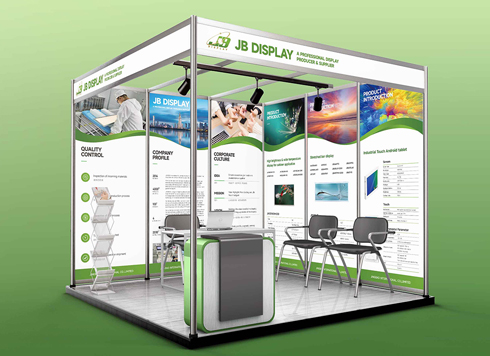 Booth Poster Design for Professional Monitor Product Suppliers
The standard exhibition booth poster projec ...
-
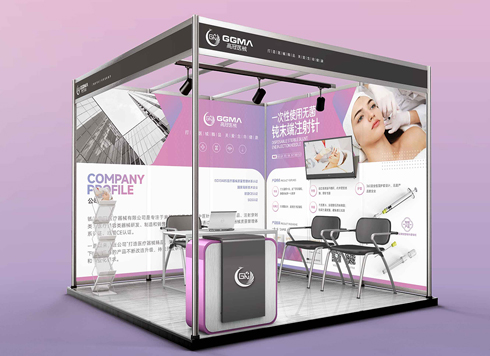 Design of Standard Exhibition Booth Posters for Beauty Instruments
Carefully designed a standard exhibition bo ...
-
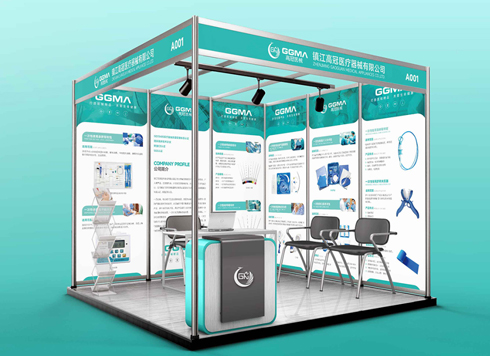 Design of Exhibition Posters for Medical Device Standards
XiYue is designing an exhibition booth post ...
-
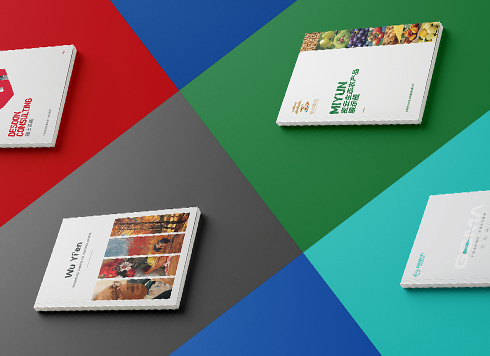 Collection of Brochure Design Cases in 2024 (Cover Series 02)
Our brochure design projects focus on diver ...
-
How to Do Graphic Design: Workflow, Options, and Common Pitfalls
Date: Aug 4, 2026 Read: 59
-
Complete Workflow Management Guide for Graphic Design Projects: Key Steps from Requirements to Delivery
Date: Jul 25, 2026 Read: 55
-
Efficient Graphic Design Execution Guide: 2026 Workflows, Tools, and Common Pitfalls
Date: Jul 20, 2026 Read: 61
-
How to Run a Graphic Design Project: A Guide to Process, Pricing, and Acceptance
Date: Aug 10, 2026 Read: 45
-
How to Design Ads/Posters: A Practical Workflow from Needs Analysis to Delivery Acceptance
Date: Aug 9, 2026 Read: 49