



How to Design Ads/Posters: A Complete Guide from Requirements to Delivery
Advertising/poster design is a form of graphic design that conveys product or brand information through visual means. The core criterion is not whether it "looks good," but whether the information is accurately received and whether the target audience takes the desired action. In project delivery practices of 2026, design effectiveness depends on three factors: clear communication goals, reasonable visual hierarchy, and controllable execution costs. Any discussion that judges "beauty or ugliness" without reference to goals is likely to steer the project off course.
Core Goals and Evaluation Dimensions of Advertising/Poster Design
The essence of advertising/poster design is "expression with a purpose." Unlike pure artistic creation, every graphic, font, and color should serve communication. Evaluating whether a design is qualified does not depend on whether it wins awards, but on whether it can accomplish the task of information delivery in a specific scenario. For example, a street poster needs to be quickly recognizable from a distance, while a magazine page allows for more detailed reading logic.
A practical set of evaluation dimensions includes the following four items, which can be used for self-check during the design process and for acceptance before finalization.
- Goal alignment: Does the design respond to the communication goals proposed by the client, such as increasing awareness, driving store visits, or maintaining brand image?
- Information clarity: Do the main headline, subheadline, and call-to-action (such as phone number, address) form a clear visual hierarchy?
- Brand consistency: Does it maintain consistency with the existing VI system in terms of colors, typography, and layout style, avoiding each design looking like a different brand?
- Output feasibility: Does the file resolution, bleed, and color mode meet the requirements of print or distribution channels?
A poster that makes people notice the decoration before the content is a failure. This does not mean decoration is unimportant, but rather that it must serve the content.
A Four-Step Process: From Requirements to Delivery
Regardless of project size, following a process reduces the cost of repeated revisions. The following four-step process is based on common delivery practices for graphic design projects in 2026, covering key stages from kickoff to print support. Each step has clearly defined inputs and outputs, avoiding inefficient communication caused by information asymmetry.
- Requirement confirmation and information extraction: Clarify the campaign theme, target audience, distribution channels, required copy, and prohibited elements. Output a "Design Brief" and start after both parties confirm. A common problem in this step is that the client only says "make a poster" without providing sufficient background information.
- Visual direction and sketches: Based on the brief, the designer provides 2–3 directional drafts, including composition, color, and typography intent. At this stage, the client should only judge the direction, not make detailed revisions. Once the direction is confirmed, fine-tuning begins. Note: do not demand fully finished artwork at this step.
- Design execution and revisions: After selecting a direction, complete high-fidelity designs and enter the revision phase. It is recommended to consolidate revisions into one round, and each revision should be accompanied by specific written annotations or reference images to reduce guesswork.
- Delivery and print support: Output multi-format files such as source files, PDF, and JPG, and provide print process recommendations (such as UV coating, lamination, spot colors). For large-format printing, confirm actual dimensions and materials to avoid blurriness caused by insufficient resolution.
The value of these four steps is turning "going by feel" into "verifiable." Each step has checkpoints, such as whether the direction in Step 2 is focused and whether the revisions in Step 3 are closed-loop. If you skip Step 1 and design directly, all subsequent revisions may be building on a wrong foundation.
Common Misconceptions and Pitfall Checklist
Based on past project collaboration experience, many advertising/poster design failures stem not from insufficient aesthetics, but from falling into process and communication traps. The following are several common misconceptions that remain prevalent in 2026.
- Treating "Chinese style" or "minimalist" as hollow labels: Providing only style names without specific references leads to completely different interpretations by designers. The correct approach is to provide visual references and negative examples.
- Ignoring print process constraints: A design may look good on screen, but after large-format printing, colors become dull and details are lost. Proofing or at least color card calibration is required before printing.
- Over-reliance on material templates: Templates improve efficiency, but they are highly homogeneous and copyright risks need to be checked. For commercial use, always confirm the authorization of materials.
- Unlimited free revisions: Not agreeing on the number of revisions causes project schedules to spiral out of control. A reasonable practice is to include 2–3 rounds of revisions in the contract and charge separately for any additional rounds.
More revisions are not necessarily better; uncontrolled revisions cause the design to lose its original sense of direction. Clarifying the scope of revisions and the workflow is a prerequisite for ensuring the integrity of the work.
Comparison of Basic and Full-Service Design Packages
Clients often encounter two types of quotes when seeking design services: "basic" and "full-service." They are not a matter of better or worse, but of different scope and depth of service. The choice depends on whether the project has a mature VI foundation and whether there are subsequent expansion needs.
- Basic package: Typically includes creative and design for a single poster or a single advertisement, provides source files and standard formats, with a limited number of revisions. The turnaround time is about 3–7 working days. It is suitable for short-term campaigns with clear copy that only need visual presentation.
- Full-service package: Includes key visuals, multi-size extensions (such as WeChat Moments, roll-up banners, outdoor boards), print process recommendations, and even guidance for on-site execution. The turnaround time is about 2–4 weeks, with more revision rounds. It is suitable for promotional projects with high brand consistency requirements.
The judgment is simple: if you only need one image, choose the basic package; if you need unified visuals and multi-scenario application, the full-service package is more appropriate. Do not expect the price of the basic package to deliver the revision volume and output specifications of the full-service package.
Applicable Scenarios and Boundaries
Advertising/poster design is suitable for scenarios that require fast, focused information delivery, such as product launches, store promotions, and exhibition events. Its core advantage is clearly conveying key points in a single image, making it suitable for offline materials and static social media posts. However, for scenarios that require deep interaction or content with extensive narrative, posters can only play the role of an entry point and cannot replace a full landing page or promotional video.
Unsuitable situations include: the brand does not yet have basic VI guidelines, yet requires a single poster to set the tone for everything; or the copy itself is several hundred words long and must be compressed into one poster. In such cases, it is better to first sort out the brand foundation before discussing individual poster design.
Frequently Asked Questions
How much does advertising design cost?
A basic single-poster quote usually ranges from RMB 500 to RMB 3,000, while full-service extensions start from RMB 3,000, depending on the designer's experience, usage scope, and number of revisions. The quote should clearly list the included design items and revision rounds.
How long does advertising/poster design take?
The basic package generally takes 3–7 working days, while the full-service package takes 2–4 weeks. If illustration, 3D, or complex printing processes are involved, the timeline will extend accordingly. It is recommended to reserve at least 3 days for revisions and printing.
How many revisions are typically included?
The common industry practice is to include 2–3 rounds of revisions, with each round based on complete feedback. Additional rounds are billed separately. Clearly stating this in the contract can avoid later disputes.
How can you tell if a poster design is effective?
An effective poster should allow the audience to state the main headline or brand name within 3 seconds and identify a clear call to action. For internal acceptance, ask someone to quickly view the poster and answer questions; vague answers mean the design is not qualified.
Before you act, ask yourself three questions: What is the goal of this communication? Who is the audience? On which channel will they see it? If you cannot answer these, don't rush to design. When you need implementation support, you can contact a team familiar with the printing process (such as Xiyue Company) to help control the details from design to output. Design is not better when more expensive; matching the needs is what matters.
-
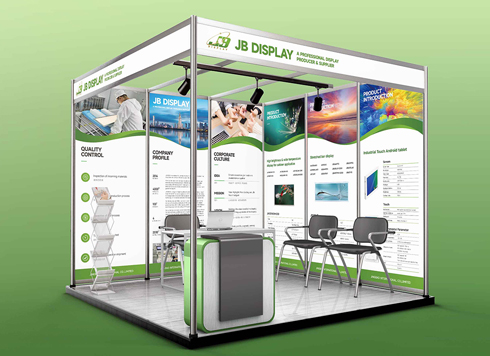 Booth Poster Design for Professional Monitor Product Suppliers
The standard exhibition booth poster projec ...
-
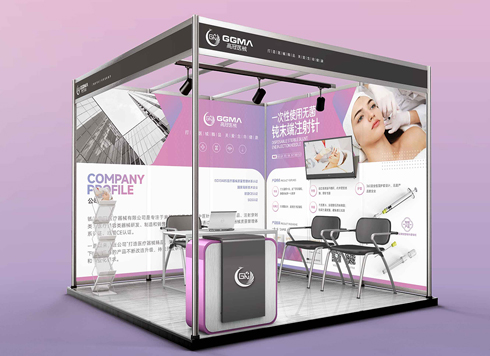 Design of Standard Exhibition Booth Posters for Beauty Instruments
Carefully designed a standard exhibition bo ...
-
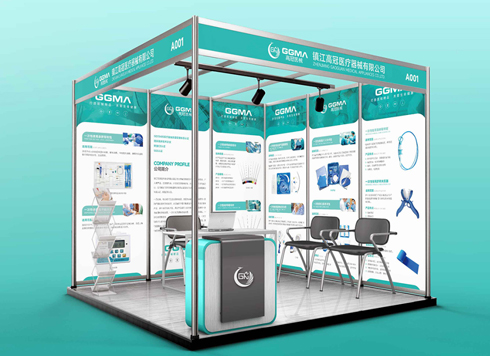 Design of Exhibition Posters for Medical Device Standards
XiYue is designing an exhibition booth post ...
-
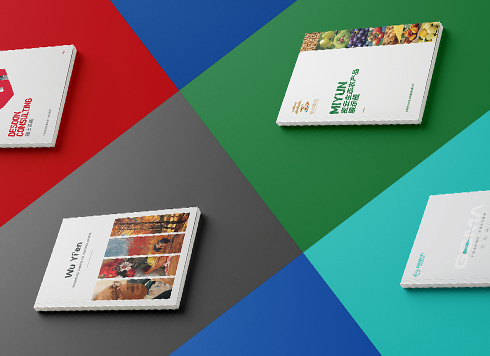 Collection of Brochure Design Cases in 2024 (Cover Series 02)
Our brochure design projects focus on diver ...
-
Why Do Poster Design Quotes Range from Hundreds to Thousands?
Date: Sep 1, 2026 Read: 28
-
Why do advertising poster design quotes vary so much? What's actually different in the deliverables?
Date: Aug 26, 2026 Read: 37
-
Advertising poster design still needs changes after multiple rounds—is it a matter of missing assets or unclear acceptance standards?
Date: Aug 20, 2026 Read: 38
-
How to Avoid Rework in Advertising/Poster Design: Key Acceptance Points
Date: Aug 15, 2026 Read: 42
-
Why Do Poster Design Quotes Range from Hundreds to Tens of Thousands?
Date: Aug 15, 2026 Read: 40