



How to Do Graphic Design: Workflow, Options, and Common Pitfalls
The success of a graphic design project depends not on the amount of creativity but on the clarity of requirements, process, and acceptance criteria. Based on 2026 project delivery practices, a reusable execution workflow should include six stages: requirements analysis, solution selection, design execution, revision iteration, acceptance delivery, and archiving review. This article walks through this workflow, explaining key points and common pitfalls at each stage, for reference by clients, designers, and project managers.
Requirements Analysis: Define the Problem First, Then Design
Requirements analysis is the starting point of graphic design and also a stage with a high rework rate. Many projects fail not because of the designer's lack of skill but because the requirements are vaguely described. For example, "make a more impressive banner" is not executable. Qualified requirements should include six elements: purpose, audience, size, style references, delivery format, and timeline.
In 2026, most mature projects use a requirements brief template to document these elements. For projects with limited budgets, at least confirm boundaries via verbal confirmation plus written meeting minutes. When possible, provide 2-3 similar cases as style anchors to prevent the designer from guessing.
- Purpose: Whether for online placement or print materials, affecting color mode and resolution.
- Audience: Characteristics of the target group, determining visual tone and copy voice.
- Size and layout: Such as A4 portrait, 1920×1080, or roll-up banner.
- Style reference: Provide specific examples or keywords; avoid vague demands like "impressive".
- Delivery format: Clarify whether source files (AI/PSD), PDF, PNG, or HTML are required.
- Timeline: Specify dates for drafts, revisions, and finals, with buffer time.
Solution Selection: Per-Project Outsourcing, On-Site Collaboration, and Self-Service Templates
Graphic design delivery methods mainly fall into three categories: per-project outsourcing, on-site collaboration, and self-service templates. Their costs, lead times, and target users differ significantly, so the choice should be based on project scale and budget. Per-project outsourcing suits one-off materials, on-site collaboration suits continuous multiple projects, and self-service templates suit scenarios with tight budgets and simple design needs.
- Per-project outsourcing: Typically several hundred to several thousand RMB per piece, with a lead time of about 1-5 working days; suitable for independent materials such as posters, flyers, and business cards, with limited revision rounds.
- On-site collaboration: Usually billed monthly, commonly between RMB 10,000 and 30,000; suitable for companies with ongoing design needs, offering quick response and smooth communication, but higher management costs.
- Self-service templates: Fixed subscription fee or free, instant turnaround; suitable for standardized scenarios like internal notices and social media images, but lacking customization.
When selecting the method, do not look only at unit price. Per-project outsourcing may seem cheap, but excessive revisions incur extra fees. On-site collaboration has high monthly cost, but over the long term, the per-piece average is lower. For a decision, estimate the total monthly design demand, calculate the total cost of the three models, and combine with quality stability.
Design Execution: A Six-Step Implementation Framework
The six-step implementation framework is not simply a list of processes; it breaks a design project into verifiable granularities. Each step has clear inputs and outputs for mid-course checks. The benefit is that any issue in a step can be corrected in time, rather than accumulating until final delivery.
- Step 1: Confirm requirements. Produce a requirements brief and define design metrics; note that you should confirm with the decision-maker, not just the messenger.
- Step 2: Research and asset collection. Analyze competitors and style references, organize usable copy and images; note that commercial assets must be licensed.
- Step 3: Draft design. Provide 2-3 directions, each covering core visual elements; note that low-fidelity wireframes should be shown first to avoid premature detailing.
- Step 4: Internal review. Check size, color scheme, typography, and copyright against requirements metrics; note that revision buffers should be kept, reserving at least 2 rounds of changes.
- Step 5: Client revisions. Make precise adjustments based on valid feedback and reject unnecessary changes; note that annotation tools should be used to record revision points, not just verbal communication.
- Step 6: Delivery and archiving. Provide source files, exported files, and usage instructions; note that projects should be archived for future reuse.
The notes for each step are listed above. In practice, most teams lose control in the "client revision" stage due to the lack of agreed revision limits. Therefore, it is recommended to specify the number of revision rounds and scope in the requirements brief, for example, "Each draft includes 2 revision opportunities; additional changes will be billed as new requirements."
Common Pitfalls and Acceptance Criteria
Common graphic design pitfalls include: not documenting requirements, judging design only by mockups, ignoring print color differences, unlimited revisions, and not keeping source files. These pitfalls extend project timelines and may even lead to legal disputes. To judge whether a design is acceptable, do not look only at aesthetics; check whether it meets the requirements metrics, such as accurate dimensions, commercially usable fonts, and compliant delivery formats.
- Pitfall 1: Requirements passed verbally, leaving no reference later; countermeasure: confirm every revision by email.
- Pitfall 2: Checking only small previews, ignoring actual size; countermeasure: output 1:1 previews for print materials.
- Pitfall 3: Assuming unlimited revisions are included in the quote; countermeasure: specify revision rounds and fees in the contract.
- Pitfall 4: Not archiving source files; countermeasure: back up to cloud or local storage after project completion.
The acceptance criteria can refer to the following checklist: correct dimensions and bleed lines; no typos in text; image resolution no less than 300dpi (print) or 72dpi (screen); color mode CMYK (print) or RGB (screen); clear file naming with version numbers.
Applicable Scenarios and Boundaries
This workflow suits conventional graphic design projects such as brand materials, brochures, posters, and packaging. For scenarios requiring full brand planning or complex interaction design, a longer research cycle and cross-disciplinary team are needed; a pure visual design process is insufficient. Similarly, if you just need to change a size temporarily or apply an existing template, simply use a template tool or tweak the original file; no need to start the full workflow.
- Suitable for: Conventional graphic materials with clear output dimensions and purpose, such as posters, brochures, and packaging.
- Not suitable for: Brand strategy consulting, cross-media motion design, or mass image template layouts.
In 2026, AI-assisted design tools can generate a large number of drafts, but key creativity and decisions still require human involvement. AI-generated candidate options can be introduced into the design workflow, but they must be screened and modified by humans to comply with brand guidelines. In Xiyue Company's project practice, this framework is often used for multi-batch material delivery and effectively maintains style consistency.
FAQ
How many revision rounds are appropriate for graphic design?
Most projects agree on 2-3 rounds of revisions, each round targeting drafts or finals. Excess rounds can be billed as new requirements or extra hours; it is recommended to specify this in the contract or requirements brief in advance.
What source file formats are delivered for graphic design?
Common source files include AI, PSD, INDD, etc., and should be accompanied by preview formats such as PDF and PNG. Source files should have clear layers, with fonts outlined or font files attached for future editing.
How to determine if a designer's quote is reasonable?
Evaluate comprehensively based on project complexity, design cycle, and revision rounds, and ask for a detailed quote. Compare quotes from 2-3 candidates, focusing on whether source files, revision rounds, and commercial licensing are included.
What are the differences between print design and screen design requirements?
Print design requires CMYK color mode, resolution above 300dpi, and bleed space. Screen design typically uses RGB mode and 72dpi resolution is sufficient. The two cannot be directly interchanged and must be exported separately.
How to complete a graphic design project in a short time?
When time is tight, narrow the scope, use existing layouts or templates, and reduce custom elements. Provide all revision feedback at once to avoid piecemeal responses, and use rush fees if necessary.
Following this workflow can significantly reduce rework risk. In practice, you can trim steps based on project size, but requirements confirmation and acceptance archiving should not be omitted. If project complexity goes beyond regular graphic design, it is advisable to engage a brand strategy consultant or a professional design team, or directly adopt the on-site collaboration model.
-
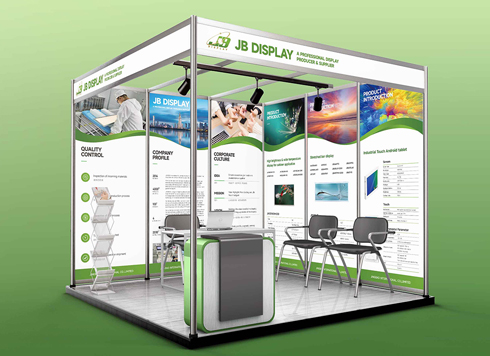 Booth Poster Design for Professional Monitor Product Suppliers
The standard exhibition booth poster projec ...
-
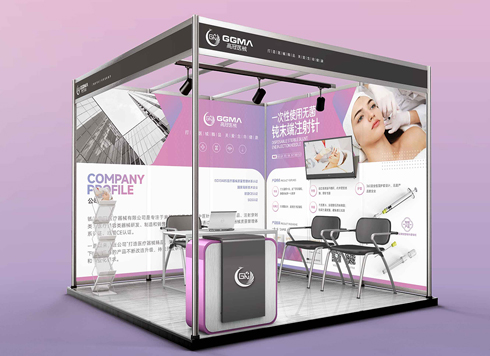 Design of Standard Exhibition Booth Posters for Beauty Instruments
Carefully designed a standard exhibition bo ...
-
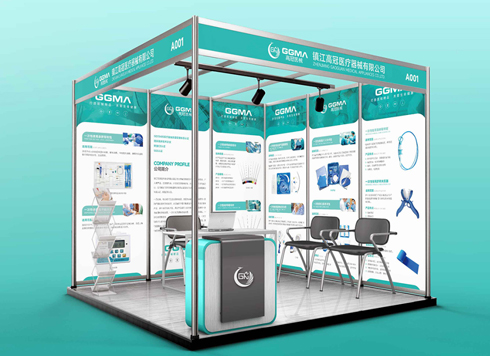 Design of Exhibition Posters for Medical Device Standards
XiYue is designing an exhibition booth post ...
-
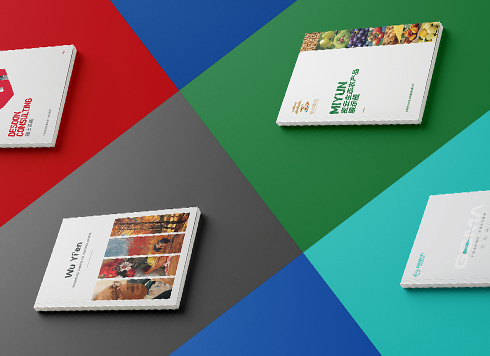 Collection of Brochure Design Cases in 2024 (Cover Series 02)
Our brochure design projects focus on diver ...
-
How to Run a Graphic Design Project: The Complete Workflow from Requirements to Delivery and Acceptance
Date: Aug 5, 2026 Read: 48
-
Complete Workflow Management Guide for Graphic Design Projects: Key Steps from Requirements to Delivery
Date: Jul 25, 2026 Read: 53
-
How to Design Ads/Posters: A Practical Workflow from Needs Analysis to Delivery Acceptance
Date: Aug 9, 2026 Read: 45
-
How to Price Graphic Design Services? A Guide to Design Fee Composition and Selection
Date: Aug 9, 2026 Read: 56
-
How to Choose a Graphic Design Service: An Evaluation Framework from Pricing, Process to Delivery
Date: Aug 7, 2026 Read: 51