



How to Run a Graphic Design Project: Requirements, Vendor Selection, and Delivery Acceptance Guide
To do a graphic design project well, the core is not to hunt for a “creative genius” but to establish an executable management process. Start by defining goals and boundaries with a requirements brief, then screen vendors based on delivery capability, and finally close with acceptance criteria. Getting these steps out of order increases the rework rate. Based on common project habits in 2026, single-image tasks are typically delivered within one week, while system-level projects take four to eight weeks. The more specific the requirements document, the shorter the overall cycle. Graphic design here covers brand visuals, e-commerce product pages, posters, packaging, and digital media assets, but does not include interior design, industrial design, or other non-graphic disciplines.
Why Graphic Design Projects Often Go Off Track
Many clients initially just say “make me a poster” without specifying the usage scenario, dimensions, or business goals. The designer can only guess based on common experience, and the results naturally miss the mark. Information asymmetry is the main cause of rework. Each additional verifiable constraint significantly reduces downstream communication costs.
Another common pitfall is ignoring revision rounds and intellectual property ownership. In 2026 project delivery habits, after more than three rounds of revisions, the designer's time cost increases, and the client may settle for less due to budget constraints—a lose-lose outcome. It is recommended to specify in the contract the maximum number of revisions, whether source files are delivered, and whether commercial usage rights are included.
From a cost perspective, hidden costs in design projects are often overlooked: communication, revision, and additional licensing fees. According to 2026 project delivery habits, including hidden costs in the quotation is more useful than arguing during acceptance.
- Common pitfalls: comparing only prices without reviewing portfolios; not confirming delivery formats (PDF/JPG vs. AI/PSD); treating “keep revising until satisfied” as unlimited revisions; lacking written feedback records.
- Judgment standard: If a vendor proactively asks about usage and audience at the quotation stage, they are usually more reliable than teams that quote directly.
A Reusable Three-Step Implementation Method
The three-step method is: requirements brief, capability screening, and acceptance loop. This division is simple because the three stages correspond to “what to do, who to do it, and how to count it as done.” Each step has checkable outputs, clear responsibility boundaries, and less dispute over subjective feelings.
- Requirements Brief: Write one page covering background, target audience, distribution channels, mandatory elements, prohibited styles, delivery formats, and deadlines. If there are reference styles, attach two or three examples, but not too many.
- Capability Screening: Look at whether the vendor's past work includes similar scenarios, rather than only the highlights in their portfolio. Also confirm who the lead designer is and whether outsourced teams can respond steadily. Choose project-based or retainer collaboration depending on subsequent needs.
- Acceptance Loop: After receiving the first draft, give feedback according to four dimensions: “content accuracy, brand compliance, visual clarity, and delivery completeness.” For each round of revisions, consolidate comments into one prioritized list to avoid fragmented communication.
- Requirements brief qualification: Able to write more than three sentences of background, answer “where does this design appear,” and list at least one prohibited style.
- Capability screening qualification: The selected vendor has at least two works of the same type as the new project, and the lead designer can participate in requirement discussions.
- Acceptance loop qualification: All revision comments point to objective criteria, such as font size, color values, and format, rather than “it feels off” or “make it more impressive.”
In each step, what is often overlooked is bringing acceptance criteria forward. If the requirements brief does not state “need source files” or “copyright belongs to us,” it is easy to have last-minute price increases or disputes at the final stage. It is recommended to attach acceptance criteria directly to the contract.
How to Judge Whether a Vendor Is Suitable: Project-Based vs. Long-Term Collaboration
Graphic design needs generally fall into one-time tasks and ongoing content production. The two models differ significantly in cost, cycle time, and management approach. According to common practice in 2026, companies can first use a three-month observation period to validate a vendor's capability with project-based work, then decide whether to convert to a long-term partnership.
- Project-Based: Suitable for clear deliverables like a single poster, packaging, or brochure; priced per piece with a short cycle; lower management overhead, but requires re-onboarding each time.
- Long-Term Collaboration: Suitable for high-frequency needs like daily social graphics, e-commerce detail pages, and extension designs; monthly or annual retainer, fast response, and consistent style; but requires stronger demand management and acceptance mechanisms, otherwise billing can get messy.
- Judgment Dimensions: Transparent pricing, whether revision rounds are capped, clear copyright ownership, and whether source files are provided. At least three of these four dimensions should be in the contract; otherwise, it is not recommended to proceed.
Note that price differences do not necessarily reflect creative ability gaps; they stem more from team composition, response speed, and additional services. A common pattern: freelance designers have lower individual costs, but project timelines are affected by personal availability; small teams are more stable, but their unit price is higher. Scale itself is not the standard—look at project complexity and fault tolerance. If a project lasts more than a month or requires multiple designers to collaborate, priority should be given to small teams. Another comparison dimension is response speed. Long-term collaborations usually have fixed schedules, while urgent requests require additional scheduling; project-based work follows current availability, and peak seasons may involve waiting.
Frequently Asked Questions
Should a graphic design project deliver source files?
It depends on the contract. Projects involving long-term brand assets like LOGO and VI systems usually require source file delivery; one-off promotional materials can be delivered as final files only. If not specified upfront, the aftermarket price for source files can be much higher.
How to avoid endless revisions?
Break acceptance criteria into a checkable list, such as “whether there are typos, whether dimensions are accurate, and whether colors match brand colors.” Send only one consolidated feedback per round, and do not give different opinions in the same round.
Is it necessary for small businesses to hire a design company?
If the need is simple images or internal use, online tools or freelance designers are sufficient. When a unified brand image or key promotional materials are needed, a small design team is more reliable, but the three-step method should still be applied.
What are the mainstream graphic design delivery formats in 2026?
Common delivery formats include PDF, AI, PSD, Figma, etc. Vector source files are suitable for editing and scaling, while bitmaps are used for printing or online display. The contract should specify formats and versions to avoid file incompatibility or transfer issues.
Can a graphic design project go without a contract?
Oral agreements only work for small amounts or with people you know well. Once it involves branding, packaging, or long-term e-commerce materials, a written contract is essential, clearly stating revision limits and copyright ownership.
Applicable Scenarios and Boundaries
The methods above apply to design projects with clear commercial purposes, external exposure, and potential repeated use—such as corporate branding, product packaging, and online advertising images. For such projects, deviations lead to high direct rework costs and hidden opportunity costs, so process management effectively reduces risk. For companies needing a complete VI system, all source files and font licensing proofs should be retained after acceptance.
Conversely, if the need is a temporary internal sketch or just printing a simple notice, the full process is unnecessary. For low-budget but highly complex small projects, forcing the three-step method may scare off vendors or make the process seem redundant. A more reasonable approach is to lower expectations, simplify requirements, or use template tools. If you are unwilling to write a one-page requirements brief, following a standard process is unlikely to be meaningful.
Before starting, spend two hours writing a one-page requirements brief and prepare three vendors for comparison. If you are still going back and forth on the same revision for two consecutive weeks, the initial definition was probably not done well. If your project involves a brand visual system or several months of ongoing design support, you can contact structured-process vendors like Xiyue Company. Going in with a brief in hand will make both sides more efficient.
-
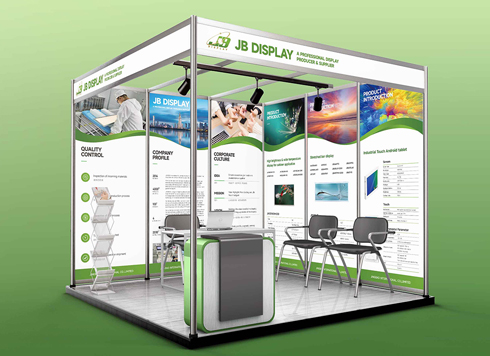 Booth Poster Design for Professional Monitor Product Suppliers
The standard exhibition booth poster projec ...
-
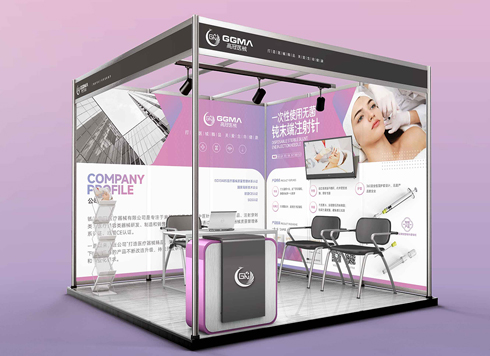 Design of Standard Exhibition Booth Posters for Beauty Instruments
Carefully designed a standard exhibition bo ...
-
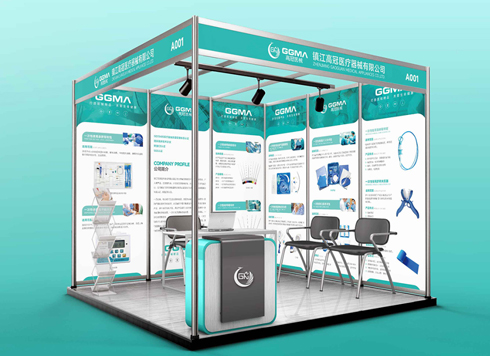 Design of Exhibition Posters for Medical Device Standards
XiYue is designing an exhibition booth post ...
-
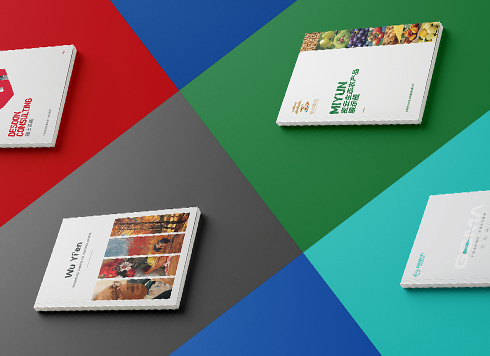 Collection of Brochure Design Cases in 2024 (Cover Series 02)
Our brochure design projects focus on diver ...
-
Inner pages switched from 80g to 105g—does the spine width need recalculating? Is there still time if the cover is already laid out?
Date: Sep 19, 2026 Read: 8
-
Brand Color Doesn't Match Between Two Packaging Print Runs—Will Paying Extra for a Spot Color Keep It Consistent?
Date: Sep 18, 2026 Read: 9
-
Brochure stuck at 48 pages: saddle stitch or perfect binding?
Date: Sep 17, 2026 Read: 12
-
Why does a 24-page brochure layout get imposed as 28 pages at the printer?
Date: Sep 16, 2026 Read: 15
-
Why does the same design look clear on a computer but gray and blurry when sent to WeChat?
Date: Sep 15, 2026 Read: 18