



Brand Identity/Logo Design: A Complete Guide from Requirement Analysis to Delivery and Acceptance
Brand identity/Logo design is a foundational task that uses graphics, text, or combined symbols to build a brand's visual identity. A qualified logo should remain recognizable across different sizes, media, and backgrounds, and convey the brand's core characteristics through shape, color, and typography. The criterion is not "looks good" but "fits the purpose": whether it aligns with the brand strategy, whether it is extendable, and whether it can be applied in real scenarios. In project deliveries for 2026, logo design has already expanded from a standalone graphic to a complete VI foundation system.
Why a Process Is Needed
Without a structured process, projects are prone to repeated direction changes, incomplete file formats, and application distortion. The core value of a process is to reduce uncertainty in a structured way, giving every decision a basis. In real projects, most rework stems from unclear requirements at the early stage, not from insufficient design capability. Therefore, the primary goal of a process is to clarify the problem.
- Help identify core brand keywords and avoid designers improvising
- Define delivery milestones to reduce the chaos of "changing as you go"
- Provide an acceptance checklist to prevent missing deliverables
The Five-Step Implementation Method for Brand Identity/Logo Design
The five-step method includes requirement analysis, strategy positioning, sketch exploration, digital specification, and delivery testing, forming a reusable verification loop. Each step has a clear output, and the next step builds on the previous conclusion.
1. Requirement Analysis
Collect information rather than proposing solutions. The client provides brand background, target audience, competitors, and preference references; the designer uncovers hidden needs through interviews and delivers a "Design Requirement Brief" containing no more than three brand keywords.
2. Strategy Positioning
Translate requirements into visual direction. Analyze competitors, extract differentiation opportunities, and define the "personality" of the logo. Produce a "Strategy Direction Statement," usually offering 2-3 keyword combinations, such as "professional + approachable."
3. Sketch Exploration
Use hand-drawn sketches to quickly produce multiple directions, avoiding color at this stage and focusing on shape and structure. It is recommended to explore at least 10 concepts, then narrow down to 3 for further development. Simultaneously test scaling effects from 16px to large-format print sizes.
4. Digital Specification
Create standard files using vector software, defining colors, fonts, and combination logic. In 2026 delivery practices, it is customary to provide RGB, CMYK, and PANTONE values for screen, print, and special processes.
5. Delivery Testing
Place the logo into real mockups to verify: business cards, packaging, websites, etc. Test feedback may lead back to the sketch stage, but this is a legitimate loop. After testing, organize source files, PDF, PNG, SVG, and other formats.
Deliverables and Acceptance Criteria
A qualified deliverable should not be just an image. In 2026, a more complete delivery checklist includes source files, multi-format exports, color specifications, font files, and basic application examples. Acceptance checks from five dimensions: uniqueness, memorability, extendability, compatibility, and timelessness. Taking extendability as an example, the logo should remain identifiable in monochrome printing, foil stamping, embroidery, and other conditions; if the shape remains recognizable after removing color, it passes the "purity test."
Clients often struggle to choose between a basic package and a full package. The two scopes are compared as follows:
- Basic package: about 4-6 weeks, up to 3 rounds of revisions, delivers basic files, suitable for startups or short-term projects.
- Full package: about 8-12 weeks, up to 5 rounds of revisions, delivers basic VI + application manual, suitable for medium-to-large enterprises.
The above are common industry ranges, depending on project complexity. If the budget is extremely low and time is tight, a "lightweight logo pack" can be considered, but future upgrade costs will be higher.
Common Pitfalls and How to Avoid Them
Pitfall 1: Treating the logo as a work of art. A logo is a commercial tool; over-pursuing uniqueness at the expense of readability reduces communication efficiency. For example, excessive use of thin lines breaks easily in print and is hard to discern on mobile phones.
Pitfall 2: Thinking you don't need to provide source files. Without open source files, the client cannot make adjustments later. In 2026, the industry convention is to deliver editable vector source files (e.g., AI/CDR) and PDF.
- Pitfall 3: The more colors, the better—printing costs rise and the memory point is diluted.
- Pitfall 4: Directly downloading templates—cheap but cannot register copyright and carries infringement risks.
- Pitfall 5: Deciding by group vote—too many tastes lead to a mediocre solution.
The bottom line to avoid these pitfalls: specify delivery formats, revision limits, and copyright ownership in the contract.
Applicable and Non-Appropriate Boundaries
Brand identity/Logo design is suitable for scenarios such as new brand creation, brand upgrading, product packaging, advertising posters, and publication layout. If a brand will enter multiple channels and needs a unified visual symbol, investing in a standardized logo design is worthwhile.
However, it is not necessary to launch immediately in the following situations: one-time use for temporary events or internal projects; extremely low budget with no long-term brand plan; or the client cannot provide any decision input. In such cases, a simple wordmark or template can be used as a stopgap, and the brand guidelines can be completed later once the business stabilizes.
It is also important to note that logo design is not equivalent to brand strategy. Without clear positioning and product support, even a beautiful visual cannot solve business problems. In 2026, many companies choose "strategy first, design second"; reversing this order is a major cause of failure.
FAQs
How much does it cost to design a brand logo?
Common industry rates range from 3,000 yuan to tens of thousands of yuan, depending on experience and delivery scope. Within budget, clarify the number of revision rounds and delivery files to avoid extra charges.
How long does the design process usually take?
The basic package typically takes 4-6 weeks, including research and 3 rounds of revisions. With clear requirements, it can be shortened to 2 weeks, but rushing affects quality; it is recommended to reserve buffer time.
How many revisions are allowed?
Formal contracts commonly specify 3-5 rounds of revisions, and additional rounds are charged. It is recommended to provide consolidated feedback early to avoid submitting only minor changes each time.
What materials do we need to provide?
At least provide the company/product name, brand positioning, target user profile, and competitor list. If there is an old logo or printed materials, provide those as well. The more complete the materials, the more efficient the process.
How do we measure the effectiveness of a logo design?
Measure from three dimensions: internal acceptance, external memory test, and implementation cost. If decision-makers can explain the meaning, users can remember and describe it, and production and maintenance are convenient, then it is good enough.
Action guide: First sort out the core brand keywords, then compare with the five-step method and acceptance criteria. For logo design in 2026, it is recommended to reserve at least 4 weeks and clarify copyright ownership and file formats in the contract. If the project timeline is tight, you can commission a team with mature processes; they usually provide standardized project management tables. The boundary is that if the brand already has a clear strategy and a limited budget, you can start with a small basic package and expand later.
-
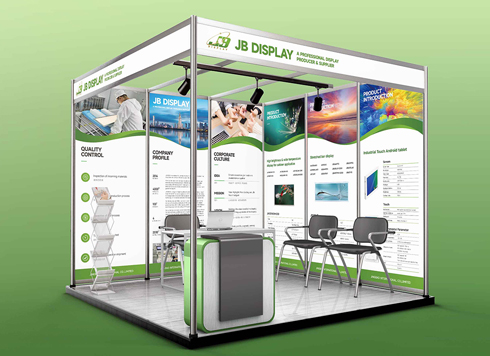 Booth Poster Design for Professional Monitor Product Suppliers
The standard exhibition booth poster projec ...
-
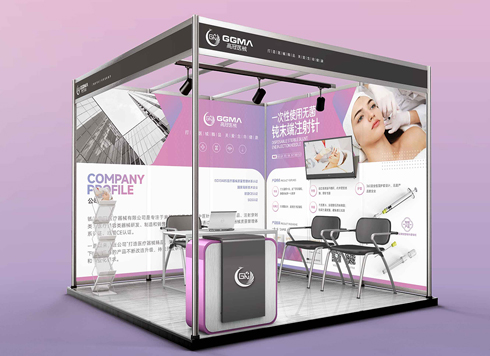 Design of Standard Exhibition Booth Posters for Beauty Instruments
Carefully designed a standard exhibition bo ...
-
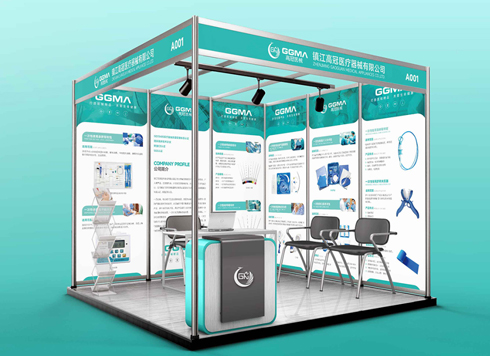 Design of Exhibition Posters for Medical Device Standards
XiYue is designing an exhibition booth post ...
-
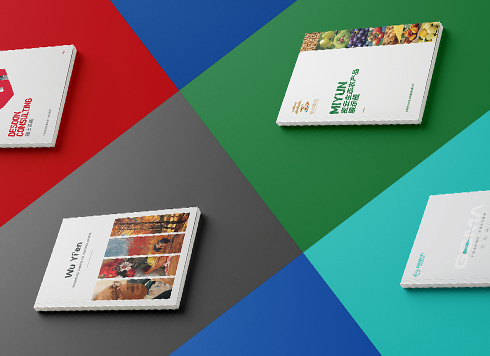 Collection of Brochure Design Cases in 2024 (Cover Series 02)
Our brochure design projects focus on diver ...
-
Brand Logo Design Delivered, but Printing Looks Blurry and Colors Are Off—What Went Wrong?
Date: Aug 23, 2026 Read: 36
-
How to Design a VI System: Key Steps from Process to Acceptance
Date: Aug 8, 2026 Read: 51
-
How to Approach Brand Identity and Logo Design: Process, Acceptance Criteria, and Common Pitfalls
Date: Aug 7, 2026 Read: 50
-
Brand Color Looks Different on Packaging Bags and Store Light Boxes: Which Should Be the Acceptance Standard?
Date: Sep 16, 2026 Read: 14
-
Client wants source files before final payment — do designers always have to hold the line? Miss these handover details and your reputation suffers
Date: Aug 30, 2026 Read: 30