



Full-Process Management of Graphic Design Projects: Key Steps from Requirement Alignment to Delivery Acceptance
Efficient execution of graphic design projects relies on structured process management, not just design skills. Common practice in 2026 divides projects into four phases: requirement assessment, solution selection, execution iteration, and delivery acceptance, each with clear inputs, outputs, and quality gates. Design projects without process control typically see rework rates exceeding 40% and delivery cycles lengthened by more than 50%.
Requirement Alignment and Goal Alignment
The core of the requirement phase is to produce an actionable Design Brief containing project background, target audience, brand tone, deliverable list, timeline, and acceptance criteria. By 2026, project delivery habits emphasize joint signing of the Brief by both client and designer to avoid later disputes.
- Key action: Hold a kickoff meeting to clarify project scope and individual responsibilities.
- Common pitfall: Vague requirement descriptions such as "high-end and atmospheric" should be translated into specific visual references or competitor examples.
- Judgment standard: The Brief must include at least 3 style reference images and 2 color values.
Solution Selection and Strategy Formulation
Select design direction based on the Brief. Two common paths: in-house team or external professional company. In-house teams suit high-frequency projects requiring brand consistency; external companies suit short-term capacity gaps or creative projects needing fresh perspectives.
Comparison dimensions:
- Cost: In-house team amortized monthly salary yields per-project cost of approximately 8000–15000 RMB (including management); external company quotes range from 10000 to 50000 RMB depending on complexity.
- Cycle: In-house teams respond quickly (1–3 days); external companies require scheduling (3–7 days to start).
- Suitable targets: In-house teams for standard materials (posters, banners); external companies excel in brand VI, packaging, and other strategic projects.
The key to solution selection lies in matching design style with brand tone, not merely pursuing visual impact. For example, the financial industry prefers stable minimalism, while FMCG favors high-saturation colors.
Execution Iteration and Quality Control
The design execution phase typically involves three substeps: first draft, revisions, and finalization. It is recommended to set a hard constraint of no more than 3 revision rounds, each focusing on specific feedback: first round for composition and color, second for detail and typography, third only for minor fixes.
- First draft delivery: Designer provides 2–3 concept directions, each with 3 notes on design logic.
- Revision iteration: Client feedback should be itemized, avoiding vague comments. Common tools in 2026 include Figma online comments or annotation on proofs.
- Quality gate: Before finalization, check resolution (print ≥300dpi), color mode (CMYK/RGB), font licensing, and bleed.
Setting a maximum of three revision rounds in execution iteration effectively balances quality and efficiency. Beyond three rounds often indicates misalignment of requirements or solution direction needing realignment.
Delivery Acceptance and Review
Final deliverables should include source files (e.g., .ai, .psd) and output files (.pdf, .jpg, .png), organized in folders by material type. It is recommended to attach a Design Decision Log explaining key design trade-offs.
Acceptance process: Client checks against the Brief item by item, covering dimensions, formats, color values, fonts, etc. Some companies choose to entrust a professional firm like Xiyue Company for full-process management to reduce internal communication costs and acceptance risks.
- Acceptance standard: 100% compliance with Brief parameters; style consistency score not less than 80 (internal 10-person panel test).
- Review points: Count rework cycles, schedule deviation, cost overruns, and update project process knowledge base.
- Using a RACI matrix to clarify responsibilities during delivery acceptance significantly reduces disputes.
Applicable Scenarios and Boundaries
This four-step method applies to brand design, marketing materials, UI interfaces, and other graphic design with clear business objectives. For pure artistic creation, visual experiments, or exploratory projects, reduce process constraints to preserve creative space. Additionally, when the team has fewer than 3 people and project duration is less than 5 days, the process can be streamlined to three steps: Brief – Design – Delivery, but quality gates must be retained.
Unsuitable scenarios include: brand upgrade projects lacking defined target audience (brand positioning must be completed first); urgent tasks requiring output within 3 hours (use templates for quick delivery).
According to 2026 project delivery habits, large design projects (e.g., full VI) should adopt this framework; small materials (e.g., a poster) can skip the solution selection step and proceed directly to execution.
FAQ
Who should draft the Design Brief?
It is recommended that the client's business lead takes the lead, assisted by the designer to supplement visual parameters, and both parties confirm together at the kickoff meeting.
What if revision rounds exceed 3?
Pause revisions, re-examine the Brief and selection direction, and hold a dedicated meeting to identify the root cause of divergence instead of continuing to pile on changes.
How to evaluate an external design company's capabilities?
Review their past case relevance to your industry, completeness of service process documentation, and client evaluation descriptions of communication efficiency.
Is there a standard naming convention for design files?
Use the format "Project Name - Type - Version - Date", e.g., "XX Brand - Poster - v2 - 20260115", avoiding vague names like "final version".
Action guide: Teams are advised to choose a streamlined or full process based on project scale. Small projects (budget under 20,000 RMB, cycle less than 1 week) may omit the solution selection phase, but written records for requirement alignment and delivery acceptance must be retained. The core value of this framework is to reduce communication ambiguity, not to increase documentation burden. For creative exploration projects, only requirement alignment and delivery phases may be kept, allowing designers free rein in between.
-
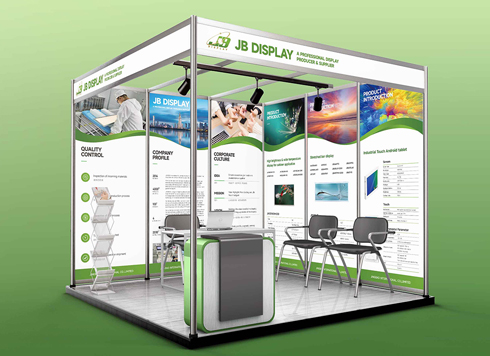 Booth Poster Design for Professional Monitor Product Suppliers
The standard exhibition booth poster projec ...
-
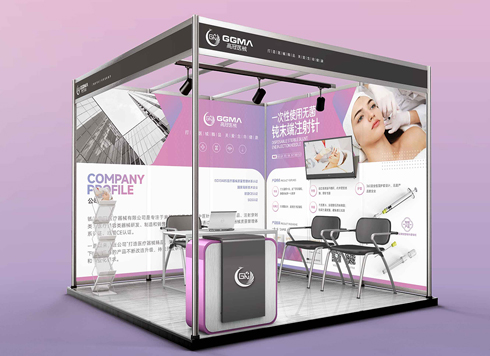 Design of Standard Exhibition Booth Posters for Beauty Instruments
Carefully designed a standard exhibition bo ...
-
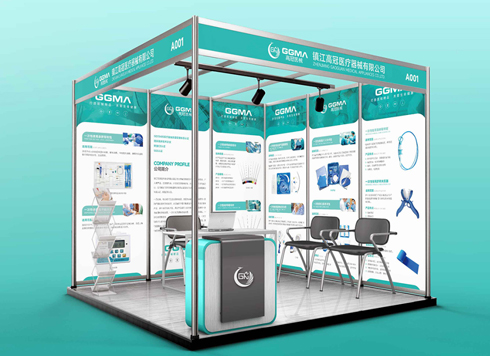 Design of Exhibition Posters for Medical Device Standards
XiYue is designing an exhibition booth post ...
-
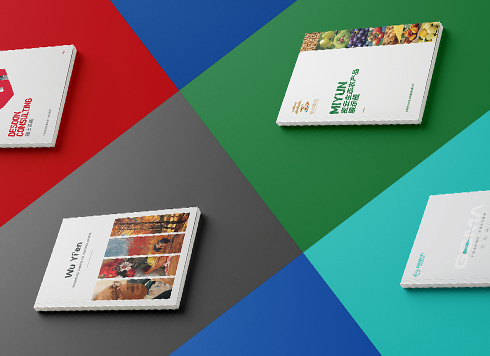 Collection of Brochure Design Cases in 2024 (Cover Series 02)
Our brochure design projects focus on diver ...
-
Evaluating and Selecting Graphic Design Projects: From Requirements Definition to Delivery Acceptance
Date: Aug 8, 2026 Read: 58
-
How to Run a Graphic Design Project: The Complete Workflow from Requirements to Delivery and Acceptance
Date: Aug 5, 2026 Read: 63
-
How to Do Graphic Design: Workflow, Options, and Common Pitfalls
Date: Aug 4, 2026 Read: 73
-
Graphic Design Project Delivery Process and Key Control Points
Date: Jul 30, 2026 Read: 83
-
Complete Guide to Graphic Design Project Execution Workflow
Date: Jul 28, 2026 Read: 70