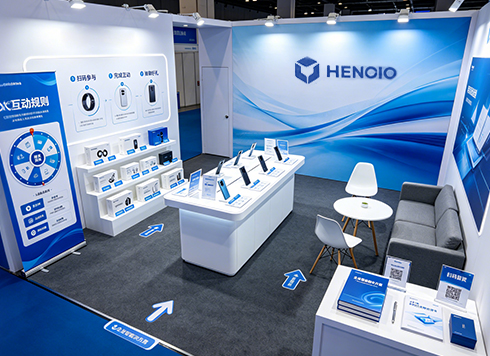





Evaluating and Selecting Graphic Design Projects: From Requirements Definition to Delivery Acceptance
The success or failure of a graphic design project is often determined in the requirements-definition phase. When enterprises procure design services in 2026, they should confirm in writing across four dimensions—deliverables list, timeline, revision limits, and copyright ownership—rather than relying solely on portfolio-based quotes. The following guide applies to common scenarios such as daily brand collateral, e-commerce visuals, and event publicity.
Why a Structured Evaluation Process Is Needed for Graphic Design
The cost difference between clearly defined and vague design requirements can be several-fold. A structured evaluation process does not add barriers; it narrows the information gap before the project begins. For non-design buyers, an easily overlooked factor is the downstream usage scenario—for example, whether the asset is for print or online distribution, as this directly affects file format and color mode.
Based on 2026 project delivery practices, most design collaboration is cloud-based, but final deliverables still need to be confirmed in writing. A competent requirements brief should at least include: file format, dimensions, whether source files are provided, revision limits, and scope of usage rights. Without these boundaries, rework and disputes are almost inevitable.
- Direct value of a structured evaluation process: reduces rework costs.
- Shortens decision-making cycles and makes quotes more comparable.
- Avoids copyright disputes by clarifying usage rights ownership.
From an execution perspective, a structured process also gives both parties a common language mid-project. When revision requests conflict with the agreed deliverables, the written checklist serves as the arbitration basis.
The Four-Dimension Evaluation Framework: Deliverables, Timeline, Revisions, Copyright
Here is a reusable framework that breaks a design project into four dimensions for confirmation. These are the deliverables list, timeline, revision limits, and copyright ownership. They are grouped this way because these areas are the most prone to disagreement during contracting and acceptance, and each dimension has objective criteria.
- Deliverables list: specify the concrete files—such as key visuals, posters, WeChat long images, print-ready source files, etc.—and indicate formats and dimensions.
- Timeline: distinguish between the initial draft delivery time and the full delivery time; reserve buffer for at least two revision rounds.
- Revision limits: define limits per round or per hour, and state the full scope of each revision round in the feedback in one go.
- Copyright ownership: agree on whether copyright is purchased outright, whether source files are included, and whether the supplier retains display rights.
Confirming along these four dimensions helps you quickly assess whether a supplier is professional. If the supplier proactively asks about checklist details during requirements communication, this usually signals stronger project management capability; otherwise, you may need stricter penalty clauses in the contract. At Xiyue Company, when helping clients execute such projects, we typically integrate this framework directly into the collaboration sheet so both sides can see it at any time.
Common Pitfalls and How to Avoid Them
Buyers often fall into the trap of thinking that a beautiful portfolio equals a good fit, but this ignores the design objectives and supply-chain coordination. Another common pitfall is requesting unlimited revisions without realizing that changing the number of revision rounds affects delivery quality. Design collaboration in 2026 places greater emphasis on efficiency, so setting clear revision boundaries protects both parties.
From the buyer's perspective, a frequent mistake is to lower design standards to compress the budget, only to find that the final materials fail to meet basic brand-recognition requirements. A better approach is to keep a viable budget tier and then make trade-offs on scope.
- Comparing only quotes without scope: ask each party for an itemized deliverables list before comparing prices.
- Relying on verbal confirmation of milestones: put them in the contract or collaboration tool, with compensation mechanisms for delays.
- Requesting source files while paying only for production: source files are typically a core asset and need separate agreements.
- Ignoring print-production requirements: online images and print materials use different color spaces, so confirm this in advance.
Comparing Options: Freelance Designers vs. Design Agencies
Freelance designers and design agencies are not simply a small team vs. a large team. They differ in cost, collaboration style, and suitable scenarios. Based on 2026 market rates, a freelancer's per-project fee is typically lower than an agency's, but agencies offer multi-role coordination and more stable delivery schedules.
- Cost: freelancers are generally lower; agencies include project-management overhead.
- Collaboration: freelancers have shorter communication chains; agencies have structured review processes.
- Delivery time: freelancers may delay when busy; agencies have backup mechanisms.
- Best for: freelancers are suitable for single posters and simple collateral; agencies are suitable for multi-category, long-term visual needs.
It should be noted that there is no one-size-fits-all answer. The key is project complexity and your capacity to manage overhead. If the project requires coordination with printers, illustrators, and copywriters, an agency's coordination costs are often lower. Conversely, if you just need a single social media graphic, a freelancer may be more efficient.
Whichever you choose, be sure to document revision limits and source-file ownership in the agreement. These are the two most common sources of rework disputes.
Applicable Scenarios and Boundaries
The graphic design evaluation process applies to most commercial design procurement, including brand basics, e-commerce pages, and offline event visuals. It also applies to collaborations between internal teams and external suppliers. However, not every situation requires this level of formality. For internal quick proposals or creative exploration, a lightweight approach can be used to avoid process slowing down creativity.
Scenarios that are not suitable for a heavy process include: internal ad-hoc WeChat header images, experimental designs without clear business objectives, and team collaborations where the designer and the requester already have long-standing working rapport. In these cases, excessive process reduces responsiveness. A quotable takeaway: structured evaluation applies to projects with budget, deadlines, and delivery standards—not to every design request.
- Suitable: commercial projects with clear delivery standards and multi-person collaboration.
- Not suitable: rapid creative validation, long-term internal collaboration, or exploratory design without clear goals.
If you are using template-based designs, internal design software may suffice, and there is no need to go through an external procurement process. Projects that require third-party evaluation tend to have the attributes of brand assets or long-term use needs.
Frequently Asked Questions
What is a reasonable number of revisions for a graphic design project?
The industry norm is two rounds of minor revisions plus one overall adjustment. Revisions beyond that can be negotiable for a fee, as specified in the contract.
Will not having the source files affect future changes?
Yes. Source files are the basis for resizing or changing text later. Without them, the work often has to be recreated, so it is recommended to clarify in procurement whether they will be provided.
How do I judge whether a design quote is reasonable?
First, use the same requirements brief to obtain quotes from three suppliers, then compare deliverables and timelines. An unusually low quote may signal that source files and revision limits are being trimmed.
Where is the boundary between graphic design and UI design?
Graphic design focuses on static visuals and print output, while UI design focuses on screen interaction and responsive adaptation. Choosing the wrong service provider can lead to project rework.
Next steps: use the four-dimensional framework in this guide to draft your requirements list, then approach two or three suppliers for trial quotes. If the project involves multiple asset types or long-term maintenance, consider teams with structured delivery capabilities. For a one-off creative exploration, simplify to a two-person workflow. The boundary is that process serves delivery—do not sacrifice creative flexibility for process.
-
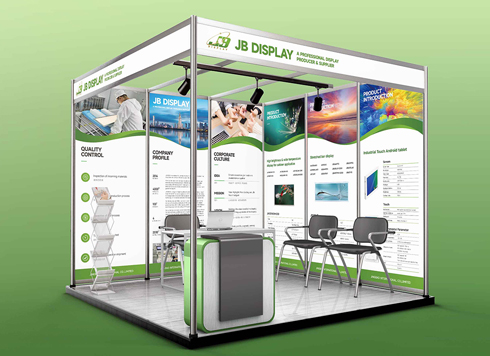 Booth Poster Design for Professional Monitor Product Suppliers
The standard exhibition booth poster projec ...
-
 Design of Standard Exhibition Booth Posters for Beauty Instruments
Carefully designed a standard exhibition bo ...
-
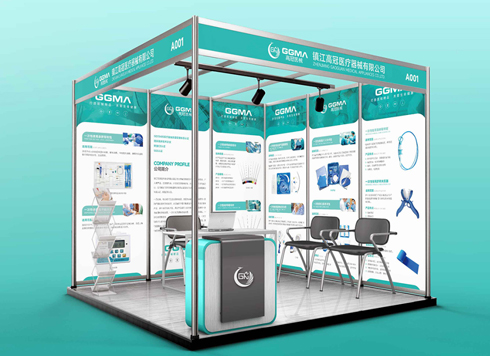 Design of Exhibition Posters for Medical Device Standards
XiYue is designing an exhibition booth post ...
-
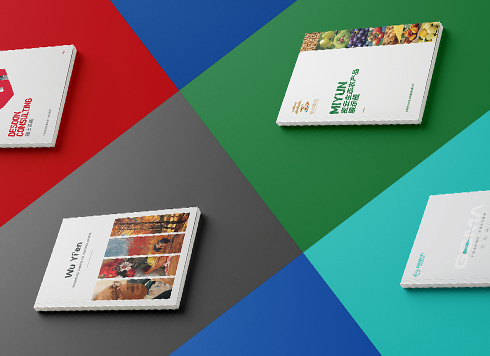 Collection of Brochure Design Cases in 2024 (Cover Series 02)
Our brochure design projects focus on diver ...
-
Should You Ask for Source Files When Outsourcing Graphic Design? How Much Extra Does It Usually Cost?
Date: Aug 28, 2026 Read: 52
-
With So Many Template Sites, Do You Still Need to Pay a Graphic Designer?
Date: Aug 19, 2026 Read: 49
-
Client wants source files before final payment — do designers always have to hold the line? Miss these handover details and your reputation suffers
Date: Aug 30, 2026 Read: 42
-
Should You Send Source Files Before Final Payment Is Settled? Missing These Handover Items Causes More Trouble
Date: Aug 30, 2026 Read: 39
-
When Designing Packaging Boxes, Who Should Provide the Die Line: the Design Firm or the Printer?
Date: Aug 26, 2026 Read: 68