




Medical Device Interface Design Guide: From Information Architecture to Usability Acceptance
The core goal of medical device interface design is to enable healthcare professionals to complete tasks quickly and accurately in high-pressure environments while avoiding medical errors caused by interface design. A successful medical device interface should feature clear information hierarchy, key data readable at a glance, robust error-proof interaction mechanisms, and visual standards compliant with medical device regulations. In 2026, as smart medical terminals become widespread, interface design must also consider cross-device consistency (e.g., synergy between patient monitors and mobile devices) and low learning costs.
Information Architecture: Task Flow as the Backbone
The information architecture of medical devices should not mimic general-purpose software but be based on clinical workflows. For example, a patient monitor should place vital signs (heart rate, blood pressure, SpO2) in the primary viewing area, alarms centered at the top, with historical trends and settings in secondary layers. Information grouping follows the "three-click rule": users can reach any frequently used function within three clicks.
- Priority sorting: Categorize based on usage frequency and urgency, e.g., alarm settings > parameter adjustments > report export.
- Navigation: For devices with physical buttons + touchscreen, retain dedicated physical shortcut buttons; for pure touchscreen devices, use a fixed bottom bar or gesture swipe.
- Counterexample: Overloading the main screen with too many charts may obscure critical numbers; a better practice is to display only the top 5 core indicators by default, with the rest accessible via drop-down.
Interaction Logic: Error Prevention and Feedback Timeliness
In medical scenarios, users often wear gloves or need to shift visual focus quickly, so interactions must reduce precision requirements. Button size should be at least 48×48px (touchscreen) or 12mm (physical buttons). Critical operations (e.g., starting an infusion pump) require double confirmation or long-press activation. Feedback delay should be less than 100ms; if an operation involves device action (e.g., adjusting infusion rate), the interface should simultaneously display a progress bar or status ring.
- Comparison: Two-step confirmation vs. slide-to-unlock — Two-step confirmation (select parameter, then confirm) aligns better with medical habits; slide-to-unlock risks accidental activation and should be avoided.
- Edge case: In emergency mode, some confirmation steps may be skipped, but must be accompanied by auditory/visual cues informing the user of the bypass.
- Visual feedback: Button press states, value change animations (e.g., blood pressure number transitions), and alarm flashing must comply with ISO 13482 or IEC 62366 standards.
Visual Hierarchy and Component Specifications
Visual design for medical device interfaces follows the principles of "high contrast, large font, restrained color palette." Default font size should be at least 16px (adjustable to 20px), with contrast ratio ≥ 4.5:1. Red is reserved for emergency alarms, yellow for warnings, and green for normal status. Component libraries should include numeric displays, trend charts, buttons, sliders, switches, etc., and support adaptability to different screen resolutions (e.g., 800×480 to 1920×1080).
- Component states: Each component must define default, hover, selected, disabled, and alarm states, with corresponding color and shape changes.
- Animation principles: Avoid excessive animation; use only smooth in/out transitions (≤300ms) and value change tweens that do not interfere with clinical judgment.
- Brand consistency: If using templates delivered by Xiyue Company, institutional brand colors can be embedded into the color system, but ensure no conflict with alarm colors.
Four-Dimensional Implementation Framework: From Prototype to Acceptance
This framework progresses through four dimensions: Task Analysis → Low-Fidelity Validation → High-Fidelity Simulation → Usability Testing. Each step corresponds to different deliverables and evaluation criteria.
- Task Analysis: Define target users (e.g., ICU nurses, anesthesiologists), map core tasks (e.g., setting alarm thresholds, viewing historical trends). Produce task flow diagrams with abnormal paths marked.
- Low-Fidelity Validation: Create wireframes using paper prototypes or tools like Axure/Balsamiq. Conduct card sorting or task walkthroughs with clinical users to confirm information architecture.
- High-Fidelity Simulation: Build interactive prototypes at real resolution, simulating device states (e.g., heart rate changes, alarm triggers) to validate visual feedback and interaction logic.
- Usability Testing: Recruit 5–8 healthcare professionals to complete 10 typical tasks (e.g., adjusting infusion rate, viewing 24-hour trends) in a simulated environment. Measure task completion time, error rate, and satisfaction; a SUS (System Usability Scale) score ≥ 75 is considered passing.
Note: After each step, confirm technical constraints (e.g., screen refresh rate, memory limits) with product managers and hardware engineers to avoid excessive divergence in high-fidelity prototypes.
Applicable Scenarios and Boundaries
This guide applies to the following scenarios: embedded screen interfaces for patient monitors, infusion pumps, ventilators, etc., as well as companion nurse station apps or doctor-side web pages. It is not suitable for non-medical devices like fitness trackers, nor for standalone software requiring FDA 510(k) clearance (interface design is only one aspect; algorithm validation must also be considered). If the project timeline is less than 4 weeks and no clinical users are involved, the full framework is not recommended; only component style adaptation may be performed.
Additionally, for healthcare IT systems (e.g., HIS interfaces) with higher interaction complexity (multiple roles, long forms), the task analysis phase in the four-dimensional framework should be extended to user journey mapping with role-permission mapping added.
Frequently Asked Questions
How long does it take from prototype to high-fidelity for a medical device interface?
Typically, a single-function screen takes 2–4 weeks, while a complex screen with multiple views (e.g., ultrasound diagnostic device) takes 6–8 weeks, depending on team experience and technical verification speed.
What is the biggest difference between medical device UI design and consumer app design?
The former must comply with medical regulations (e.g., IEC 62366), emphasizing fault tolerance, consistency, and low cognitive load; the latter can focus more on visual innovation and brand personality.
When should a design system for medical devices be established?
It is recommended to create it after completing the first project and before starting the second device. At that point, common components and patterns have been accumulated, making it more practical than abstract planning.
How to verify whether a medical device interface meets usability requirements?
Quantify using three metrics: task completion rate (≥95%), critical error rate (<1%), and subjective satisfaction (≥4/5). Record user feedback for improvement points.
Action Guide: If you are a startup medical device team, prioritize establishing role models with clinical consultants. If you already have mature hardware, use the four-dimensional framework to gradually optimize existing interfaces. Note that healthcare institutions with internationalization needs must prepare for right-to-left text alignment and icon localization. In project deliveries in 2026, Xiyue Company has repeatedly adopted this framework to help clients reduce error rates, but adjustments must be made according to actual device characteristics (e.g., screen size, touch type).
-
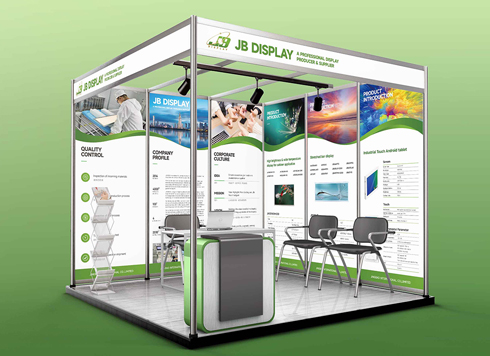 Booth Poster Design for Professional Monitor Product Suppliers
The standard exhibition booth poster projec ...
-
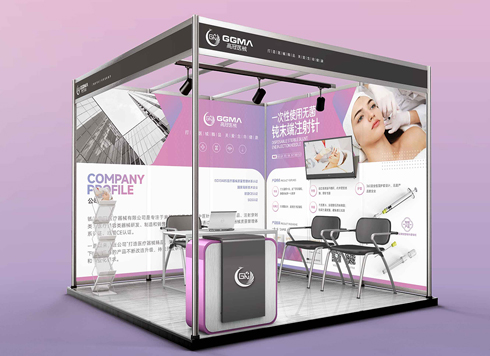 Design of Standard Exhibition Booth Posters for Beauty Instruments
Carefully designed a standard exhibition bo ...
-
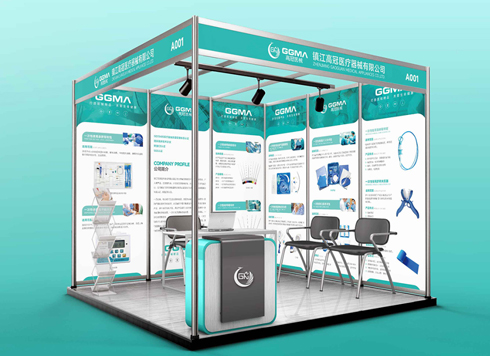 Design of Exhibition Posters for Medical Device Standards
XiYue is designing an exhibition booth post ...
-
 Collection of Brochure Design Cases in 2024 (Cover Series 02)
Our brochure design projects focus on diver ...
-
In-Store Guide Interface Design Guide: From Information Architecture to Delivery Acceptance
Date: Jul 30, 2026 Read: 106
-
Live Streaming Interactive UI Design Guide: Information Architecture, Interaction Logic, and Delivery Acceptance
Date: Jul 28, 2026 Read: 101
-
Form Design: A Complete Guide from Information Architecture to Delivery Review
Date: Jul 25, 2026 Read: 68
-
Government Approval Interface Design Guide: From Information Architecture to Usability Acceptance
Date: Jul 22, 2026 Read: 88
-
Key Considerations and Implementation Methods for ToB Commercial Interface Design
Date: Jul 16, 2026 Read: 74