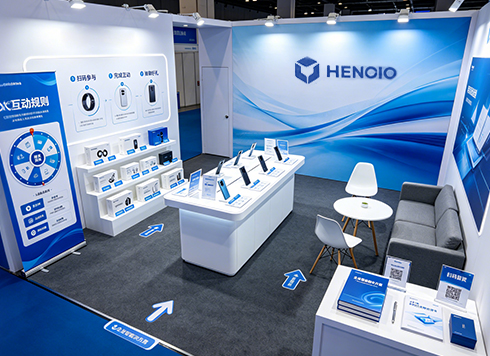





Graphic Design Project Delivery Process and Key Control Points
The core of graphic design project delivery lies in establishing a standardized phased process, rather than relying on single communication. In 2026, mature design teams generally adopt a four-stage model of "brief - draft - revision rounds - final lock," with clear deliverables and review checkpoints set for each stage, reducing rework rates by over 60%. Below details the operational points and common mistakes for each stage.
Requirement Confirmation and Brief Writing
The requirement confirmation stage is often underestimated, but it determines the direction of all subsequent work. Common practice in 2026 is to use a structured requirement template, including project background, target audience, delivery formats, visual references, and constraints. This template should be filled out and signed off by both the designer and the client.
- Required items: Brand color values, logo source files, font list, size specifications.
- Reference examples: Provide at least 3 directional references (competitors, styles, mood boards), with preferences and exclusions noted.
- Scope boundaries: Clearly state that this delivery does not include icon illustration, illustration, or animation, to avoid later scope creep.
A common mistake is when a client only verbally describes something like "high-end" or uses vague terms. In such cases, guide them to provide specific references, otherwise the design direction may deviate. A qualified brief should allow the designer to enter the creative stage without needing additional questions.
Creative Output and First Draft Review
For the first draft stage, it is recommended to provide 2-3 different directional concept options, each with a design rationale. During the review, focus on whether the requirements are met, not personal preferences. In 2026, many teams use online collaboration tools (e.g., Figma, Canva) to annotate feedback directly, avoiding email back-and-forth.
- Efficiency tools: Use Figma's comment feature to collect feedback; each piece of feedback must correspond to a specific location and revision opinion.
- Review criteria: Check against the brief item by item—color, typography, layout, information hierarchy, brand consistency.
- Time control: The client feedback window after the first draft should be no more than 3 working days; if exceeded, the project will be re-queued.
Compared to traditional email rounds (3-5 days per round), online collaboration can compress one round of feedback to 1 day. However, note that if feedback exceeds 10 items or involves directional adjustments, a second concept meeting should be initiated rather than making revisions one by one.
Revision Rounds and Version Management
Revision rounds are the most prone to losing control in a project. Convention in 2026 is to explicitly include 2-3 rounds of revisions in the contract, with additional rounds billed separately. Version management should follow a naming convention of "name + date + version number" (e.g., homepage_v2_20261015), and previous files should be retained for at least one month.
- Revision hierarchy: First round adjust layout and copy; second round refine color and typography; third round only allow micro-adjustments to spacing or alignment.
- Locking mechanism: Before final delivery, both parties confirm the revision list to avoid opening new issues.
- Counterexample: In one project, because requirements were not locked, the client requested a font change in the third round, leading to a complete overhaul—the responsible party should bear additional costs.
Good version management is not just an archiving habit but also a basis for dispute resolution. It is recommended to use Git LFS or built-in version history on design platforms, supplemented by manual change logs.
Final Delivery and Asset Archiving
Final delivery includes source files (e.g., AI, PSD), exported files (JPG/PNG/PDF), and design specification notes. In 2026, mainstream delivery standards require providing both dark and light background copies, as well as size variants adapted for different media.
- Package checklist: Source files, font package (or inform about fonts used), color profile, sliced image folders.
- Naming convention: Follow the rule "project name - content - usage - size - date", e.g., "ecommerce banner_main promotion_1920x1080_20261020".
- Archiving requirements: Upload all files to a cloud shared folder and send a delivery receipt. The client should provide final feedback within 7 working days after receipt, otherwise the delivery is deemed accepted.
Applicable Scenarios and Boundaries
This process applies to graphic design projects such as brand promotional materials, online ads, and e-commerce pages. It is not suitable for: large-scale illustration creation (requires separate illustration agreement), motion graphics, 3D rendering. Boundaries: When the project budget is below 5,000 RMB or the timeline is shorter than 3 days, the process can be simplified to a three-stage "brief + first draft + final draft," but risk is borne by the parties. For strategic brand design, it is recommended to involve a third-party reviewer to balance subjective judgment.
Frequently Asked Questions
How to control revision count without exceeding budget?
Clearly define the maximum number of revision rounds in the contract (usually 2-3), and allow only specific types of changes per round. Excess rounds are billed by the hour, with rates communicated in advance.
What to do when the client repeatedly says "it doesn't feel right"?
Guide the client to refer to the brief and point out specific phenomena rather than feelings, e.g., "this button is too low" is more actionable than "it doesn't look good." If multiple attempts fail to clarify, consider pausing the design and holding a requirement workshop to realign goals.
What if the client suddenly wants to add a page after submission?
This is a scope change. It is recommended to use a "change request form," re-quote based on the original unit price, adjust the timeline, and do not add it for free. Also, record the impact of the change on the overall schedule.
Should source files be given to the client?
Depends on the contract. If not specified, it is generally recommended to provide only final output files; if the client requests source files, an additional fee is charged (usually 20%–30% of the total project amount), while retaining copyright attribution clauses.
Action Guide: In 2026, whether you are a team manager or a freelance designer, establish the above four-stage process early and solidify the templates. Particularly suitable for startup brands or e-commerce operations teams, it can reduce communication friction. However, if your project is very small (single page, business card) or the client is highly professional (with an in-house design team), the process can be simplified. For high-complexity projects (e.g., full VI system, packaging series), consider collaborating with experienced outsourced teams (such as Xiyue Company) to refine standard operating procedures.
-
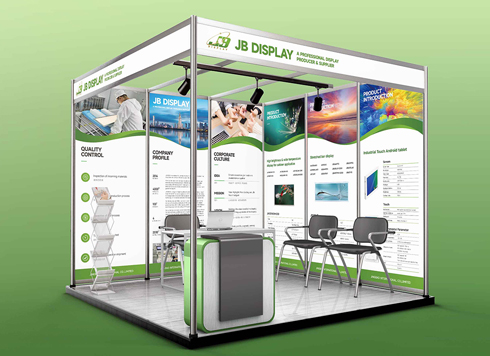 Booth Poster Design for Professional Monitor Product Suppliers
The standard exhibition booth poster projec ...
-
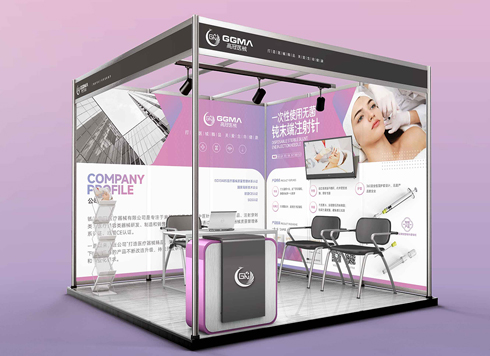 Design of Standard Exhibition Booth Posters for Beauty Instruments
Carefully designed a standard exhibition bo ...
-
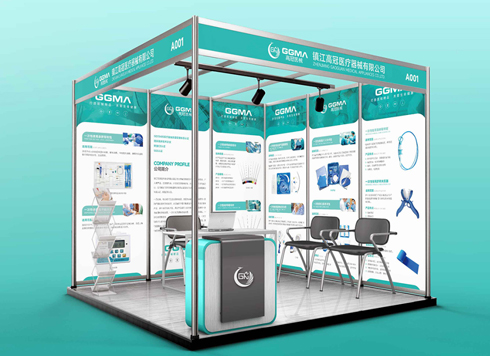 Design of Exhibition Posters for Medical Device Standards
XiYue is designing an exhibition booth post ...
-
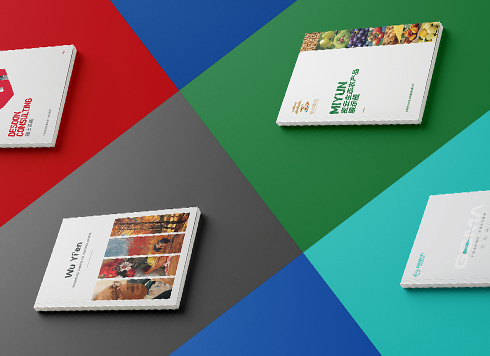 Collection of Brochure Design Cases in 2024 (Cover Series 02)
Our brochure design projects focus on diver ...
-
How to Run a Graphic Design Project: A Guide to Process, Pricing, and Acceptance
Date: Aug 10, 2026 Read: 42
-
Graphic Design Project Delivery Guide: From Requirement Confirmation to Acceptance
Date: Aug 6, 2026 Read: 49
-
How to Run a Graphic Design Project: The Complete Workflow from Requirements to Delivery and Acceptance
Date: Aug 5, 2026 Read: 48
-
How to Do Graphic Design: Workflow, Options, and Common Pitfalls
Date: Aug 4, 2026 Read: 55
-
What Is the Graphic Design Project Process? Four-Stage Implementation Method and Common Pitfalls
Date: Jul 31, 2026 Read: 46