



Is it too late to add VI six months after opening if the takeout bags and menu were designed separately?
For a single small shop that does not plan to open another location in the short term, retroactive VI is still worth doing, but in most cases it does not need to become a full, thick manual built to chain scale.The basis for the decision is not budget size but three numbers: how many material touchpoints will carry brand information within a year, how many of them must be handed to external producers, and how many times information such as menu prices changes in a year. Based on common 2026 delivery experience, a more common approach for a single store is a 6–10 page lightweight identity package that fixes the logo, colors, typography, and four or five high-frequency materials, with the rest added as the store gets running.
The VI a single store needs is not the same thing as a chain’s VI
The essence of VI system design is not producing a booklet; it is writing brand identity into rules that other people can also follow and execute. A chain needs to solve “one hundred stores look like one brand,” while a single store needs to solve “this one store of mine looks like one brand from the storefront to the takeout bag.” With different goals, the manual’s granularity, approval chain, and version-management needs naturally differ; directly copying a chain template often results in a thick manual that the store cannot use.
The users are also different. In a chain, the people executing the rules are franchisees, regional marketing teams, and outsourced producers; if the rules are not in place, errors occur across dozens of stores at the same time. In a single store, the people executing are often the owner plus one or two staff members, and many decisions are settled in one sentence on WeChat. If the rules are written to be more complex than actual execution, it is the same as not writing them.
- Number of touchpoints: A single store commonly has 6–12 high-frequency materials, including storefront, menu and price list, business cards, packaging bags, takeout stickers, uniforms, roll-up banners, and social media avatars; a chain usually has more than 30.
- Share of outsourced production: About half of a single store’s materials go to printers, advertising shops, or embroidery factories, and this part needs to be constrained by written rules.
- Decision-makers: A single store usually has 1–2 people making the final call, while a chain goes through multiple approval layers, so a slightly loose rule gets amplified layer by layer.
- Cost of errors: For a single store, misprinting a batch of packaging bags often means a loss in the thousands of RMB; for a chain, that multiplies by the number of stores.
Count three numbers first, then decide how thick the deliverable should be
Why count first and ask afterward, instead of looking at the budget first? Because budget determines how detailed the work is, not whether it should be done. Use the three numbers first to judge scale, then use one question to determine granularity; this avoids two common extremes: spending tens of thousands of RMB on a manual nobody opens, or opening with just a logo image and then re-matching colors every time a new material is made.
- Count touchpoints: Make a list of materials that will carry brand information within a year. If there are more than 8–10 items and at least 3 of them need outsourced production, written rules are usually needed.
- Count external producers: If there is only one long-term printer or advertising shop, WeChat communication may still barely work; once there are more than 2–3, verbal transmission starts to drift.
- Count changes within a year: How many times do the menu, prices, address, and featured items change in a year? The more frequent the changes, the more the manual should be written as a template with “fixed areas plus variable areas,” rather than drawing every material as a fixed artwork.
- Ask who executes: If the person making materials is not you and may change, the rules need to be put on paper; otherwise every new staff member requires the same explanation again.
What is easily missed is step 1: main images on takeout platforms, social media avatars, uniforms, and storefronts are often excluded from “materials,” yet these are exactly what customers see most often. Step 3 determines the manual format: a brand that changes only once a year is suited to detailed writing, while one that runs promotions frequently is better served by templates and variable areas.
What is the difference between a lightweight identity package and a full manual?
Neither option is inherently better; the question is fit. The common situations below are listed by dimension. Timeline and cost are experience ranges, affected by the number of decision-makers, completeness of materials, and producers’ schedules, and are not a quotation commitment.
- Best fit: A lightweight identity package suits a single store, an early-stage business, or a brand whose tone is still being validated; a full manual suits multiple stores, preparation for franchising, or cases where the brand needs to be licensed externally.
- Deliverable thickness: A lightweight package commonly has 6–10 pages of core rules plus 4–6 material templates; a full manual commonly has 40+ pages and covers office, environment, packaging, and online applications.
- Timeline: The experience range for a lightweight package is 2–4 weeks; the experience range for a full manual is 6–10 weeks.
- Cost: The experience range for a lightweight package is from several thousand to more than 10,000 RMB; the experience range for a full manual is from just over 10,000 to tens of thousands of RMB; projects including photography, font licensing, or illustration will be higher.
- Ongoing maintenance: A lightweight package can be expanded page by page as needed; a full manual requires version management and execution training, otherwise old and new rules are likely to coexist after six months.
A verifiable comparison should look not only at price but also at whether “a different staff member or a different printer can produce the same set of outputs.” If a lightweight package achieves this, it is more practical than a thick manual; if a full manual lacks dimensions, color values, and margins, more pages only make it a collection of mockups.
On the delivery site: what to lock first when the opening date is fixed and materials are incomplete
A common situation in projects is that the opening date is fixed first and materials are filled in later. When the budget is held in the range of just over 10,000 RMB and the timeline is only two or three weeks, the client often has only a few phone photos of the old sign and a handwritten menu on their phone. In common delivery practice, at this point lock three things that cannot move: logo proportions and clear space, the print specification for the primary colors, and the information hierarchy; then split the takeout bag and storefront lightbox into two separate pages, and provide templates for the remaining materials first.
The costs are also concrete: because the storefront did not have a synchronized nighttime illuminated artwork, the sample showed gray lettering at night and required one rework; the packaging bag was changed from spot color to four-color process, the color difference was within an acceptable range but new proof approval was needed, and the overall schedule was delayed by 3–5 days. Another bottleneck is the number of revision rounds. With fewer decision-makers in a single store, it may look fast, but in practice it is common to like something today and change your mind tomorrow; 3–5 revision rounds is a typical range. The control method is to sign off “the logo itself” and “material applications” separately: once the logo is finalized, it no longer changes, and material adjustments are discussed only within layout and copy, which can save a large amount of rework.
When it is worth doing, and when it can wait
The signals that it is suitable are fairly clear: more than 6 types of materials within a year; work handed to external producers; a possibility of opening a second store, even if only a plan; and store image directly affecting whether customers enter and how much they spend. In these situations, the difference between writing rules and not writing them will show within six months.
There are also cases where a full set is unnecessary: a stall or counter that cannot produce many materials in a year, an online presence limited to one small platform store, a brand in the early validation stage that may change its name or category within three months, and temporary activities that need only one opening poster.If fewer than 3 materials are outsourced for production within a year and the person executing is always the same person, the return on a written manual is usually lower than putting the same budget into one professional photo shoot and a qualified set of basic layouts.
Frequently asked questions
What budget range is typical for retroactive VI for a single store?
Based on common 2026 delivery situations, the experience range for a single-store lightweight identity package is from several thousand to more than 10,000 RMB, including logo cleanup, color and typography rules, and 4–6 material templates; projects requiring photography, custom fonts, or illustration will be higher.
The store is already open—is it still in time to add VI retroactively?
Yes, and it is common. The approach is to first inventory existing materials, reverse-engineer the layouts already in use into rules, and then unify the logo, colors, and typography; the cost is that printed old materials need to be replaced in batches, and it is not recommended to discard them all at once.
Does a VI manual have to be printed as a paper book?
Not necessarily. In a single-store context, a PDF plus editable templates is usually enough; the key is embedding fonts and specifying dimensions and color values. A paper copy becomes more meaningful when franchisees or producers need to compare against it on site.
If the printer says the standard color must use a spot color, do I have to follow it?
You do not have to follow it automatically, but ask why. Spot color is more reliable when the volume is large, the color area is large, or the brand color is sensitive to color difference; when the volume is small or the color itself is easy to reproduce, a four-color approximate substitute with proof approval is also common, and the substitute color values need to be noted in the file.
The next step is to list the materials needed within a year, mark which ones need outsourcing and who will produce them, and then decide whether to do a lightweight identity package or a full manual. If the store is opening within three months and materials are already being scheduled, first use the logo vector file, color specification, and minimum layout standards to lock down the storefront and packaging bag—the two items most prone to rework—and fill in the remaining standards as the opening schedule allows.
-
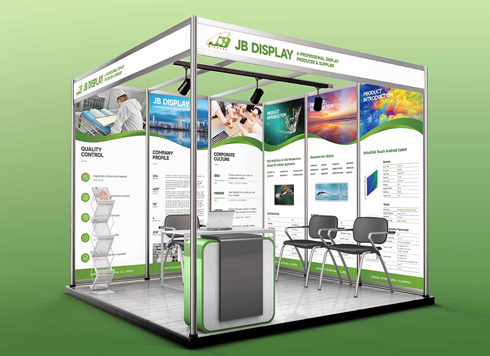 Booth Poster Design for Professional Monitor Product Suppliers
The standard exhibition booth poster projec ...
-
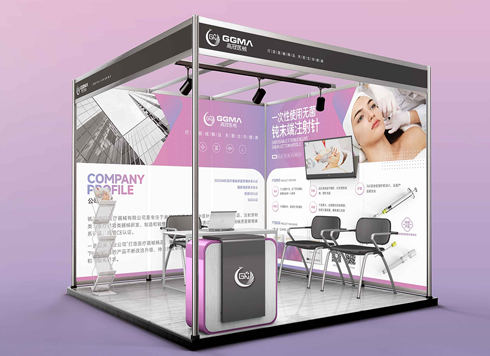 Design of Standard Exhibition Booth Posters for Beauty Instruments
Carefully designed a standard exhibition bo ...
-
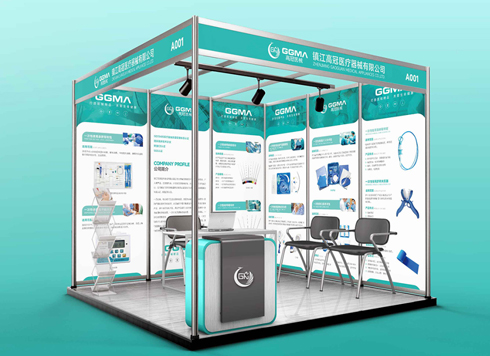 Design of Exhibition Posters for Medical Device Standards
XiYue is designing an exhibition booth post ...
-
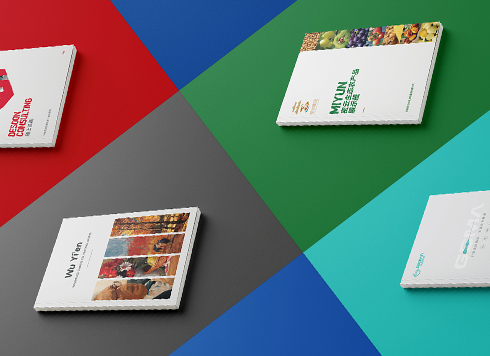 Collection of Brochure Design Cases in 2024 (Cover Series 02)
Our brochure design projects focus on diver ...
-
If the logo is finalized and I only received a PDF, and we need to switch printers for packaging next month, can I still ask for the source files now?
Date: Nov 2, 2026 Read: 1
-
Brochure laid out as A4 but finished size is large 16mo: scale the design down or ask the printer for a separate A4 sheet?
Date: Nov 1, 2026 Read: 7
-
Does the main packaging headline font need a separate commercial license—should the designer swap it out or should the brand buy it?
Date: Oct 31, 2026 Read: 11
-
If a storefront poster headline looks gray from two meters away in daytime backlight, should I enlarge the text or change the background color?
Date: Oct 30, 2026 Read: 9
-
A thin booklet starts every chapter on a right-hand page and adds 10+ blank pages—should you change the binding first or the chapter-start rule first?
Date: Oct 29, 2026 Read: 16