



Why does a 24-page brochure layout get imposed as 28 pages at the printer?
A brochure design file laid out at 24 pages but imposed as 28 pages by the printer is usually not the printer adding pages at will: a full sheet printed on both sides, then folded and trimmed, commonly produces 4 pages per signature, and saddle stitching and perfect binding require pages to be combined by signature — so page counts like 4, 8, 16, 24, and 32 run more smoothly in 2026 project delivery. Going from 24 pages to 26 is usually not impossible; it may mean an extra separate imposition, two filler blank pages, or a change in signature count for binding, and both cost and lead time shift with it. The earlier the page count is aligned with the printer's imposition sheet, the lower the chance of later rework.
First, the boundaries: this covers printed brochures that need folding and binding, such as corporate brochures, product catalogs, annual books, and event handbooks. Single-sheet flyers, tri-fold leaflets, menu inserts, and digital PDF brochures do not follow the same page-count logic. Whether a brochure page count works comes down to three variables: binding method, trim size, and pages per printed sheet (imposition). When these three are not aligned, rework such as "the content is laid out, but the printer says the page count doesn't match" becomes more likely.
Why brochure page counts commonly increase in steps of 4
Printing presses commonly run full sheets or half sheets, printing part of the page numbers on the front and part on the back, then folding and trimming. One folded half sheet commonly produces 4 page numbers, so adding pages in steps of 4 keeps imposition relatively smooth. Under the production habits of many printers in 2026, combinations like 4, 8, 12, 16, 24, and 32 pages can more easily use existing imposition templates, and the page order after folding is less likely to go wrong.
When the page count is not a multiple of 4, the printer is not unable to do it; it simply often requires adjusting the imposition separately, adding blank pages, or changing the fold. Separate imposition takes up extra plate positions, and for small runs the cost spread across each copy may rise; adding blank pages disrupts reading rhythm, and readers who hit a blank page may think something failed to print. For designers, page-count planning belongs before content layout, not after layout is done and you ask the printer whether it can be printed.
- Imposition logic: one sheet folded in half commonly yields 4 pages; when the page count rises in steps of 4, imposition is smoother, and page order after trimming is more stable.
- Binding logic: saddle stitching binds by nested signatures, each commonly combining in multiples of 4 pages; perfect binding stacks signatures, so the page-count combination also has to align with signature counts.
- Cost logic: page counts in multiples of 4 usually reduce separate imposition and manual page pairing, and within the experience range can save some plate-making and folding labor.
A common trap: the designer lays out the content in 16 pages, the client adds a brand introduction at the last minute to 17 pages, the printer imposes it as 20 pages, and the extra 3 pages can only be blank or stuffed with content — the layout rhythm breaks, and files have to be exported again. That cost usually does not show up in the design fee; it shows up in lead time and re-exported files.
How page count, binding method, cost, and lead time line up
Whether a brochure page count holds up ultimately depends on the binding method. Saddle stitching suits booklets with fewer pages, perfect binding suits brochures with a medium-to-higher page count, and sewn perfect binding (lock-stitch) suits booklets with more pages that need to lie flat. Based on 2026 project delivery experience, the typical page range for saddle stitching is about 8–48 pages, perfect binding about 32–200 pages, and sewn perfect binding is typically considered from 80 pages upward. Going outside these ranges is not impossible, but binding stability and the reading experience change.
On cost, more pages raise the total price, but per-page cost often spreads thinner as print quantity rises. If you only print two or three hundred copies, separate imposition and extra folding steps feel expensive; if the run reaches a few thousand copies, the imposition advantage of multiples-of-4 page counts becomes clearer. Before quoting, designers are safer to first confirm print quantity and binding method, or page-count advice can easily miss the mark.
- Saddle stitching: typical page range about 8–48 pages, relatively low cost, suitable for product booklets and event handbooks; with too many pages, the middle tends to bulge and the feel when flipping changes.
- Perfect binding: typical page range about 32–200 pages, flat spine, suitable for corporate brochures; too few pages make the spine too thin, and binding stability may drop.
- Sewn perfect binding: typical page range from about 80 pages upward, lies flat, suitable for brochures with many pages and many spreads; more production steps mean a higher unit price and a lead time that needs to be reserved.
A checkable comparison looks like this: with few pages and a tight budget, saddle stitching is more common, with page counts combining as 8, 16, or 24, and the cost of changing pages is relatively low; with a medium page count and a spine, perfect binding is more common, with page counts combining as 32, 40, or 48, and spine thickness needs to be calculated in advance; with many pages and a need to lie flat, sewn perfect binding is more common, with page counts combining as 80, 96, or 112, and both binding lead time and cost need to be reserved. These are all typical experience ranges, not fixed thresholds; the specifics also depend on paper weight, trim size, and the printer's equipment.
When the page count doesn't match, what are the common fixes?
When the content page count and the printer's imposition page count don't match, don't rush to cut content first. A steadier order is to confirm the binding method and trim size first, then adjust content pages, and handle blank pages last. Following a four-step check can reduce back-and-forth revisions.
- Decide the binding method first: saddle stitching, perfect binding, or sewn perfect binding sets the baseline for how pages increase.
- Then set the trim size and sheet: A4, square, portrait 16mo, and similar trim sizes affect how many page numbers fit on one sheet.
- Check content pages: mark the pages that must stay, then see which pages can be merged, split, or moved to a separate booklet.
- Plan blank pages: if you need to reach a multiple of 4, blank pages sit more naturally between chapters or before the back cover — not in the middle of continuous content.
To judge whether a fix is acceptable, check two things: whether page order is correct after folding, and whether blank pages leave the reading logic intact. If the page order on the printer's imposition sheet is out of position, even a strong layout fails after binding. Fixes usually come in three forms: adding blank pages, separate imposition, and splitting into a separate booklet. Adding blank pages costs relatively little but affects reading rhythm; separate imposition is flexible but spreads poorly on small runs; splitting into a separate booklet suits projects with independent content modules, though lead time and binding cost increase.
On the delivery floor: the cost of going from 24 pages to 26 pages
At one project delivery, the constraints were a small print run and only a few days of lead time left; the client wanted to add two pages of new-product introduction to an already laid-out 24-page brochure while keeping saddle stitching. The designer added the two pages and sent it to print, and the printer imposed it as 28 pages with two blank pages added. After saddle stitching, consecutive blank pages appeared in the middle; at acceptance the client thought pages were missing and asked to bring it back to 24 pages. The result was an extra round of revisions, a re-export, and use of the printer's originally scheduled production time.
Later we changed the approach: first ask the printer for the imposition sheet, compress the new-product introduction into an existing spread, and make a local replacement, keeping the page count at 24. In that process, page count is not purely a design question; it is decided together with binding, imposition, and content trade-offs. Under 2026 project delivery habits, locking page count, binding method, and print quantity before layout changes lowers the probability of later revisions considerably. In experience ranges, if the page change is 2–4 pages, adding blank pages or moving back to the original page count is often less trouble than re-imposing; if the change exceeds one signature, splitting into a separate booklet or changing the layout is usually steadier.
Where it applies, and where it doesn't
The multiples-of-4 page-count logic suits printed brochures that need folding and saddle stitching or perfect binding, especially corporate brochures, product catalogs, annual books, and event handbooks. It suits projects with a relatively clear print run where content needs to be bound into a booklet; it also suits situations where designers need to estimate imposition and cost in advance.
It does not suit single-sheet posters, tri-fold leaflets, one-sheet flyers, digital PDF brochures, or long-form graphics meant mainly for screen reading. Single-sheet materials have no folding or binding, so increasing pages in steps of 4 is meaningless; digital brochures are not limited by printed sheets, and forcing a multiple of 4 wastes layout space. If a brochure is printed in only a few dozen copies with very little content, it doesn't have to be forced into 16 pages — an 8-page saddle-stitched booklet may fit better.
- Suits: printed brochure projects that need to be bound, have a clear print run, and may have changing page counts.
- No need to apply: single sheets, folded leaflets, digital brochures, menu inserts, and other materials that don't depend on sheet imposition.
- Boundary note: whether page count follows multiples of 4 is ultimately set by the printer's imposition sheet and binding method; the design file's page count is only an input.
FAQ
Can a brochure not be printed if its page count isn't a multiple of 4?
It can be printed, but the usual imposition is more roundabout. Increasing in steps of 4 reduces separate imposition and folding adjustments; when the count isn't a multiple of 4, printers commonly add blank pages or impose separately, which changes cost and lead time.
Can paying more solve going from 24 pages to 26 pages?
Paying more usually solves it, but it depends on the binding method. Saddle stitching may add two blank pages, and perfect binding may adjust signature counts; it is steadier to ask the printer for the imposition sheet first, then decide whether to add content or move back to 24 pages.
Do digital brochures also need to reach a multiple of 4?
No. Digital brochures aren't limited by sheet folding, so pages can follow reading rhythm; forcing a multiple of 4 easily adds blank pages and hurts screen reading. If the same brochure is also printed, check against the print imposition separately.
Does more pages always mean lower per-page cost?
Usually not. Per-page cost spreads thinner mainly as print quantity rises, while more pages push up the total price. Only when the print run is large enough do the spreading effects of imposition and folding become clearer; check the specifics against the printer's quote range.
How do you choose between saddle stitching and perfect binding by page count?
With few pages, saddle stitching is more common; with a medium-to-higher page count, perfect binding is more common; with many pages that need to lie flat, sewn perfect binding is worth considering. The typical ranges overlap, so the final choice depends on paper weight, trim size, and the printer's equipment.
If you're about to start a brochure, settle four numbers first — binding method, trim size, target page count, and print quantity — before design moves into interior layout. Under 2026 project delivery habits, confirming this page-count checklist earlier lowers the chance of later revisions and added blank pages. It applies to printed brochures that need binding; single sheets, folded leaflets, and digital brochures don't need the multiples-of-4 rule. Aligning page count with the printer's imposition sheet at project kickoff before visual design usually reduces late-stage delivery rework.
-
 Booth Poster Design for Professional Monitor Product Suppliers
The standard exhibition booth poster projec ...
-
 Design of Standard Exhibition Booth Posters for Beauty Instruments
Carefully designed a standard exhibition bo ...
-
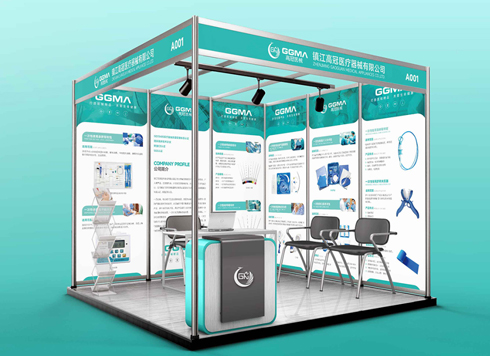 Design of Exhibition Posters for Medical Device Standards
XiYue is designing an exhibition booth post ...
-
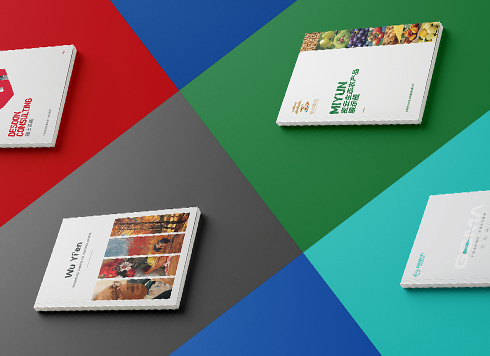 Collection of Brochure Design Cases in 2024 (Cover Series 02)
Our brochure design projects focus on diver ...
-
Inner pages switched from 80g to 105g—does the spine width need recalculating? Is there still time if the cover is already laid out?
Date: Sep 19, 2026 Read: 7
-
Brand Color Doesn't Match Between Two Packaging Print Runs—Will Paying Extra for a Spot Color Keep It Consistent?
Date: Sep 18, 2026 Read: 7
-
Brochure stuck at 48 pages: saddle stitch or perfect binding?
Date: Sep 17, 2026 Read: 12
-
Why does the same design look clear on a computer but gray and blurry when sent to WeChat?
Date: Sep 15, 2026 Read: 18
-
Why does the same foil stamping look premium on someone else's brochure but cheap on mine?
Date: Sep 14, 2026 Read: 19