



Changing from 16mo to 32mo: Which Is More Reliable, Direct Proportional Scaling or Full Reformatting?
Conclusion first: when changing from 16mo to 32mo, do not directly scale down proportionally. What shrinks is the page size; if the font size and line spacing follow along, the finished product tends to show problems such as tiny text, empty pages, and blurry images. The correct approach is to reset the type area and text parameters according to the new format, then check image resolution and bleed areas one by one.
What exactly does proportional scaling lose?
Format is just a simple name for paper size. A common 16mo finished size is about 185×260 mm, and a common 32mo is about 130×185 mm. Some people treat this ratio as roughly 0.7× and directly scale the page in layout software, only to run into three pitfalls.
- Font size drops below a comfortable reading level: After scaling down the body text proportionally from the original format, some annotations fall to 6–7 pt, which is hard to read even on a printed proof, let alone in a full print run.
- Type area and margins become unbalanced: As the page width-to-height ratio changes, the original fixed margins can look too wide or too cramped, and the spacing between images and text becomes uncoordinated.
- Actual pixel resolution of images does not increase: Shrinking the display does not equal increasing resolution. If the original image was just barely adequate in the old format, a slight reduction may hide problems; but when you need to enlarge a portion or handle a cross-page bleed, the graininess immediately appears.
First distinguish the applicable boundaries: which books can be scaled, and which need full reformatting
Not every 16mo to 32mo change requires starting the layout from scratch. If the content is mostly continuous text, with almost no columns, tables, or side notes, few images that do not cross pages, and the binding method remains unchanged, you can consider applying a local scale to the new page size and then checking page by page. However, such cases are not common in formal publications.
- Suitable for scaling with fine-tuning: Informal manuals, internal training materials, electronic presentation files, or lightweight albums with minimal content and ample white space; the finished product is for short-run printing only, and slightly smaller text is acceptable.
- Full reformatting is recommended: When the manuscript contains many image-text comparisons, note columns, data tables, or cross-page images. Switching from 16mo to 32mo reduces the area by nearly half, making the original column structure and image-text arrangement easily cramped. If the binding method also changes, full reformatting is recommended rather than direct scaling.
A useful criterion: if more than one third of the objects on a page need manual repositioning, full reformatting is usually more time-efficient than adjusting page by page, and it is more likely to pass print review.
Cost, timeline, and typical ranges for full reformatting
Here are typical experience ranges from 2026 projects as a reference: for a text-only manuscript changing from 16mo to 32mo, the full reformatting and pre-press check cycle is usually 1–2 weeks; for mixed image-text or albums with cross-page layouts, the typical range is 2–4 weeks. If only PDFs or scanned files are available and you need to rebuild the files, estimate the schedule at the upper end of the range.
Regarding cost, per-page typesetting prices fluctuate with layout complexity. Based on common experience ranges, a text-only manuscript is roughly 15–35 RMB per page, and an image-text album is about 40–60 RMB per page; some regions or rush orders may push prices higher. Proportional scaling has almost no design cost, but if the proof fails and the whole batch is scrapped later, the extra expense can easily exceed the saved typesetting fee. Therefore, before commissioning, confirm whether the quotation includes digital proofing and one round of physical proofing.
Before changing the format, get these three numbers from the print shop
Proportional scaling often fails because the real constraints of the printing process have not been addressed first. Before starting, obtain the finished size, bleed value, and binding method from the print shop—do not rely solely on the memory of the format name for your settings.
- Finished size and bleed: The format name does not equal the final trim size. Ask the print shop to confirm the new width and height, and request the recommended single-side bleed, typically about 3 mm.
- Binding method and page turn direction: Perfect binding, thread-sewn binding, and saddle stitching have different requirements for the binding edge and fore-edge margins. Saddle-stitched pages may also shift when turned due to paper thickness, so extra allowance is needed.
- Minimum acceptable font size and image resolution: Ask the pre-press supervisor directly about the smallest annotation size in points and the required dpi for images at actual print size—do not leave it until proofing.
I remember a format change project in 2026 where the client specified the format from experience, but the actual trim size from the print shop was 2 mm narrower than the usual standard, causing rework when the files were already done. Once these three numbers are confirmed, the page size and margin settings can be stabilized in one go.
Delivery scene: how to change a 16mo with only old PDFs into a 32mo pocket book
Here is an actual project I handled: a client brought a discontinued 16mo internal publication, the original layout files were lost, and only a print-grade PDF remained. They wanted to convert it to a 32mo pocket book within a limited schedule, while preserving the cross-page images at the beginning of each chapter. The challenge was that the original cross-page images were just sharp enough for the old format, but if they continued as cross-page spreads in the new format, the small text inside the images would become much smaller than in the 16mo version.
We did not scale proportionally. Instead, we first calculated the usable size of each cross-page image within the 32mo type area. For the three cross-page photos that had to be kept, we offered two options: A, change to single-page bleed, or B, shrink and place inside the type area. The client chose A, which meant some cropping on the left and right and slightly stronger grain in parts, but the reading rhythm of the whole book was preserved. Full reformatting and digital proofing took 13 working days, falling in the middle of the 2–4 week typical range for mixed image-text work. Because we ran split-image tests in advance, the physical proof passed on the first attempt, and no rework was needed after the batch went to press.
My takeaway from this project: first judge whether the original materials can support the new format, then decide the schedule and budget—this is more reliable than relying on automatic scaling. If we had simply delivered scaled pages, we would have only seen the problems and blurred images at the proofing stage, and the reprint cost would have far exceeded the budget of typesetting for one more week.
When you receive the new book sample, check these four spots first
After the digital or physical proof comes back, do not just look at the cover. Focus on four areas:
- Smallest font size page: Turn to chapter notes, the copyright page, or page corners, and check in natural light whether you can read without a magnifier.
- Balance on both sides of the type area: Compare against the layout file to see if the margins are even and whether the binding line presses into the text.
- Cross-page and bleed edges: Check that the center lines of facing pages align and that no white borders appear at the trim positions.
- Tables and side note positions: Confirm that large tables are not truncated and that spacing between side notes and body text conforms to the layout specification.
The acceptance standard is not “the same font size as the old book,” but “still easy to read in the new format without breaking the layout.” The first proofing cost typically ranges from a few hundred RMB; spending this can expose three kinds of problems—minimum font size, images, and binding—before mass production.
FAQ
Are 16mo and 32mo fixed dimensions?
No. A common 16mo is about 185×260 mm, and a 32mo is about 130×185 mm. Different paper specifications and print shop trimming may cause slight variations. Before making changes, rely on the finished size provided by the print shop, not just the format name.
My font size did not get smaller after scaling, so why is there still a problem?
Because the page shrunk but the font size did not change, readability is preserved, but the line spacing, type area, and image positions are still arranged according to the old proportions, so the overall layout can feel crowded or the page may appear empty.
The original image was sharp in 16mo, so why does it look blurry when scaled down to 32mo?
Shrinking the display does not automatically add pixels. The original image met the printing requirements of the old format, but when you need to enlarge a portion or crop it in the new format, the actual pixel count is insufficient, so blurriness appears.
Can you reformat from a PDF without the layout files?
Yes, but treat it as a file rebuild project. You first convert to high-resolution images, then recreate the layout and verify fonts and text. The timeline and cost will be higher than for projects with source files.
Is it necessary to make a proof before changing the format?
For formal printing, proofing is recommended. The proofing cost typically ranges from a few hundred RMB, but it can identify problems with the smallest font size, cross-page images, and binding margins in advance, avoiding the need to scrap the entire batch.
Back to the original question: when changing from 16mo to 32mo, full reformatting is usually more reliable than proportional scaling. As long as the final product is a formal printed publication, it is worth resetting the type area, font size, and image parameters before discussing cost and speed. Before starting, remember to get those three numbers from the print shop: finished size, bleed, and binding method.
-
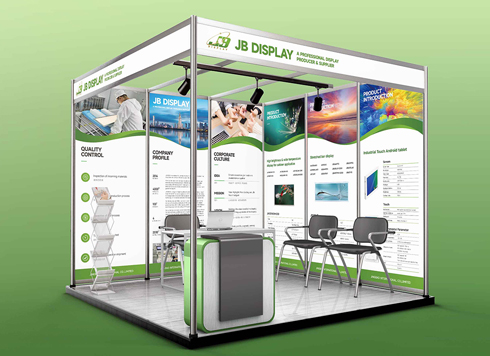 Booth Poster Design for Professional Monitor Product Suppliers
The standard exhibition booth poster projec ...
-
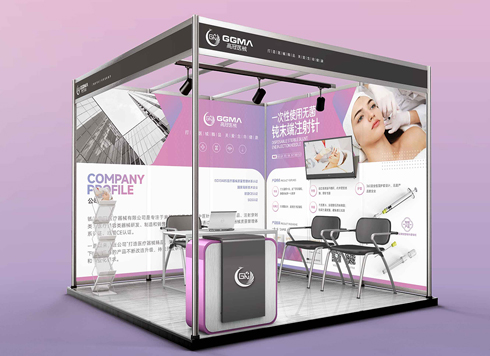 Design of Standard Exhibition Booth Posters for Beauty Instruments
Carefully designed a standard exhibition bo ...
-
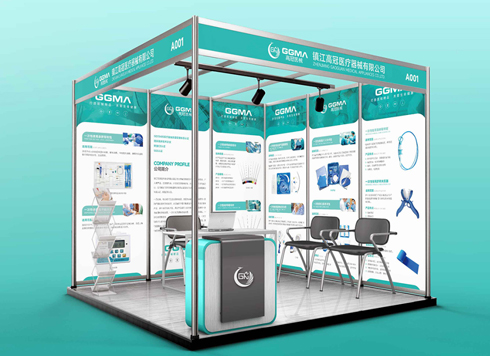 Design of Exhibition Posters for Medical Device Standards
XiYue is designing an exhibition booth post ...
-
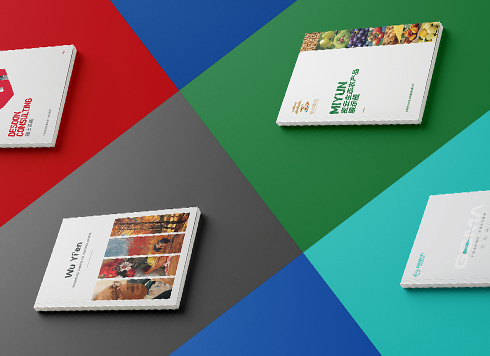 Collection of Brochure Design Cases in 2024 (Cover Series 02)
Our brochure design projects focus on diver ...
-
Art paper covers lose their feel when laminated, but unlaminated covers wear out: what is the right trade-off?
Date: Oct 20, 2026 Read: 5
-
When a pack front is packed with selling points, why does the shelf shopper pick up the less-wordy pack next to it?
Date: Oct 19, 2026 Read: 9
-
Full-bleed poster shows white edges after trimming—printer says the file has no bleed. How much should I believe that?
Date: Oct 18, 2026 Read: 9
-
At the same font size, English looks thinner than Chinese in mixed text—can making the Western type larger really make up for it?
Date: Oct 17, 2026 Read: 10
-
The sub-brand is still internal-only—should the VI system include the master–sub relationship in advance?
Date: Oct 16, 2026 Read: 15