

When Should Image Licensing Fees Be Charged Separately in a Poster Quote?
Whether image licensing fees should be billed separately is not primarily about how high the design fee is, but about the number of stock images and the scope of license defined in the contract. Based on 2026 project delivery practices, a commercial poster design quote usually already includes standard commercial licenses for two to four stock images from shared libraries. Only when the number exceeds that, or when a buyout license or custom photography is required, should the asset fee be calculated separately. Confirming first how many images are included in the quote and whether the license covers your intended use is more important than looking at the total price alone.
Three Common Charging Methods: Where the Image Fee Lands
Whether the image fee is billed separately depends first on how the entire quote is packed. Many buyers compare two quotes and see only the difference in total price, not realizing that the difference may come from the image assets rather than the design itself.
- All-inclusive flat fee: The design fee and licensing fee for commonly used stock libraries are combined. This suits materials that are updated frequently, such as one-off posters or headers for WeChat official accounts. A common agreement is to include standard commercial licenses for 2–4 stock-library images, with each additional image charged separately.
- All-inclusive capped image count: The contract states that the total fee includes licenses for 10–20 royalty-free images, limited to the enterprise and a specified project. This fits one-time print materials such as investment brochures and product catalogs. Images beyond the cap are generally billed at the stock library’s actual purchase price.
- Agency procurement of assets: Design fees and asset fees are listed separately. The designer assists in purchasing, and the client settles at actual cost; some teams add a small procurement service fee. This suits projects with high requirements for image resolution, style consistency, or uniqueness.
A common misunderstanding is to equate “using an image from a stock library” with “being free to use the image anywhere.” The standard license from a stock library is generally sufficient for most posters, brochures, and webpages, but it does not allow reselling the image or registering it as a trademark. If the image is to be used on non-standard media such as elevator frames or shopping-mall screens, the standard license usually needs to be upgraded to an extended license, and the cost will rise accordingly.
Three Steps to Verify Whether an Image Fee Is Reasonable
Instead of repeatedly asking “why is it so expensive?” during inquiry, break the quote down with the following three steps; this will filter out most unreasonable markups.
- Confirm the license type. First find out whether the quote covers a standard commercial license from a stock library, an extended license, or a buyout license. The standard license already covers most poster, brochure, and webpage scenarios.
- Confirm the number of images and usage channels. If the same image is used on packaging, the official website, in-store displays, or online advertising, different scenarios may require different license terms. Check whether those channels are covered by the license being granted.
- Confirm the rules for image replacement and refunds. If you swap in a different style of image at the first-draft stage, is there an extra fee? If the image must be replaced after final approval because of content changes, how is it counted? Asset fees are generally non-refundable, but replacing with a similar style within the agreed number of revision rounds is usually not charged separately.
Based on our project delivery experience, here are a few typical ranges: the single-image purchase price of a standard stock license is usually several dozen to several hundred RMB; an annual subscription lowers the effective per-image cost. Buyout licensing or custom photography usually starts at several thousand RMB. If the image fee listed in a poster quote is more than half of the total design fee, it is often because a special channel license or custom shooting is involved. In that case, go through the authorization files and usage notes item by item.
A Real Project Example: Align Constraints First, and the Image Fee Is Not Wasted
In a store-opening poster project, the client found a planet image online and wanted to enlarge it directly as the background. The original file was small and would inevitably be blurry at print size. Our approach was to first produce a complete layout using a commercial high-resolution image, then make a partial comparison at the maximum size the client’s original could tolerate. At the same time, we listed the real cost ranges of the two options: buying the licensed image would account for about 10–20% of the total project quote, which is a typical range for this type of material. Forcing a low-resolution image would save that asset fee, but the labor and materials to reprint a poster are often more expensive than buying the image. The client finally chose to buy the license.
The key constraint in this project was that the visual would only appear on a store roll-up banner and in a WeChat official account post, with no outdoor screen or TV use, so there was no need to buy a higher-level media license. The image fee did not overpay for premium licenses that would not be used, nor did saving money on the image lead to a deliverable that could not meet the print size requirement.
Three Areas Where Disputes Are Most Likely, and How to Close Them in Advance
Based on our design delivery experience, image-fee disputes tend to occur in three places.
- Client-supplied images: Many “high-resolution” images saved from webpages or WeChat are not original files, and their copyright is unclear. You can ask the client for a reliable source link or proof of purchase before deciding whether the image can be used.
- Casual borrowing: Occasionally a designer puts an image from a search engine into a mockup. No problem is visible in the preview, but the infringement risk may surface only after printing or distribution. Before final handover, check the source and license status of every image one by one.
- Verbal confirmation: A group chat message like “just use the image” provides no evidence if something goes wrong later. The correct practice is to archive screenshots of the stock library name, purchase receipt, and license scope, and deliver them alongside the source files.
If a client insists on using an image with unknown provenance or insufficient resolution, the design party is better off not taking on that risk. When it is unavoidable, at least note on the confirmation sheet that “the client is responsible for insufficient pixel quality and licensing compliance,” making the responsibility boundary visible.
Contract and Confirmation Sheet: Put Four Things in Writing
If you want the asset fee not to become a point of contention, the rules should be set down in the contract from the beginning.
- Number of included images and license level: for example, “Includes 3 images under the standard commercial license of [stock library name], for use only in this poster on WeChat official accounts and offline event materials.”
- Pricing for the excess: for example, “From the 4th image onward, a service fee of 5%–15% will be added on top of the actual purchase price at the stock library.”
- Responsibility for client-supplied assets: for example, “The client is responsible for the copyright and compliance of the fonts and images they provide; the design party only checks the formal source and does not provide a copyright guarantee.”
- Ownership of license documents and receipts: Clarify whether the asset fee is itemized and whether the license documents are delivered to the client together with the final artwork.
In 2026, stock libraries are mainly purchased through subscriptions and credit packages. The price difference between single-image purchases and subscription packages can be large, so it is better to state the image count and license scope in the contract than to write a vague phrase such as “use image materials.” For teams with ongoing design needs, an annual subscription is more economical than buying images each time; this should also be considered early in budget planning.
Applicable and Non-Applicable Boundaries
This method — first identify the charging method, then verify the license scope — applies to commercial designs that need third-party image material, such as posters, brochures, packaging, e-commerce detail pages, and WeChat article illustrations. It helps you determine whether the asset fee in a quote is transparent and can also reduce copyright disputes later.
However, if the project uses a stock library for which you already have licenses, or if the whole design is based on vector illustration and typography without bitmap assets, you do not need to wrestle with these rules. Another situation deserves attention: outdoor advertising screens, broadcast television, and newspaper ads impose additional image-license requirements, which are not covered by the default “image included” language of an ordinary poster. Obtain the written license rules before proceeding.
Common Questions
If a designer says the fee already includes genuine licensed images, how can I verify it?
Ask the designer for the stock library name, purchase receipt, or license document, and check whether the license scope covers your use. If the source library cannot be clearly identified, the asset fee is likely not included.
Can a designer directly use an image found online by a client?
Direct use in print is not recommended. Images from the web are often low resolution and have unclear copyrights. You can buy a license first or replace them with a stock-library image. If the client insists, state in the confirmation sheet that the client bears the corresponding risk.
If an image is bought out, can it then be used anywhere?
Buyout licenses also come in media-limited and channel-unrestricted forms. Before signing, confirm the usage channels, the circulation volume, and whether secondary editing is allowed. Do not rely on the word “buyout” alone.
If the main image is replaced during the revision stage, will the image fee be charged twice?
Usually, replacing an image within the agreed revision rounds is not charged again. If the new image requires a higher license level or the number of images increases, the client pays the difference. Write this clearly in the quote in advance; there is no need to guess.
-
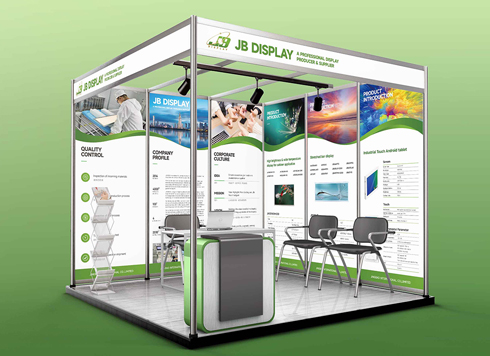 Booth Poster Design for Professional Monitor Product Suppliers
The standard exhibition booth poster projec ...
-
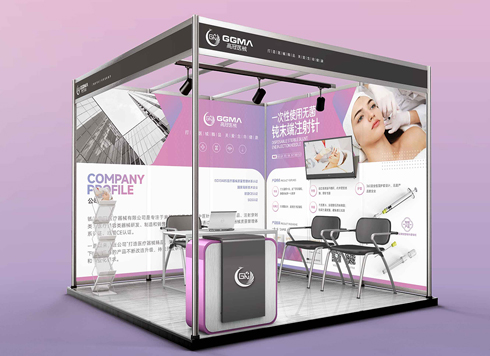 Design of Standard Exhibition Booth Posters for Beauty Instruments
Carefully designed a standard exhibition bo ...
-
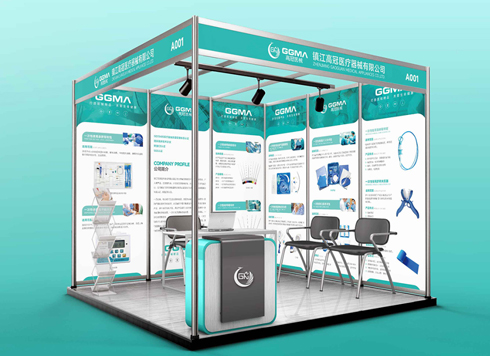 Design of Exhibition Posters for Medical Device Standards
XiYue is designing an exhibition booth post ...
-
 Collection of Brochure Design Cases in 2024 (Cover Series 02)
Our brochure design projects focus on diver ...
-
Both the pen-barrel printer and the uniform embroidery vendor sent the logo file back—should versions have been separated from the start?
Date: Oct 20, 2026 Read: 7
-
When an A4 one-pager is scaled straight to A5 for print, where does it feel cramped first if font sizes and margins are not rechecked in millimeters before printing?
Date: Oct 19, 2026 Read: 11
-
Where does a semi-transparent white overlay on a cover photo fail first if it is not flattened before printing?
Date: Oct 18, 2026 Read: 12
-
Brochure spread photo has a strip eaten away in the middle—what number should you ask the printer before going to press?
Date: Oct 17, 2026 Read: 14
-
For a packaging box with a round window, should the window position be set by the designer in the artwork first, or wait until the printer's die line is ready?
Date: Oct 16, 2026 Read: 17