



Art paper covers lose their feel when laminated, but unlaminated covers wear out: what is the right trade-off?
Once an art paper cover is laminated, its texture and feel are indeed hard to preserve; but you do not have to choose only between 'lamination' and 'no lamination'. Based on common project delivery experience in 2026, the decision order is to determine binding first, then surface treatment, and only then choose paper: paperback catalogues that are frequently handled in stores and shipped by express usually use matte film or soft-touch film, prioritizing abrasion resistance; brand catalogues and client gifts that are opened less often usually use hardcover wrapping or a dust jacket, letting the paper surface show its texture directly. The trade-off is not whether the film is expensive, but whether rework or reprint costs more.
After lamination, how much of the art paper texture remains?
Lamination means attaching a film roughly ten-plus microns thick (commonly BOPP or PET) to the paper surface with adhesive or heat pressure; the film layer fills in the fine unevenness of the paper, so your hand touches the film, not the paper. The shallower the texture and the lower the basis weight of the art paper, the more obvious the loss; deeply embossed, heavier paper can show a bit of grain, but the feel has already changed. What determines the outcome is texture depth and film type, not the words 'art paper' printed on the design file.
There is another related change that is often overlooked: lamination changes the visual impression. Matte film usually darkens and increases contrast, while gloss film makes dark colors more saturated; the same cover can appear as two different colors before and after lamination. Comparing an uncoated proof with a laminated finished piece will almost certainly be judged as a color difference, and the problem is not the printer's ink mixing.
- Paper texture depth and basis weight: after lamination, art paper with shallow texture and low basis weight feels close to ordinary coated paper.
- Film type: gloss film has a smoother surface, matte film is next, and soft-touch film (sensory film) is closer to the paper surface; its per-unit cost is commonly higher.
- Process method: water-based adhesive, oil-based adhesive, and pre-coated film differ in bond strength and feel, and dark paper more easily shows adhesive spots.
- Whether partial treatment is used: partial lamination or spot UV can leave part of the paper surface exposed, but edges tend to lift, and fine patterns are also harder to register accurately.
First decide how the catalogue will be used, then decide how the cover should be treated
Handling frequency and shipping method are the primary constraints, with higher priority than aesthetics. For catalogues that are casually handled in stores, distributed at trade shows, or sent by express, the cover rubs against fingers and packaging every day; untreated art paper will usually start to shine and gray at the corners and in dark areas within a few weeks. For gift catalogues and archive copies that are opened only a few times a year, feel can rank ahead of abrasion resistance. Binding determines whether the cover can go without lamination: a hardcover cover is paper wrapped over greyboard, and wrapping itself is a solution that can hold up without lamination; a paperback cover is a single sheet of paper with no hard shell underneath, so it can only rely on lamination, varnish, or no treatment.
A pitfall encountered on a delivery site: a brand catalogue project had a tight budget, and the time left for printing was around three weeks (experience range). The cover used deeply embossed dark art paper, and to save cost it received only a thin layer of water-based gloss varnish. After the first batch was sent by express, obvious rubbing shine and fingerprint marks appeared at the corners and on dark surfaces; the only option was to reprint the covers and ship them again, which added more than a week to rework (typical range: five to ten days) and required paying shipping again. This cost is often higher than laminating with matte film or adding a dust jacket from the start, but it usually gets included in the budget only after a problem has occurred.
- Frequently handled in stores, distributed at trade shows: prioritize abrasion resistance; use matte film or soft-touch film on paperbacks.
- Sent by express: beyond surface treatment, check the outer packaging; cover corners are usually damaged first.
- Client gifts, annual reports: prioritize feel; use hardcover wrapping with art paper plus a dust jacket.
- Internal archives, small giveaways: matte varnish or no treatment is acceptable, with relatively low cost.
Cost and lead-time comparison of three common approaches
The three approaches have no universal good or bad; the difference lies in where the cost falls. The figures below are all experience ranges, affected by print run, paper, regional printers, and scheduling. Before quoting, ask the printer to break down the calculation according to the actual process, and do not treat the ranges as promises.
- Paperback with gloss or matte film: the typical range for per-unit increase is a few tenths of a yuan to one or two yuan; abrasion resistance is good and the process is mature; the trade-off is that texture is largely flattened, and dark covers can look dull after matte lamination. Suitable for bulk store distribution, textbooks, and tool booklets; not suitable for brand books that sell on tactile feel.
- Paperback with matte varnish or water-based gloss varnish: the typical range for per-unit increase is a few cents to a few tenths of a yuan; some feel remains, but abrasion resistance is limited, and corners will still shine. Suitable for brochures with tight schedules, tight budgets, and low handling; not suitable for covers that are repeatedly rubbed or displayed long term.
- Hardcover wrapping with art paper plus a dust jacket: cost typically rises by 30% to more than 100% compared with paperback, and lead time increases by three to seven days; feel is better preserved. Suitable for brand catalogues, client gifts, and annual reports; not suitable for large free giveaways or projects with fixed budgets.
According to 2026 delivery practices, many brands use a dual-version approach: a small hardcover run plus a large laminated paperback run—hardcover for gifts and archives, paperback for stores and trade shows—which eases budget pressure at both ends.
What to check in cover inspection
Inspection standards should be written into the delivery checklist in advance. The core rule is: use the signed sealed sample as the benchmark, compare color under standard lighting, and judge feel against the paper surface of the sealed sample. A common pitfall is signing off on a digital proof while mass production uses a different process, so color and tactile feel do not match, leaving only rework or downgraded acceptance.
- Lamination bond strength: no blistering, no edge lifting, no film separation; spot-check all four corners and the center.
- Surface cleanliness: no snowflake spots, no impurities, no adhesive spots; especially check dark covers.
- Creasing and folding: the film layer does not crack at fold lines and creases, and folded corners do not open.
- Texture retention: compare with the sealed sample; if the difference is obvious, first check film type and adhesive layer.
- Rubbing color and fingerprints: rub a dark art paper cover repeatedly with your hand a few times and see whether marks remain.
When this approach applies, and when it is unnecessary
This approach is suitable for printed materials that need to balance feel and durability at the same time, such as catalogues, brand books, annual reports, and product directories—especially projects whose covers use textured art paper and also go through express shipping or long-term display. Deciding cover treatment early can save a lot of rework discussions.
It is also important to clarify what does not need this process: one-page posters, DM flyers, and internal notice printed materials do not need the cover to carry both tactile feel and abrasion resistance; conventional lamination or varnish is enough. For internal materials with a print run of only one or two hundred copies that circulate only in meeting rooms, agonizing over film type often costs more in time than the material price difference.
Frequently asked questions
Can an art paper cover be left unlaminated?
Yes, but first look at the use case. Hardcover wrapping, adding a dust jacket, and matte varnish can all replace lamination; for paperbacks that are shipped by express and handled every day, bare paper is not recommended to leave the factory.
What is the difference between soft-touch film and matte film, and is it worth paying more?
Soft-touch film has a finer surface and feels closer to paper; its abrasion resistance is close to matte film, and its per-unit cost is commonly higher. If the cover is for a gift catalogue that clients will touch repeatedly, it is worth paying more; for bulk distribution, it is not necessary.
If the film cracks at creases after lamination, is it a film quality problem?
Most of the time it is not the film itself, but misalignment among the crease line, paper grain direction, film tension, and workshop humidity. At the sealed sample stage, fold once at the crease position before signing off.
Can partial lamination preserve part of the tactile feel?
Yes. Partial lamination or spot UV can leave part of the paper surface exposed, but edges tend to lift, and fine patterns are harder to register accurately. It is generally advisable to use large blocks and check the edge effect on the sealed sample.
Should you produce both hardcover and paperback versions?
Yes. Use hardcover wrapping for gifts and archives, and laminated paperback for stores and trade shows. Make sealed samples for both versions together; this spreads budget pressure but also requires leaving time for an extra round of proofing.
Next step: first write a one-page cover requirements sheet, clearly filling in use, handling frequency, shipping method, per-unit budget, and binding method. Then ask the printer to produce a cover sample according to the finished process, and check three items—folded corners, rubbing, and creasing—before signing off for mass production. If you have both hardcover and paperback versions, make sealed samples for both together for comparison; do not make the final decision based only on a digital file.
-
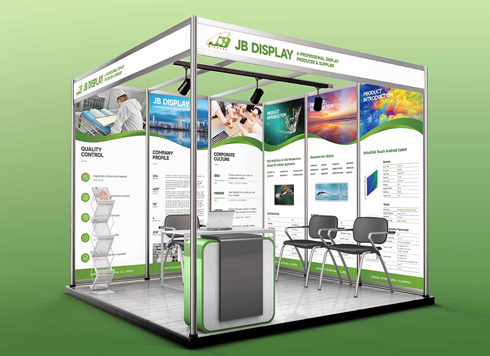 Booth Poster Design for Professional Monitor Product Suppliers
The standard exhibition booth poster projec ...
-
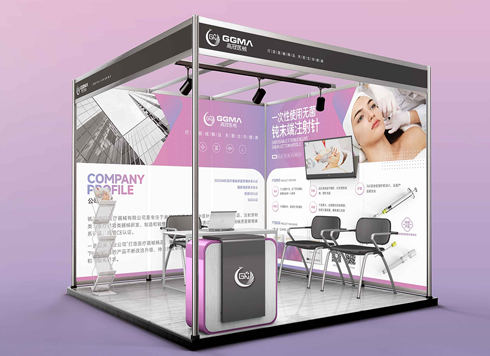 Design of Standard Exhibition Booth Posters for Beauty Instruments
Carefully designed a standard exhibition bo ...
-
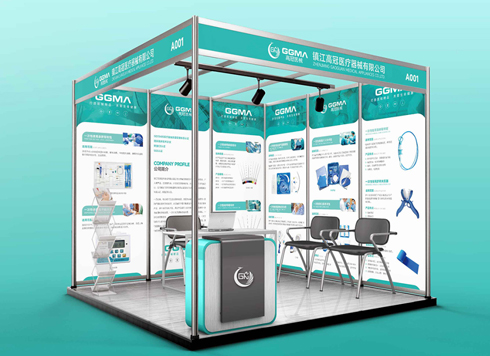 Design of Exhibition Posters for Medical Device Standards
XiYue is designing an exhibition booth post ...
-
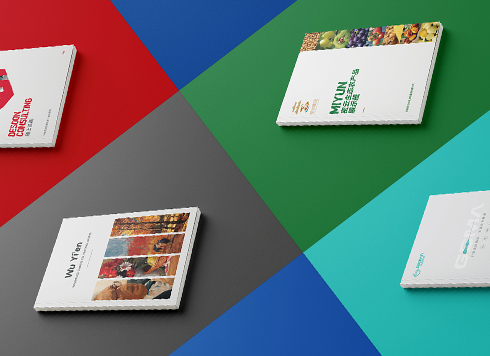 Collection of Brochure Design Cases in 2024 (Cover Series 02)
Our brochure design projects focus on diver ...
-
When a pack front is packed with selling points, why does the shelf shopper pick up the less-wordy pack next to it?
Date: Oct 19, 2026 Read: 8
-
Full-bleed poster shows white edges after trimming—printer says the file has no bleed. How much should I believe that?
Date: Oct 18, 2026 Read: 7
-
At the same font size, English looks thinner than Chinese in mixed text—can making the Western type larger really make up for it?
Date: Oct 17, 2026 Read: 9
-
The sub-brand is still internal-only—should the VI system include the master–sub relationship in advance?
Date: Oct 16, 2026 Read: 14
-
The AI-generated logo looks decent, but the printer says it needs vector art—should I ask AI to regenerate it or have a designer redraw it?
Date: Oct 15, 2026 Read: 14