



Can Posters, Brochures, and Packaging Be Produced with the Same Printing Paper and Finishing Processes?
Let’s state the conclusion first: posters, brochures, and packaging are rarely produced with the exact same set of paper, finishing, and binding parameters. The reason is that their usage scenarios are completely different—posters are viewed from a distance for immediate impact, brochures require continuous page turning and reading, and packaging must endure folding and transportation. The same design printed on glossy coated paper versus matte specialty paper will differ noticeably in color, feel, and cost. Based on 2026 project delivery practices, clients don’t need to memorize paper names; instead, define the direction with the “purpose – quantity – budget” three questions, compare common combinations, and finalize by proving with physical samples.
Why can’t a single set of standards be shared?
The design file on screen may be the same, but each category faces different physical demands once printed. Posters are usually single large-format sheets hung on walls or mounted on stands; brochures need to be flipped, laid flat, and read for extended periods; packaging must be folded, filled, stacked, and transported. Because these three actions require different levels of ink adhesion, paper stiffness, crease resistance, and binding strength, paper and finishing cannot be fully interchanged across them.
- Posters are prone to “not hanging properly” and “muted colors” — coated paper is commonly used to boost color saturation, then lamination protects the surface.
- Brochures are prone to “pages not opening fully” and “pages falling out” — check the page count and paper weight first, then decide between saddle stitching or perfect binding / sewn binding.
- Packaging is prone to “cracking along creases” and “delamination” — the carton board must be rigid, and scoring and die-cutting positions must be precise.
First, frame the direction with the three questions: “purpose—quantity—budget”
Rather than randomly browsing material swatch books, first answer these three questions clearly, then let the printer or designer recommend a complete solution. This three-question framework applies well to conventional paper printing and saves a lot of detours compared with just asking “which paper is best.”
- Purpose: Is it for single-sheet display, flipping-reading, or containing and transporting? The purpose determines the paper category and whether binding reinforcement is necessary.
- Quantity: Dozens of copies suit digital printing; thousands or more suit offset printing. Different printing methods also dictate which papers and inks are usable.
- Budget: Budget separates “what you want” from “what is possible.” Specialty finishing has plate-making and process fees; the experience range is typically hundreds to several thousand yuan per item, depending on size and complexity.
These three questions are not a one-off checklist. When the budget is tight, protect the costs related to packaging structure and binding strength, while surface decoration can be reduced. With a sufficient budget, consider specialty papers or layering multiple finishes. If after answering the three questions you can only remove specialty finishing, it means the original proposal exceeds budget; the negotiation should be about whether to reduce surface decoration or lower the paper weight.
What should posters, brochures, and packaging each focus on?
Break down each scenario first, then compare specifications. Otherwise it is easy to apply poster lamination habits to packaging, or book binding needs to posters.
Posters: single large-format sheets, prioritize lamination and color boost
A poster needs to be seen from a distance, so color saturation and surface smoothness matter more than fine details. A typical experience range is 157g–200g coated art paper or matte art paper for indoor posters, with lamination depending on the display environment; outdoor posters require dedicated inkjet media. Recommended: make a proof first and inspect colors at the actual viewing distance, not just on a phone screen.
Brochures: multi-page flipping, decide binding method first
The core of a brochure is making the “flipping” behavior work. When the inner pages are not too many and the paper is not thick, saddle stitching is economical. When pages are numerous, paper is thicker, or you need the book to lay flat, switch to perfect binding or sewn perfect binding. The cover paper weight must be confirmed together with the binding method, otherwise a cover that is too thick will make the spine bulge with perfect binding or saddle stitching. In 2026’s common practice, the three items “page count, gram weight, and binding method” are written into a work order before ordering to avoid rework later.
Packaging: 3D structural load-bearing, check box style and scoring first
Packaging is not a flat sheet but a 3D structure that must be folded into shape. For ordinary coated one-side carton board (C1S) used in paper boxes, the typical experience range is 250g–400g. For shopping bags or gift boxes, you often need corrugated backing or mounting. Before printing, place foil stamping and spot UV inside the die-cut line, not on crease lines; otherwise they may crack or curl during mass production.
Which paper-and-finishing combinations are more stable?
The following combinations come from project delivery habits in 2026; they are experience references, not fixed formulas. You can use them to communicate with your printer, but the safest move is to make a proof.
- Posters: coated art paper or matte art paper + 4-color printing + lamination. Without lamination, colors are easily scratched and the surface can be marked during transport.
- Brochures: Body paper is typically 80g–120g offset paper or lightweight paper; cover is typically 250g–300g coated paper. Basic perfect binding meets most needs; choose sewn perfect binding for long-term frequent reading.
- Packaging: white cardboard or grey-back white board, usually 250g–400g. Spot UV or foil stamping can be added, but finishing areas must avoid crease lines and die-cut windows.
If you are unsure between saddle stitching and perfect binding, a simple boundary: when the inner pages are 20–40 pages and the paper is not thick, saddle stitching can lay flat at low cost. Beyond that typical range, or when you want the whole book to open flat, switch to perfect binding or sewn binding. However, perfect binding is not automatically safer with more pages. For very thick covers or heavy body paper, you need to re-evaluate sewn binding.
A brochure rework case: misaligned constraints
Field delivery experience: a brochure was fully laid out for saddle stitching. During pre-press check, the page count was found to be close to 50 pages—already beyond the common 20–40 page saddle-stitching experience range. It couldn’t be laid flat, so they had to switch to perfect binding midway. The switch forced changes in page sequence and bleed trim, added a price difference, and added two extra days to delivery. The cost of this case created a habit in the team: for a brochure, first have the printer confirm whether the “page count + gram weight + binding method” is feasible, then start layout.
During acceptance, check the physical sample first, then verify finishing positions
Paper color, print density, lamination gloss, and binding strength can only be accurately assessed on a physical sample. After proofing, take it to a real usage scene, flip, fold, and lightly scratch it by hand, then decide whether to proceed to batch production.
- Pitfall 1: Using screen color as acceptance criterion. Screens emit light while printed matter reflects light; they will not be identical by nature. Use two signed proofs as the standard.
- Pitfall 2: Ignoring paper grain direction. When the grain runs parallel to the crease line, the fold is more stable; perpendicular to it, the edge may crack easily.
- Pitfall 3: Finishing positions misplaced. Foil stamping or UV placed along die-cut lines is hard to detect on short-run samples, but problems become obvious in mass production.
- Pitfall 4: Cover and binding mismatch. A cover that is too thick combined with perfect binding or saddle stitching tends to create a bulge at the spine.
Frequently Asked Questions
Up to how many pages is saddle stitching suitable for a brochure?
Based on delivery experience, saddle stitching can flatten effectively when the inner pages are 20 to 40 pages and the paper is not thick. Beyond that range, or with an exceptionally thick cover, switching to perfect binding or sewn binding is recommended.
Should a poster use matte art paper or coated art paper?
Choose coated art paper for rich, glossy colors. Choose matte art paper for less reflection and a cleaner, understated feel. Both are coated papers; the difference lies mainly in surface gloss and visual style.
Is a higher gram weight always better for packaging boxes?
Higher is not necessarily better. A higher gram weight increases cost and folding difficulty, and poor scoring can still cause edge cracking. For ordinary C1S carton board, the typical experience range is 250g to 400g depending on the box style and contents.
What finishing should I choose first for a premium look on a limited budget?
Spot UV or embossing is easier to keep within a budget than large-area foil stamping, and it adds tactile depth. Paired with a lightly textured specialty paper, the overall quality is elevated.
Can the same design be used directly for digital quick printing and offset printing?
The file can be shared, but color and halftone dot accuracy vary. Digital printing is mostly toner or inkjet, while offset printing uses ink. Before mass production, make proofs under each process and fine-tune accordingly.
This set of guidelines mainly applies to conventional paper printing, such as corporate brochures, event posters, product packaging, and brand identity (VI) materials in quantities from dozens to several thousand. For high-speed printing at a scale of hundreds of thousands, or when special materials such as flexible packaging or plateless digital inkjet are involved, paper and process combinations will be further restricted by different equipment. In such cases, quantify requirements with the “purpose–quantity–budget” first, then ask the printer for a feasible solution—this is more reliable than directly applying experience.
-
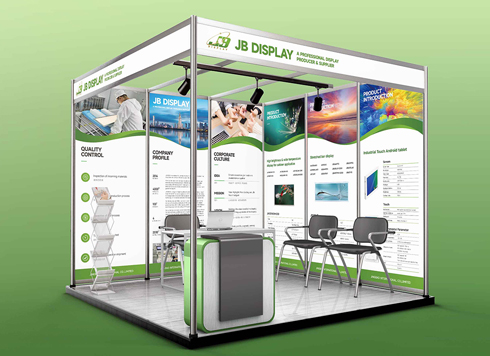 Booth Poster Design for Professional Monitor Product Suppliers
The standard exhibition booth poster projec ...
-
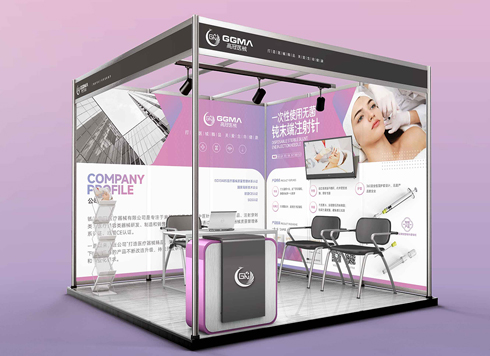 Design of Standard Exhibition Booth Posters for Beauty Instruments
Carefully designed a standard exhibition bo ...
-
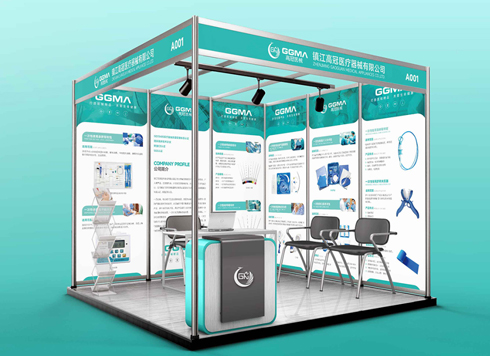 Design of Exhibition Posters for Medical Device Standards
XiYue is designing an exhibition booth post ...
-
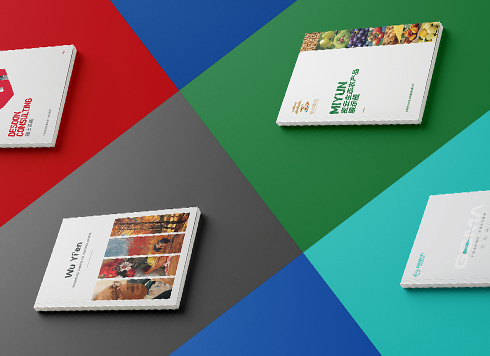 Collection of Brochure Design Cases in 2024 (Cover Series 02)
Our brochure design projects focus on diver ...
-
Art paper covers lose their feel when laminated, but unlaminated covers wear out: what is the right trade-off?
Date: Oct 20, 2026 Read: 5
-
When a pack front is packed with selling points, why does the shelf shopper pick up the less-wordy pack next to it?
Date: Oct 19, 2026 Read: 9
-
Full-bleed poster shows white edges after trimming—printer says the file has no bleed. How much should I believe that?
Date: Oct 18, 2026 Read: 9
-
At the same font size, English looks thinner than Chinese in mixed text—can making the Western type larger really make up for it?
Date: Oct 17, 2026 Read: 10
-
The sub-brand is still internal-only—should the VI system include the master–sub relationship in advance?
Date: Oct 16, 2026 Read: 15