




How Many Days Does a Poster Take? Why Rush Orders Often Fail
For a poster from design to delivery, based on 2026 project delivery habits, the typical range for an ordinary commercial poster is 1-5 business days; when illustration or 3D modeling is involved, we recommend reserving 7-10 business days. Same-day delivery is not impossible, but in most cases only a layout framework can be delivered first, and later detail work often leads to full revisions. The rework rate for rushed posters is significantly higher than for normally scheduled work.
The turnaround range discussed here applies mainly to commercial poster scheduling with relatively complete assets and clear objectives; it does not apply to brand key visuals started from scratch, full VI specifications, or projects requiring extensive research.
How Does Poster Type Change Turnaround Time
Even for posters, different usage scenarios create large gaps in workload. Posters shared online are laid out for mobile screen dimensions, do not involve print media, and have higher tolerance for detail errors; whereas offline roll-up banners, outdoor advertisements, or display racks require setting bleed and safe margins based on print dimensions, and must also consider information hierarchy for viewing from far and near. Before delivery, an extra proofing or review step is needed, which naturally extends the cycle.
When scheduling a project, first confirm whether the deliverable is a single image or a set that includes source files and multi-size extensions. If someone only says "a poster," different designers may give noticeably different day estimates.
- Single online sharing image: 0.5-1 business day for an initial draft, provided the copy and reference images are ready.
- Standard print poster (A2 or smaller): typically 1-2 business days, including one round of revisions and outlined font packaging.
- Posters involving illustration, compositing, or custom typography: depending on complexity, the experience range is 3-7 business days.
- When multi-size extensions or print proofing are involved: adding 1-2 business days to the base time is safer.
Four Variables That Decide the Exact Days Needed
We summarize the process of estimating poster turnaround time as the "four-step estimation method": sequentially check asset readiness, design complexity, number of revision rounds, and output requirements. Discussing scheduling in this order avoids missing key factors that affect the timeline.
When assets are not ready, design work cannot start stably; what appears first is often a placeholder draft. Complexity determines core working time; revision rounds determine buffer space; output requirements determine whether extra prepress checks or multi-size adaptations are needed at the end. After confirming all four items, working backward to determine the number of days is far more reliable than quoting based on gut feeling.
- Asset and information readiness: Are the core copy, brand logo, reference images, and product images confirmed? When assets are missing, the first version usually does not count as real work.
- Design complexity: Pure layout, compositing/photo retouching, hand-drawn illustration, and 3D elements correspond to different workloads. The more original the visual expression, the more buffer time is needed.
- Revision and review rounds: The common practice is to reserve 1-2 rounds of structured revisions per poster. Exceeding the rounds or overturning the concept requires additional hours.
- Output requirements: Are digital files, print files, and multi-device adaptations all delivered? Print files need checks for bleed, color, and outlined fonts; multi-device adaptations require a review for each size.
Why Do Same-Day Rush Jobs Often Fail?
"Same-day delivery" is not the same as "same-day completion." Within a limited working time, designers typically compress the time for digesting information, exploring alternatives, and self-checking. If the requirements themselves are not finalized, a same-day draft simply postpones problems to the revision stage.
In 2026, our team took an urgent request: the client asked for an event poster before the end of the afternoon, but two promotional ranges in the copy were not yet determined, and the brand logo was only provided as a screenshot with a white background. To meet the deadline, we first built the framework based on known information. The next day, when the promotional terms were updated, the entire layout was rearranged. The originally planned 1-business-day rush task actually consumed 3.5 business days, far exceeding the typical range of 1-2 business days for comparable rush orders. Afterward, we established a rule: for rush projects, the content must be "frozen" before starting work; even if only half a day remains, we do not rely on placeholder drafts.
- Same-day deliveries often skip multi-concept comparisons, shifting creative risks to the revision phase.
- When assets are incomplete or the decision chain is long, what seems like time savings actually incurs extra rework costs.
- For print posters, compressing proofing and review reveals color and safety issues after mass production.
- We recommend limiting same-day requests to "layout mockups" or "quick extensions of an existing draft," not from-scratch creation.
How to Judge Whether a Design Schedule Is Reasonable?
A reasonable schedule should accommodate four stages: information input, creative output, feedback and revisions, and delivery/closure. A quote that only lists days without discussing these stages should be questioned. Use the following checklist to quickly evaluate:
- Did the designer ask about purpose, dimensions, and assets, rather than immediately saying "one day for delivery"?
- Were the number of revision rounds, feedback format, and final approval method agreed upon?
- Did the designer clearly state the source file delivery format and include outlined fonts and bleed checks?
- Was buffer anticipated for last-minute copy changes or missing brand images?
For 2026 project habits, it is recommended to define "business days" in requirement discussions as time after assets are complete and feedback is consolidated, rather than counting from the first contact. This ensures both parties understand the timeline consistently.
Normal Scheduling vs. Rush Orders: What's the Real Difference?
The value of normal scheduling lies in following the full process, with enough time for concept comparison and detail checks; for rush orders, the focus shifts to prioritizing the designer's availability. A rush fee does not buy "faster inspiration"; it buys "priority scheduling" and "reduced flexibility for back-and-forth reviews."
- Scheduling priority: Normal orders are queued in sequence; rush orders are inserted into the current workflow, often squeezing other projects' time.
- Revision allowance: Normal orders typically include at least one round of revisions; rush orders often accept only minor tweaks or a single feedback round.
- Deliverables: Rush orders usually provide a high-resolution image or PDF first; source file organization and packaging may be deferred until after additional confirmation.
- Pricing range: The industry experience range is 20%-50% of the original quote, depending on asset readiness and the designer's current availability.
To judge whether a rush order is reliable, do not just look at whether someone accepts it; check whether they are willing to clearly state these limitations. Confirming the rushed delivery scope, revision count, and deadline before accepting is more useful than verbal promises.
When Not to Insist on Same-Day Delivery
Posters suitable for compressed timelines usually have these characteristics: content is already frozen, they rely mainly on layout, no extra illustration or modeling is needed, and the execution is done by someone familiar with the brand. Conversely, if the situation falls into the following scenarios, forcing a same-day deadline often does not save time.
- First reveal of brand key visuals: requires internal discussion and multi-draft trial and error; compressing time sacrifices long-term usage quality.
- Posters with special print materials, foil stamping, or irregular cutting: requires extra time for proofing and process confirmation.
- Corporate materials whose copy needs approval from multiple departments: the bottleneck is often the decision chain, not the designer.
- When using fonts with copyright restrictions: time for license evaluation and replacement font selection is easily overlooked.
Frequently Asked Questions
How much extra does a rush poster design cost?
Based on common 2026 pricing ranges, the rush fee is approximately 20%-50% of the normal design fee. However, if assets are severely missing or major revisions are likely, discussing the schedule first is more practical than negotiating the rush fee.
Does the design cycle include revision time?
The common experience range of 1-3 business days includes one round of revisions. Exceeding the agreed rounds or overturning the concept typically incurs additional charges, so it is best to specify this in the requirements confirmation.
Why does the designer say two days are needed even when it seems simple?
Simplicity depends on the delivery requirements. If details need polishing and buffer for revisions is reserved, two-day delivery is more likely to give you a near-final result than one day of rushing.
Do online sharing posters also require this long?
Online non-print posters can be compressed to half a business day, but only if it is a single standard-size image, there is no copyright risk, and all assets are provided by the requester. If multi-size extensions are needed, they should be scheduled as a set.
If you are preparing to find a designer for a poster, do not rush to ask "How many days?" Instead, confirm the purpose, dimensions, copy, assets, and revision count first, then use the four-step estimation method to plan backward from the deadline. Same-day delivery is only suitable for simple extensions with frozen content, not for from-scratch creativity or brand materials involving print processes. Clearly stating the timeline is often more effective than blindly pushing for speed in reducing rework probability.
-
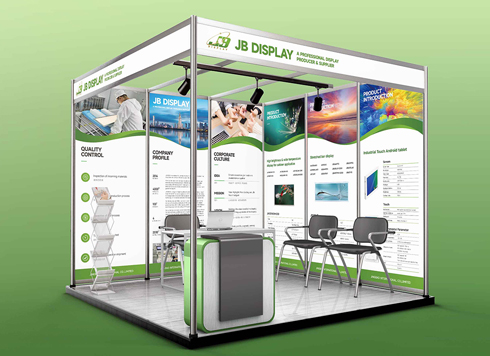 Booth Poster Design for Professional Monitor Product Suppliers
The standard exhibition booth poster projec ...
-
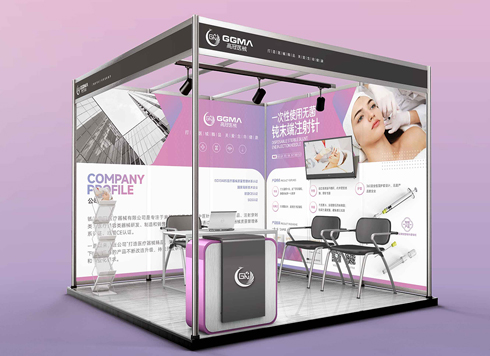 Design of Standard Exhibition Booth Posters for Beauty Instruments
Carefully designed a standard exhibition bo ...
-
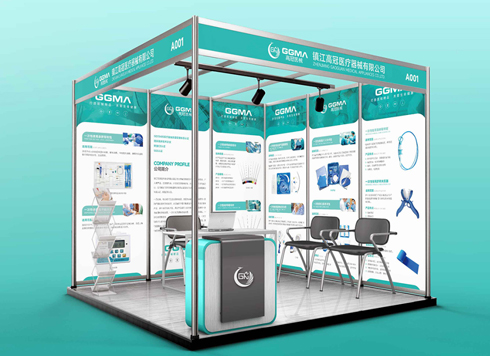 Design of Exhibition Posters for Medical Device Standards
XiYue is designing an exhibition booth post ...
-
 Collection of Brochure Design Cases in 2024 (Cover Series 02)
Our brochure design projects focus on diver ...
-
Both the pen-barrel printer and the uniform embroidery vendor sent the logo file back—should versions have been separated from the start?
Date: Oct 20, 2026 Read: 7
-
When an A4 one-pager is scaled straight to A5 for print, where does it feel cramped first if font sizes and margins are not rechecked in millimeters before printing?
Date: Oct 19, 2026 Read: 11
-
Where does a semi-transparent white overlay on a cover photo fail first if it is not flattened before printing?
Date: Oct 18, 2026 Read: 12
-
Brochure spread photo has a strip eaten away in the middle—what number should you ask the printer before going to press?
Date: Oct 17, 2026 Read: 14
-
For a packaging box with a round window, should the window position be set by the designer in the artwork first, or wait until the printer's die line is ready?
Date: Oct 16, 2026 Read: 17