


Why do advertising poster design quotes vary so much? What's actually different in the deliverables?
Advertising poster design is essentially visual persuasion aimed at a specific audience, not merely making a good-looking image. To judge whether a design is worth it, first check whether it revolves around communication goals: who sees it, where it is viewed, and what printing process is used. Based on 2026 project delivery practices, advertising poster design is often divided into two stages: 'creative concept' and 'final delivery.' When quotes differ severalfold, the difference usually lies in the latter—that is, source files, print adaptation, and revision boundaries—aspects that are not immediately visible.
1. Why do quotes differ severalfold? Where does the money go?
A typical basic poster design usually provides only a JPG image suitable for screen viewing, intended for online display such as WeChat long images or e-commerce detail pages. A full version includes AI or PSD source files, bleed lines, color profiles, export files in different sizes, and even printing process recommendations. In the experience range, online-only poster quotes range from a few hundred to over a thousand yuan, while a full package covering online and print adaptation often ranges from two or three thousand to over five thousand yuan. If illustration or 3D rendering is involved, prices are even higher.
- Basic version: Suitable for online distribution; delivers JPG/PNG; includes 1-2 revisions; printing details not guaranteed.
- Full version: Suitable for print materials; delivers source files + print parameters; includes 3-5 revisions; requires process matching.
- Comprehensive version: Includes multi-scenario extensions and VI guidelines; commonly used for brand events; takes longer.
Why such a big difference? Because the workload of a full version is not just 'making the design'; it also includes hidden labor such as pre-press checks, font embedding, color mode conversion, and size adaptation. Missing any of these steps can cause problems at production. So the quote amount is not the key point—what matters is what's included in the deliverables you're buying.
To judge whether a design is worth it, you can look at it the other way: if the designer only gives you an image without source files or revision instructions, its value is one-time; if the deliverables let you later edit text, change sizes, and adapt for different channels, it's worth paying more. We generally recommend that for posters with an adequate budget and multiple uses, the full version is more cost-effective.
2. When accepting advertising poster design, check these four items first
We break down project acceptance into four dimensions: goals, assets, process, and revision boundaries. Missing any step can lead to rework. Below is a detailed breakdown.
- Goal review: Does the main visual deliver the core message at first glance? Is there any conflict between the headline and the visual? The pass criterion: when the image is scaled down to a phone screen size, the main title is still clearly readable.
- Asset check: Are the logo, fonts, and images clearly licensed? Does the source file include the font packages used to avoid garbled characters when opened on others' computers? For commercial use, prefer open-source or purchased fonts.
- Process check: For print, confirm 3mm bleed, resolution ≥300dpi, and CMYK color mode; for screen display, RGB mode is needed. In the experience range, images below 300dpi will show obvious jagged edges when enlarged for print.
- Revision boundary confirmation: The contract should specify how many revisions are included and how additional ones are charged. In the experience range, online drafts include 1-2 revisions, print drafts 2-3, with extra revisions charged per round.
These four dimensions are not arbitrary. If the goal is wrong, no matter how beautiful the image is, it's useless; if assets are incomplete, progress can be blocked later; if the process is wrong, final quality suffers; if revision boundaries are unclear, the number of revisions can spiral out of control. We usually turn these four items into a confirmation checklist at the quoting stage and have the client tick each one.
3. Common pitfalls and how to avoid them
In graphic design commissions, clients often get stuck on incomplete assets and vague revision boundaries. For example, a client provides only a blurry screenshot but demands a high-definition poster; or keeps adding content during acceptance, turning the agreed three rounds into seven or eight.
- Pitfall 1: Not confirming the distribution channel, leading to incorrect color mode. Solution: Always ask 'online or print' before quoting; for print, further ask about material and process.
- Pitfall 2: Overlooking font licensing. Solution: Clarify font sources; for commercial use, prefer open-source or purchased fonts.
- Pitfall 3: Source files not delivered, locking you into the designer for changes. Solution: Specify in the contract whether the delivery includes source files.
In a project at Xiyue Company, the client provided only a blurry photo of a dish and no logo source files. We worked for three consecutive days to redraw vector graphics. Then the client switched to outdoor inkjet printing at the last moment, and after converting from RGB to CMYK, the colors turned grayish, forcing us to redo the design before it was approved—adding two days to the overall timeline. Since then, we always sign a process confirmation sheet before starting, clearly listing material and color deviation risks.
The lesson here is that most design problems are not about poor design skills but a lack of alignment upfront. What counts as qualified? If the designer proactively asks about distribution channels, print materials, and revision counts before starting, the process is usually reliable. If they just deliver a design without asking anything, the chance of rework is often high.
4. Applicable scenarios and boundaries
Advertising poster design suits communication scenarios that require quickly establishing visual memory, such as store openings, promotions, event announcements, and brand exposure. It is not suitable for long-term brand asset building. If the budget allows and unified visual identity is needed, a more comprehensive VI system should be considered.
- Suitable for: standalone offline posters, online promotional images, outdoor billboard design.
- Not suitable for: complete brand visuals requiring multi-channel extension, or long-term materials with undefined printing processes.
If you only need one online promotional image, the basic version at a few hundred yuan is sufficient. But if you need it printed as a roll-up banner or brochure, be sure to confirm CMYK, bleed, and font licensing; otherwise you'll incur extra costs during proofing. This is an experience range, not absolute pricing—the actual rate depends on the designer's positioning and timeline.
FAQ
How many revisions are normal for advertising poster design?
In the experience range, 1-2 rounds for online images and 2-3 rounds for print materials are normal. If revisions exceed 5 rounds, it's usually because requirements weren't clearly defined upfront; we suggest stopping to re-align on goals.
Are low-quote designs necessarily bad?
A low quote may mean only an image is provided without source files or print adaptation, or it could simply reflect lower design fees. The key is whether the deliverable checklist is clear, not just comparing prices.
The printed colors look very different from the screen. Can this be fixed?
It depends on whether the contract includes proofing adjustments. Doing a small sample and color calibration before printing is common practice. If screen calibration and pre-press checks are done properly, the deviation can be kept within an acceptable range.
Do I need to ask the designer for source files?
If the contract states that source files are included, they must be delivered; if you only purchased display rights, they may not be. It's advisable to ask upfront whether source files are included to avoid additional charges later.
How long does advertising poster design take?
A single poster typically takes 2-5 working days; with illustration or 3D rendering, it can be 7-15 days. Rush orders usually require an expedite fee, but you still need to reserve time for proofing and revisions.
If you're commissioning an advertising poster design, start by listing your requirements: distribution channel, print size, asset list, number of revisions, and source file ownership. Put these in the quote before discussing price to avoid unnecessary detours. Following 2026 project delivery practices, separate quotes for online display and print materials—don't mix them. This framework also applies to packaging design and other print materials, though not exactly equivalent; specific processes need to be checked separately.
-
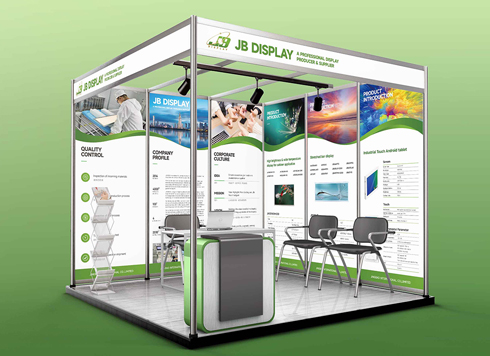 Booth Poster Design for Professional Monitor Product Suppliers
The standard exhibition booth poster projec ...
-
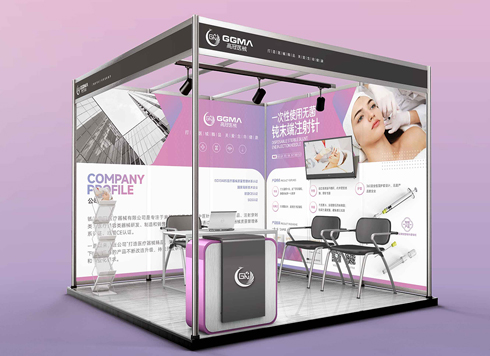 Design of Standard Exhibition Booth Posters for Beauty Instruments
Carefully designed a standard exhibition bo ...
-
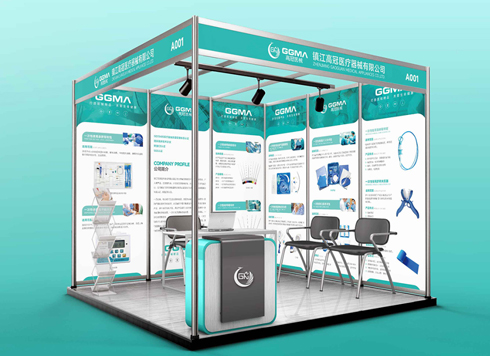 Design of Exhibition Posters for Medical Device Standards
XiYue is designing an exhibition booth post ...
-
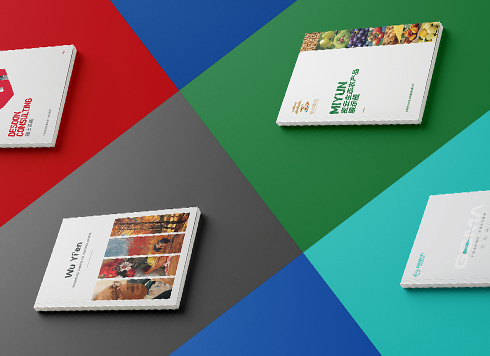 Collection of Brochure Design Cases in 2024 (Cover Series 02)
Our brochure design projects focus on diver ...
-
Why Do Poster Design Quotes Range from Hundreds to Thousands?
Date: Sep 1, 2026 Read: 41
-
Can't Finalize Your Packaging Design? What Should You Check for Acceptance?
Date: Sep 1, 2026 Read: 38
-
Why Are Graphic Design First Drafts Rejected? Communication or Concept?
Date: Sep 1, 2026 Read: 37
-
When checking print quality and paper binding, should you check ink color or page folding first?
Date: Aug 28, 2026 Read: 47
-
Book Layout Design Quotes Can Vary Severalfold, and After Five or Six Revisions You're Still Not Satisfied—Where's the Problem?
Date: Aug 19, 2026 Read: 52