



Graphic design quotes can differ severalfold — where does the higher price actually go?
Graphic design quotes can range from a few hundred to tens of thousands. The gap usually doesn't come from how well the designer knows the software, but from service scope, revision rounds, copyright delivery, and risk assumption. Looking at project delivery habits in 2026, a complete quote often includes hidden work that makes the deliverables actually printable and usable long-term, while low-budget bids tend to leave those costs for the client to absorb later. To judge whether a quote is reasonable, start with three dimensions: service depth, revision mechanism, and risk assumption.
Why can quotes vary by several times? Three variables decide
For the same key visual, one designer may quote 500, another 5,000. The difference is not software operation, but service depth, revision mechanism, and risk assumption. Service depth determines early research, trial-and-error on proposals, and application extensions. Revision mechanism affects how smoothly communication goes. Risk assumption decides whether the designer covers unexpected issues like printing errors or unclear copyrights. Low-priced orders often compress service into "one draft + two rounds of fine-tuning" — once you change the style, they charge as a new project, so the final total may not be low. Therefore, comparing prices shouldn't focus only on the bare unit price.
What is the typical range for common projects in 2026?
Because geography, experience, and project purpose vary greatly, the ranges here are experience ranges for horizontal reference. If a quote falls below the lower bound, check whether proofreading, licensed fonts, or source files were cut. Above the upper bound doesn't necessarily mean better quality — use the four-step verification method to confirm each item.
- Logo design: roughly 800–8,000 RMB, with common tiers at 1,500–4,000 RMB, including basic VI extensions (e.g., business cards, standard type).
- Single poster / flyer: about 200–1,500 RMB per piece. E-commerce product images can be as low as dozens of RMB, while event key visuals and offline print are higher.
- Brochure design: priced per page, about 80–400 RMB per page. Booklets under 10 pages are often quoted as a package, so the total conversion varies widely.
- Packaging design: a set including die-cut templates and print files is around 3,000–15,000 RMB. Complex structures and special die-cutting are charged separately.
Note: the above ranges are based on traditional graphic design outsourcing and do not include motion design, 3D rendering, or original illustration customization. If your project involves these, costs are usually higher and the ranges don't directly apply.
Use the four-step verification method to separate premium from bargain
When you receive a quote, don't rush to negotiate the price. First use the four-step checklist to surface hidden costs. Many people get stuck at the first step — they start bargaining immediately, and end up cutting revision rounds or source files, only to pay higher supplementary fees later. Order matters: confirm scope first, then discuss revisions, then copyright, and finally after-sales support.
- Verify scope: clarify the deliverables list — for example, whether the logo includes standard colors and standard type, whether PNG/SVG/AI source files are provided, and whether business cards or social media extensions are included.
- Verify revisions: confirm the number of revision rounds, what each revision covers — fine-tuning or allowing re-composition — and the standard for extra rounds.
- Verify copyright: confirm whether the copyright (economic rights) is transferred upon payment, whether use for trademark registration incurs an extra license fee, and who is responsible for commercial licenses for fonts and images.
- Verify after-sales: confirm whether detail adjustments within 1–3 months after delivery are free, and whether print files include technical proofreading and editable versions.
After completing the four-step verification, many quote differences become explainable. If the other party refuses to put any of these items in the contract, even a low price may trigger risk at delivery.
Which projects deserve "premium design" and which don't?
Core brand identity items, mass-produced print materials, and graphics involved in trademark registration should not be chosen based on low price alone. For example, logos, VI, product packaging, and promotional brochures — once these are put into use, the cost of revision and rework far exceeds the design fee itself, so the designer needs to invest sufficient research and proofreading. On the flip side, low-risk, low-reuse temporary materials such as social media posters, internal graphics, and short-term promotional flyers reasonably warrant a cheaper option. There are three criteria: whether it faces external customers, whether it directly affects conversion, and whether it needs long-term reuse. If none of the three apply, there is no need to pay a premium for service depth. Also, if your budget only covers design but not proofing and printing, it's wise to split and reserve funds rather than compress the design fee. Because printing color deviation and die-cut problems often occur at the junction of design files and production processes — saving this step leads to higher rework costs later.
At delivery, where does money typically get stuck? Three places
In projects, clients often get stuck on "should the source files be given," "can the fonts be used for printing," and "how many revision rounds have been added." Many quotes avoid these details, but they are collision points at delivery. To avoid losing out, review the following checklist before starting, and keep records in the contract or chat logs.
- Source file formats: Do common formats like AI, PSD, CDR include CMYK color mode for printing? Do they have bleed? Are fonts outlined?
- Font licensing: Does the licensed font come with a transferable license? Without it, commercial use may face copyright claims, especially for common fonts like Microsoft YaHei and Founder.
- Print readiness: Is the image resolution at least 300 dpi? Is black set as single-color black? Are spot colors separately marked?
There was a packaging project where the budget only covered design, with no funds reserved for print proofing. The result was significant color deviation and misaligned die-cut lines — it took two weeks of back-and-forth to re-output the film. Considering "design + proofing + printing" as an integrated process is more stable. Based on common project experience, reserving 10%–20% of the design budget for proofing and text proofreading is safer. This is also why pre-press checks are recommended before delivery.
FAQ
Why do some designers quote especially low? Is it because they have poor skills?
Low quotes may compress the number of concepts, revision rounds, and source files. Skill isn't necessarily worse, but invested time and service depth are significantly reduced. When a project needs repeated adjustments, they tend to add charges later.
Can design fees be negotiated?
Yes, but we suggest also cutting revision rounds or delivery scope, otherwise the other party may lower their input to protect profit. Do the four-step verification before negotiating to clarify which services cannot be cut.
When receiving a quote, which item should I check first?
First, check revision rounds and overtime fees. Second, check whether copyright and source files are bundled in the price. Third, check whether print files include technical proofreading. These three items directly affect total cost.
Are individual designers cheaper than agencies and reliable?
Individual designers can be just as reliable if the contract is standardized and copyright is clear, but you take on heavier communication and delivery risk. Agencies usually have scheduling and quality processes, but as long as the written agreement is clear, individuals can also do it.
What's the difference between the upper and lower limits in the quote range?
Usually the difference lies in the number of concepts, revision rounds, application extensions, and risk coverage — not in how visually appealing the design is. Upper-limit proposals also include font licensing, print coordination, and after-sales adjustments, which are hidden costs.
First, use the four-step verification method to clarify scope, revisions, copyright, and after-sales, then make budget decisions. If your project involves long-term brand materials, we recommend reserving 10%–20% above the design budget for proofing and text proofreading; if it's short-term temporary material, going with the lower end of the range is fine. This experience range applies to regular graphic design budgets, not to projects with extremely heavy layout, high originality illustration, or motion design.
-
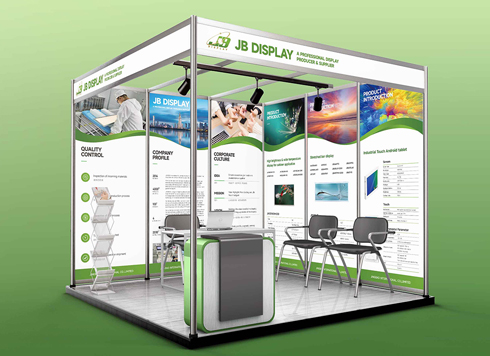 Booth Poster Design for Professional Monitor Product Suppliers
The standard exhibition booth poster projec ...
-
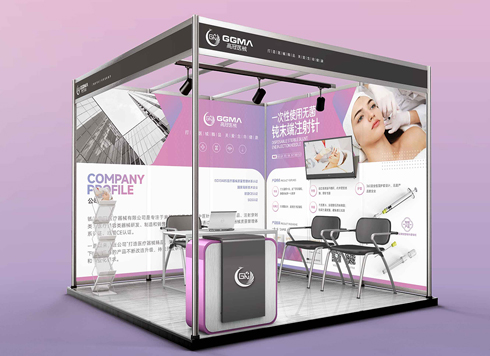 Design of Standard Exhibition Booth Posters for Beauty Instruments
Carefully designed a standard exhibition bo ...
-
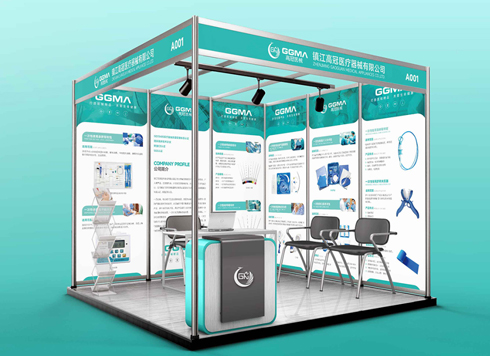 Design of Exhibition Posters for Medical Device Standards
XiYue is designing an exhibition booth post ...
-
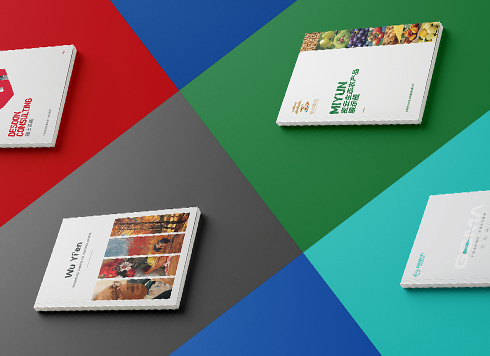 Collection of Brochure Design Cases in 2024 (Cover Series 02)
Our brochure design projects focus on diver ...
-
The logo is centered in the circular button, so why does it still look off to one side? Should I nudge it manually, or is something wrong with the file?
Date: Oct 15, 2026 Read: 1
-
Same logo looks clear in a brochure—why does it blur on a shipping box? Can switching the file to a box version save it?
Date: Oct 14, 2026 Read: 3
-
Brochure body text justified with uneven letter spacing and white gaps at line ends—is the software stretching the spacing? Will left alignment fix it?
Date: Oct 13, 2026 Read: 7
-
White Logo on Black Card Packaging Looks Gray—Was White Ink Printed Only Once? Will One More Pass Fix It?
Date: Oct 12, 2026 Read: 9
-
Why does a folded crease always crack with a white line first—is the paper too thick or the crease not scored deep enough?
Date: Oct 11, 2026 Read: 12