



Why Are Graphic Design First Drafts Rejected? Communication or Concept?
First drafts get rejected rarely because the design is 'not pretty'; more often, the requirements were translated incorrectly. If the client's 'premium feel' or 'grand' has no corresponding references or counter-examples, design becomes a guessing game. Based on 2026 corporate project delivery practices, doing a round of requirement translation and acceptance-criteria alignment before starting can typically compress revision rounds from six or seven down to three or four. The solution is not to swap in a stronger concept, but to align requirements and acceptance criteria first, so the proposal doesn't start off on the wrong foot.
Why Are First Drafts Always Rejected? Separate the Issue of Concept vs. Communication
A rejected first draft looks like a weak concept, but the real issue is often a breakdown in information transfer. The client has an image in mind but can't articulate it; the designer follows the text and naturally misses the mark. To diagnose the bottleneck, check three points:
- Decision chain broken: The decision-maker didn't attend the requirements meeting and changed the criteria during review.
- Ambiguous reference images: For one reference image, the client wanted the color palette, but the designer interpreted it as layout.
- Missing acceptance criteria: Nobody clarifies what counts as 'passed', so revisions are made by feel.
If after rejection the client can clearly state 'what colors and layout we want', it's more of a communication issue; if they only say 'it doesn't feel right' without specifics, the requirements themselves were likely not translated clearly. Write down such feedback for next time—it can be distilled into a requirements checklist. A common mismatch is: the designer interprets 'impactful' as high-saturation clashing colors, while the client envisions large white space with oversized typography. Don't waste feedback after rejections—archive it by topic and reuse it directly for similar projects.
Another often-overlooked issue is the decision chain: if the final approver didn't participate and changes the criteria during review, all previous work is wasted. So, try to include the ultimate decision-maker in the first requirements meeting, even if remotely.
Do 'Requirement Translation' Before Presenting—More Important Than Drawing
Requirement translation isn't parroting the client's words; it's converting verbal descriptions into actionable design conditions. Here's a three-step verification method that saves detours in projects.
- Extract keywords: Break terms like 'premium' or 'youthful' into color, typography, whitespace, and image style.
- Find counter-examples: Ask the client to point out what it must not look like, eliminating wrong directions.
- Confirm in writing: Write your understanding as a one-page summary and get a 'confirmed' reply before starting.
The key to this framework is step two. Most proposals go off track because we only discuss what to do, not what to avoid. Counter-examples narrow the scope more effectively than positive references. Based on project experience, requirement translation typically takes 20 minutes to an hour; the more complex the project, the more worth doing thoroughly. After that, the rationale for later revisions becomes much clearer.
Written confirmation isn't just a formality. It helps you judge later during revisions: which items are new requirements, and which were missed from the confirmation. This document becomes the acceptance basis. A typical confirmation method is emailing a one-page bullet-point list and asking for a 'confirmed' reply; no formal contract change is needed. If the client refuses to give written confirmation, watch out for project risk.
How to Structure a Single-Round Proposal to Reduce False Starts?
During the proposal, present two comparison options—one safe, one bold—and clearly state the trade-offs of each. Don't present only one version; otherwise the client has no choice and easily turns 'I don't like it' into 'revise it again'.
Keep the differences between the two options to major directions like visual hierarchy and color ratio; make each option internally consistent in details. Attach one or two sentences of design rationale to each version, explaining why you made these choices, which reduces baseless criticism.
- Safe version: Aligns with industry conventions, low risk, but possibly bland.
- Bold version: Breaks conventions, likely to stand out, but requires high client acceptance.
Give the client choices, not a puzzle. A common mistake is offering five or six styles at once—overwhelming the client and making it impossible to choose. Two versions is the sweet spot. If the client rejects both, ask why before creating a third version instead of immediately drawing it.
Time cost comparison of the two approaches:
- Single-version proposal: Saves half a day to a full day upfront, but if the direction is wrong, rework typically takes two to three extra days.
- Two-version proposal: Costs an extra half day to a day upfront, but the first-pass approval rate can increase by 20–30%, making the overall timeline shorter.
From personal experience, the two-version proposal demands a bit more thought upfront, but it's far less stressful than redrawing after a single version is rejected.
When Revision Count Spirals Out of Control, Where Does It Typically Get Stuck?
During project delivery, a common scenario is: a two-week budget timeline, incomplete assets, and three internal stakeholders with conflicting opinions. We require a one-page style board first, have everyone confirm it, then produce the formal draft. This style-board confirmation typically takes half a day to a full day, but it prevents major overhauls later. If we skip it, we often discover the wrong direction only on the proposal day, and rework costs at least two to three extra days. The upfront pace slows down, but the back end becomes smoother.
Out-of-control revisions also often get stuck because: the decision-maker was absent, assets were missing, or font licensing forced a last-minute font change. A well-executed design delivery typically finalizes within three rounds; beyond five, revisit whether the requirements have changed. Under normal circumstances, a medium-scale asset's revision cycle typically spans one to two weeks; if it exceeds three weeks, it generally means the requirements shifted or the decision chain is broken. If revisions keep looping without converging, also consider whether communication channels are too scattered—suggest consolidating to a single point of contact.
Another common pitfall is 'adding requirements while working.' The contract says three layouts, but mid-project the client asks for a fourth without extending the timeline. In this case, itemize the extra work and negotiate timeline or fees with the client instead of silently absorbing it. Based on 2026 project practices, schedule or fee changes should be noted in a supplementary memo.
Applicable Scenarios and Boundaries
This requirement-translation and two-version proposal approach suits multi-round proposals, brand projects, and designs that need cross-departmental confirmation, such as corporate VI, new product packaging, or annual campaign key visuals. It helps align direction early and reduce idle work.
It is not suitable for urgent posters, one-off low-budget tasks, or production work (e.g., changing text on a business card). For such jobs, using a template directly is faster—skip the two-version proposal. To decide whether to run the full process, check two indicators: whether the budget reaches the ten-thousand-yuan level and whether the timeline exceeds one week. If both are met, spending 20 minutes on requirement translation is worthwhile; otherwise, use a simplified version.
If you're unsure, ask yourself: is this job worth half a day of upfront communication? If not, skip it. The value of this method lies in reducing rework, not adding process. Especially for first-time clients, the full process builds trust; after many collaborations with high rapport, you can streamline it.
Frequently Asked Questions
What if the client can't articulate a specific style?
Offer three style directions, have the client pick the one closest, and also state the one they strongly dislike. This quickly yields an actionable scope instead of vague talk.
Should we keep revising after more than five rounds?
Stop first, review the original written confirmation points, identify which items are new requirements and which weren't executed according to the confirmation, then decide whether to continue—avoid a never-ending rabbit hole.
Can I use elements from reference images?
Reference images are for directional expression only—don't copy them directly. Commercial assets require licensing or original creation; otherwise there's copyright risk. Replace or redraw them.
How long should the design rationale be?
Three to five sentences per version suffice. Clearly state the design thinking and trade-offs. Don't write a long report—clients don't have time and may miss key points.
If the client's leader doesn't attend the proposal meeting, should we wait?
Don't wait. Proceed with the confirmed direction, send the key decision list to the leader, and adjust after their response—otherwise time is wasted.
Spend 20 minutes on requirement translation before starting, present two comparative versions during the proposal, and confirm acceptance criteria in writing before finalizing. Nail these three things and your rework rate will drop significantly. If the project is tight on time or low on budget, just pick one direction and move forward—don't force the full process. For long-term collaboration, you can fold this checklist into your design service description.
-
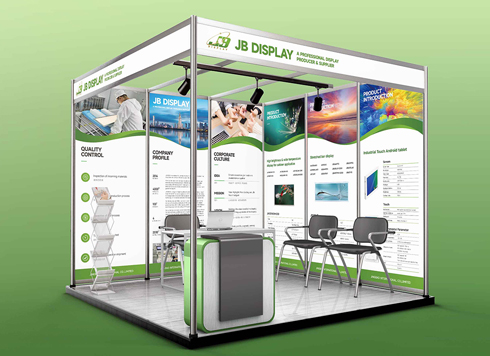 Booth Poster Design for Professional Monitor Product Suppliers
The standard exhibition booth poster projec ...
-
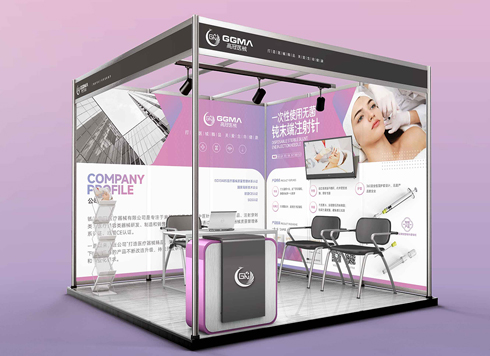 Design of Standard Exhibition Booth Posters for Beauty Instruments
Carefully designed a standard exhibition bo ...
-
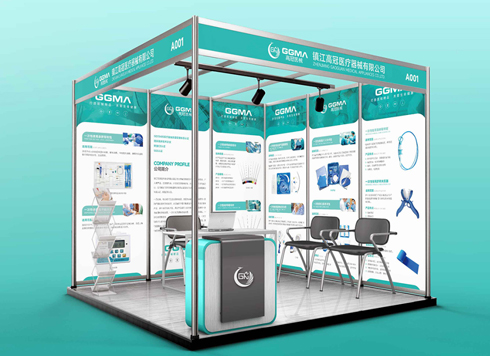 Design of Exhibition Posters for Medical Device Standards
XiYue is designing an exhibition booth post ...
-
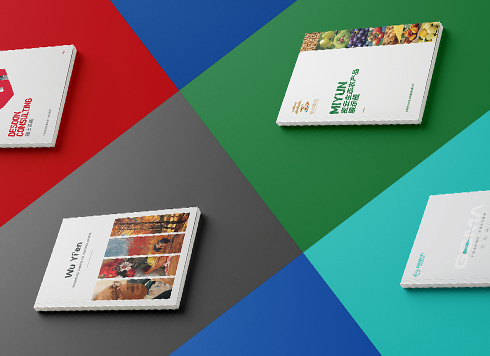 Collection of Brochure Design Cases in 2024 (Cover Series 02)
Our brochure design projects focus on diver ...
-
Can't Finalize Your Packaging Design? What Should You Check for Acceptance?
Date: Sep 1, 2026 Read: 42
-
When checking print quality and paper binding, should you check ink color or page folding first?
Date: Aug 28, 2026 Read: 49
-
Why do advertising poster design quotes vary so much? What's actually different in the deliverables?
Date: Aug 26, 2026 Read: 59
-
Book Layout Design Quotes Can Vary Severalfold, and After Five or Six Revisions You're Still Not Satisfied—Where's the Problem?
Date: Aug 19, 2026 Read: 55
-
How Many Revisions Are Normal for Packaging Design? And Where Does the Money Go When Quotes Differ?
Date: Aug 16, 2026 Read: 65