



Does Using Free Fonts in Commercial Design Come with Copyright Risks?
Free fonts are not necessarily free for commercial use. Under common font licensing agreements in 2026, free fonts are usually fine for personal work or non-profit scenarios. However, as soon as they are used in commercial contexts such as brand promotion, product packaging, e-commerce product pages, or store materials, you must check the license terms for each font one by one. The rule is simple: only use a font if the license explicitly states "free for commercial use"; if it only says "free download" or "personal use," a paid license is required. When delivering graphic design projects, font license proof should be included in the acceptance checklist along with source files.
Why Free Fonts Are Not Necessarily Free for Commercial Use? Check the License Scope
Fonts are software works, and the font files themselves are protected by copyright. Vendors limit usage through license agreements. Many free fonts are only available to individuals or only for non-commercial scenarios; they do not waive commercial rights. In 2026, font stores and vendor websites typically provide a "license information" page. The key is to check three fields: whether commercial use is allowed, whether modification is allowed, and whether the publishing platform is restricted.
In actual delivery, a common situation is: a designer downloads a free font from a download site, uses it in the final work without any verification, and later the customer is contacted by the vendor after using it for outdoor ads or live-stream clips. Such disputes are not uncommon in 2026, and the responsibility often falls on the user. Why? Because the user of commercial materials is usually a company, and font vendors will prioritize seeking compensation from the beneficiary rather than the designer when tracing authorization.
How to Quickly Determine If a Font Can Be Used Commercially? The Three-Step Verification Method
Instead of relying on memory, use a consistent process to verify every time you download a font. We often use the "three-step verification method." It has only three steps, but each step has its boundaries.
- Check the license agreement: Open the license document attached to the font file, or the official license page, and find the "commercial use" clause. If it only says "allowed to use" without mentioning "commercial," treat it as not allowed for commercial use by default.
- Verify the usage scenario: The same font may have different licenses for different media. For example, it might be free for print only but requires payment for online ads or video. Compare your intended use (print, web, app, video, e-commerce) against the license scope item by item.
- Confirm whether modification and embedding are involved: Modifying a font for a logo, converting outlines for printing, or embedding the font in a mini-program or H5 may trigger additional restrictions. If the license does not explicitly allow it, it is considered disallowed.
Why divide it this way? Because font disputes mostly occur in two cases: "usage beyond the license scope" or "modification of the original glyphs." The three steps correspond to three risk points: source, scenario, and modification. If any step fails, you cannot use the font commercially. Once you maintain this habit, you will also keep license screenshots when handing off materials to clients or downstream partners, avoiding the need to supplement proof later.
Common Font Copyright Pitfalls in Commercial Scenarios
Besides not reading the license, there are several high-frequency pitfalls worth listing separately.
- Modifying free commercial fonts: Many open-source fonts allow commercial use but prohibit modification or derivatives. Simply stretching strokes or adding an outline may violate the license.
- The difference between web embedding and appearing in images: Uploading a font to a website or mini-program requires an "embedding" license, while appearing in a design image is usually treated as image distribution. Many people only purchase a standard commercial license and not an embedding license.
- Geographic or time restrictions in the license: Some fonts are free for commercial use only in certain regions or for a limited time. You need to verify the covered region and duration before use.
- Fonts provided by outsourced designers are untraceable: If a designer forwards a font file without license documentation, the client cannot obtain legal usage proof, effectively transferring the risk.
These pitfalls share a common theme: only looking at the font name, not the license terms. In 2026, font vendors' rights enforcement has become increasingly mature, and automatically scanning commercial images for fonts is a common tactic. So verifying in advance is more cost-effective than remedying after the fact.
Where Should Font Copyright Be Verified in Outsourced Design?
When a company hires a graphic designer to create materials, the common practice is for the designer to deliver "finished work + source files," but font copyright is often overlooked. In reality, whether the design fee includes font license fees usually depends on the contract. In the 2026 project delivery practice, we clearly indicate whether each font is free for commercial use, self-purchased, or covered by the designer's existing license, and we deliver the license proof along with the source files.
In one project, the client gave a two-week deadline. The designer used a free font for the entire e-commerce product detail pages. After launch, they discovered the font prohibited commercial use. They had to purchase a license at the last minute and regenerate the images, spending an extra several hundred yuan in license fees and two extra days on revisions. If font licensing had been confirmed before starting, this time could have been saved.
A useful acceptance checklist: font license screenshots, font file source explanation, editable source files, and outlined files for printing. If all these items are provided, future problems are greatly reduced. Comparing the two options, many companies struggle between "having the designer buy the font" and "buying the font themselves."
- Designer purchases the font on behalf: Saves time, but the license holder is generally the designer individually. The client may still be asked to purchase a license later unless the contract explicitly transfers the license.
- Client purchases the font directly: The license holder is the client, and the user is the buyer—clear logic. It requires a bit more time, with an average licensing process taking 1-2 days.
Based on industry experience, buying the font directly gives more peace of mind, because the legal principle of "whoever benefits bears responsibility" makes it safest for the user to hold the license. If a company has long-term design needs, self-purchasing common body and title fonts can be reused, lowering marginal costs.
How Much Budget Should Be Set for Font Copyright? Proportion-Based Estimation Is Safer
For a basic VI (visual identity) set or e-commerce packaging, the font licensing budget typically accounts for 5% to 10% of the total design fee. The typical range for an annual commercial license for a single font is several hundred to several thousand yuan, while a permanent buyout or all-platform license may range from several thousand to tens of thousands of yuan, subject to the vendor's quotation. If the project uses multiple body and title fonts, reserve the budget according to the above proportion.
It is worth noting that not all projects require expensive buyouts. Only when the font is used for a logo or core brand communication does a buyout or long-term license make sense; for one-time promotional materials, an annual license is sufficient. Also, the same font may have different prices for personal desktop use versus commercial server use, so always ask about the intended use when requesting a quote.
Applicable Scenarios and Boundaries
This verification method is suitable for regular corporate materials, e-commerce design, packaging, and print, and can also serve as a reference for outsourcing acceptance. However, if a brand is particularly large and covers all platforms and media, font licensing involves far more channels and scope. In such cases, it is advisable to contact font vendors for all-channel quotes. There is also a category where you need not worry too much: materials used only for internal training or internal documents not distributed externally usually do not require a commercial license. But if they are shown externally or distributed, they are treated as commercial use.
Additionally, while free commercial fonts do exist, the selection is limited. If the brand needs a distinctive character and the budget allows, purchasing a license is a safer path. Do not risk a full rebranding of materials to save a few hundred yuan in licensing fees.
FAQ
Can all free fonts not be used for commercial design?
No. Some fonts explicitly allow free commercial use, but you must see the words "free for commercial use" on the official website or in the license document. If it only says "free" or "personal use," treat it as not commercial.
Do I still need to buy a license when using a free commercial font for a logo?
Yes. Logos often involve modifying, transforming, or embedding the font into a trademark. Most free licenses prohibit modification or use in trademarks. You need to confirm whether the license covers these uses; otherwise, it is recommended to purchase a commercial license.
If a designer uses pirated fonts, will the client bear legal liability?
Yes. As the user and beneficiary of commercial materials, the client is usually listed as a claimant. It is recommended to require the designer to provide license proof for each font during acceptance, and also keep license screenshots in the source files.
How much do font licensing fees typically cost?
Experience range: Annual commercial licenses for a single font range from a few hundred to several thousand yuan, while permanent or all-platform buyouts can reach several thousand to tens of thousands of yuan. For logo fonts, it is advisable to choose fonts with clear licensing methods, and always refer to official quotes.
Based on 2026 delivery practices, avoid the "act first, ask later" approach for font copyright. It is recommended to include font licensing in the requirements checklist at project kickoff, have the designer confirm licensing before producing, and include license proof in the acceptance upon delivery. For internal-only displays or one-time offline materials, if cost-sensitive, you can start with free commercial fonts. But for long-term brand use, e-commerce platforms, and external promotion, it is safer to reserve a licensing budget. The standard always remains: the uses allowed by the license agreement must exactly cover your actual uses.
-
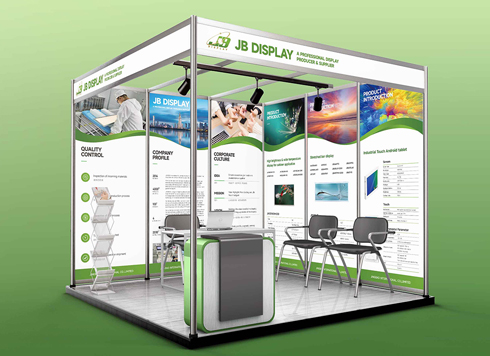 Booth Poster Design for Professional Monitor Product Suppliers
The standard exhibition booth poster projec ...
-
 Design of Standard Exhibition Booth Posters for Beauty Instruments
Carefully designed a standard exhibition bo ...
-
 Design of Exhibition Posters for Medical Device Standards
XiYue is designing an exhibition booth post ...
-
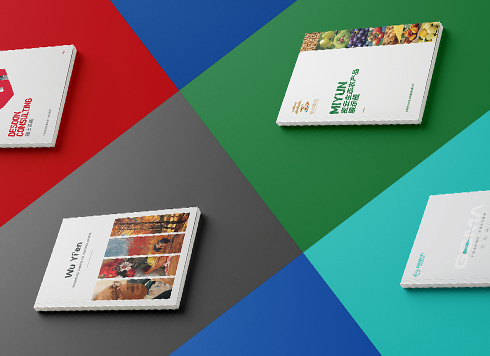 Collection of Brochure Design Cases in 2024 (Cover Series 02)
Our brochure design projects focus on diver ...
-
Client wants source files before final payment — do designers always have to hold the line? Miss these handover details and your reputation suffers
Date: Aug 30, 2026 Read: 42
-
Should You Ask for Source Files When Outsourcing Graphic Design? How Much Extra Does It Usually Cost?
Date: Aug 28, 2026 Read: 52
-
When Designing Packaging Boxes, Who Should Provide the Die Line: the Design Firm or the Printer?
Date: Aug 26, 2026 Read: 68
-
Advertising poster design still needs changes after multiple rounds—is it a matter of missing assets or unclear acceptance standards?
Date: Aug 20, 2026 Read: 53
-
With So Many Template Sites, Do You Still Need to Pay a Graphic Designer?
Date: Aug 19, 2026 Read: 48