



Advertising poster design still needs changes after multiple rounds—is it a matter of missing assets or unclear acceptance standards?
Advertising/poster design is not "drawing a pretty picture" but compressing brand messages into a single image through visual language, so audiences can understand and remember it within 3 seconds. Based on 2026 project delivery practices, to judge whether a commission qualifies, first check whether it meets three criteria: clear goals, defined deliverables, and evidence-based acceptance. Frequent revisions are mostly not due to insufficient designer skills, but to unclear acceptance points discussed upfront.
For repeated revisions, first distinguish whether it's an asset problem or a decision problem
In projects, clients often get stuck in "changes keep missing the mark" but often don't know where the problem lies. Missing assets (e.g., no high-resolution logo, product images with color deviations, copy not finalized) and decision wavering (e.g., marketing department wants one direction, the boss wants another) are two completely different causes that require different handling.
Rework due to missing assets is "waiting for materials to arrive," while rework due to decision wavering is "changing direction." The judgment is simple: if every feedback is "swap the image back" or "change the color back to the original," it's likely decision wavering; if the feedback is "this image is not clear" or "this font is not licensed," it's an asset problem. We suggest clients record each feedback during meetings, categorize them into "assets," "strategy," and "aesthetics," then decide who should make changes.
Before commissioning, put acceptance points into the contract: a four-step verification method
In 2026, many design companies still follow a three-step process of "draft – revision – finalization," but disputes often arise over "how much revision counts as done." Following corporate project delivery practices, we recommend using a "four-step verification method" to fix acceptance points, which can significantly reduce the number of revision rounds.
- Set goals: What should this poster achieve? Brand exposure, event traffic, or product promotion? Different goals lead to completely different design focuses.
- Define deliverables: Which formats are needed? For example, PDF/X-1a for print, JPG for screen, and whether source files (AI/PSD) are included. Missing source files makes later revisions troublesome.
- Set process constraints: What is the print size? Offset or digital printing? Do you need foil stamping, UV, or spot colors? Process choices directly affect file production methods—for instance, spot colors cannot be fully displayed on screen.
- Set revision rounds: Specify how many rounds of changes are included (the experience range is 2-3 rounds) and the scope of feedback for each round. Beyond that, additional fees apply or it is billed as a new project to avoid endless revisions.
Each step in this framework corresponds to an acceptance criterion: for example, after "set goals," both parties confirm a written brief; "set revision rounds" should be in the contract, stating that "each revision must be completed within 2-3 business days after receiving feedback." What counts as qualified? At minimum, the client can clearly say after three rounds that "we are revising details, not the direction."
Quotes vary several-fold—what's the difference? Comparing basic design and full-scope design
Advertising poster design is sometimes a single-piece requirement and sometimes part of a full brand package. Clients often receive quotes ranging from a few hundred to tens of thousands of yuan—the difference is not in "drawing skill" but in service scope and responsibility boundaries.
A common practice is to divide commissions into two categories: basic (single poster design + final files) and full-scope (from strategy formulation, key visual design to extended applications, and pre-press checks). The comparison below can help you decide:
- Scope: Basic version includes only the key visual and final deliverables; full-scope version also includes preliminary research, style direction, and multi-scenario extensions (e.g., social media graphics, banners, roll-up banners).
- Timeline: Basic version typical range is 3-7 business days; full-scope version typical range is 2-6 weeks, including multiple proposals.
- Cost: Basic version experience range is RMB 1,000-5,000; full-scope version experience range is RMB 20,000-100,000.
- Ideal for: Basic version suits single events and short-term promotions; full-scope version suits new brand launches and annual visual consistency.
Another reason for the large price gap is the designer's experience and industry background, but this part is difficult to quantify. We suggest clients not only look at the quote but ask for an itemized "delivery details checklist" and verify each item. If the budget is limited, start with the basic version, but be sure to confirm source file ownership and revision rounds.
Delivery case: a poster project reworked due to incomplete assets
In early 2026, Xiyue Company received a commission for a new product poster from a chain restaurant. The budget was modest, but they required both print and online images. During initial communication, the client said "all assets are ready," but after work started, we found that the product images were only taken by phone and the logo was an old version. We didn't immediately rework; instead, we first created an asset checklist listing the required high-resolution images, font licenses, and copy finals, and asked the client to confirm item by item. As a result, it took 2 business days to complete the assets, and the design was finalized after only one round of revisions. Conversely, in another project, because the client requested a single black plate without confirming the printing process, we discovered at delivery that spot colors were needed, causing a re-output and two extra days of work.
This case shows that constraints (assets, process, timeline) determine the approach. The right approach is to verify asset availability and process parameters before starting; the consequence of skipping verification is that the rework cycle will likely double.
Applicable scenarios and boundaries: when is a full-scope design worth it, and when not
Here is a boundary judgment that can be quoted independently: if you only need one event poster and already have clear copy and photos, there is no need for a full-scope design; a basic design will do. But if your brand will be listed on multiple platforms, needs a unified visual style, or you plan to run promotions for more than a year, the basic version can easily turn into an inefficient loop of repeatedly modifying the same logo.
Meanwhile, it is not recommended to commission design immediately in the following situations: no finalized copy, no high-resolution images of core products, and no clear distribution channels. Otherwise, the design will likely be reworked due to basic information changes. Additionally, if the budget is very low (e.g., below RMB 500) and unlimited revisions are demanded, such commissions often harm both sides. We suggest aligning requirements internally before seeking external help.
FAQ
How many rounds of revisions does an advertising poster design typically need before finalization?
The typical range is 2-3 rounds, provided the initial brief and assets are complete. If you are still changing direction after more than 3 rounds, it is usually a decision-making process problem, not a design problem.
Does the design quotation include source files (PSD/AI)?
Not necessarily. The basic version may not include source files, while the full-scope version usually does. Be sure to clarify the ownership of source files before signing, to avoid paying extra to the original designer for small changes later.
What is the difference between posters for print and posters for screen?
The color modes differ. Print uses CMYK with proper rich black specifications, while screen uses RGB. Additionally, print requires bleed areas, while screen does not. Outputting in different formats at delivery is an essential acceptance point.
What standards must the assets provided to designers meet?
Product images should be larger than 3000 pixels with clean backgrounds; logos should be vector files (AI/EPS); fonts must have confirmed licenses. If the assets don't meet these standards, don't start work, otherwise rework is highly likely.
Action guide: first check whether assets are complete and goals are set, then discuss design. Based on the experience range, 2-3 rounds of revisions are the norm. Compare quotes by deliverable lists, not just the total price. If it's only a single event poster, you don't need a full-scope design; if you need unified visuals, consider full-scope. We hope this article helps you keep revision counts within the normal range.
-
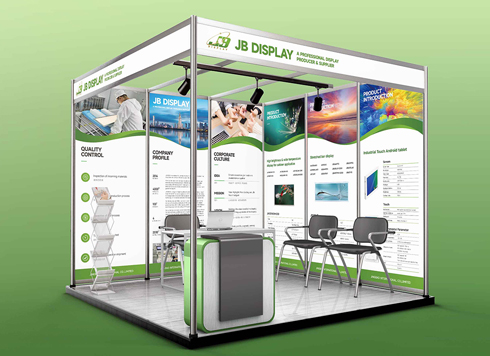 Booth Poster Design for Professional Monitor Product Suppliers
The standard exhibition booth poster projec ...
-
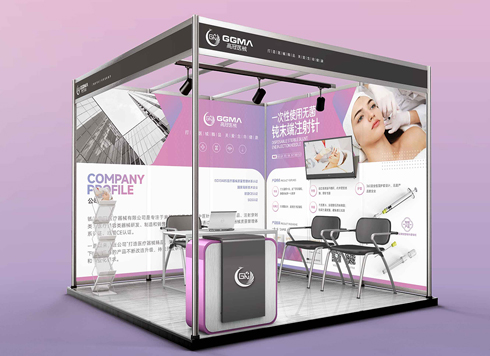 Design of Standard Exhibition Booth Posters for Beauty Instruments
Carefully designed a standard exhibition bo ...
-
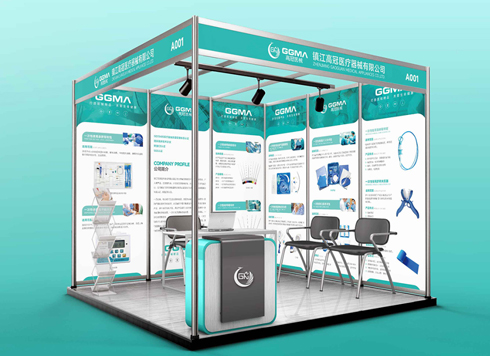 Design of Exhibition Posters for Medical Device Standards
XiYue is designing an exhibition booth post ...
-
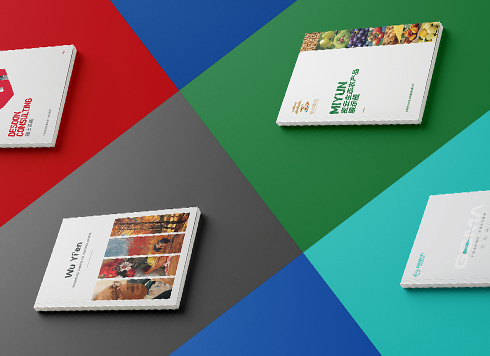 Collection of Brochure Design Cases in 2024 (Cover Series 02)
Our brochure design projects focus on diver ...
-
How to Run a Graphic Design Project: Complete Workflow from Requirement Confirmation to Delivery and Acceptance
Date: Aug 7, 2026 Read: 55
-
Client wants source files before final payment — do designers always have to hold the line? Miss these handover details and your reputation suffers
Date: Aug 30, 2026 Read: 42
-
Should You Ask for Source Files When Outsourcing Graphic Design? How Much Extra Does It Usually Cost?
Date: Aug 28, 2026 Read: 52
-
When Designing Packaging Boxes, Who Should Provide the Die Line: the Design Firm or the Printer?
Date: Aug 26, 2026 Read: 68
-
Book Typesetting Still in Rework After 7–8 Rounds? Should Acceptance Check the Type Area or the Proof First?
Date: Aug 25, 2026 Read: 47