



Printing Process, Paper & Binding: Is the Extra Cost of Proofing Worth It? What to Check Before Receiving Your Order?
Printing process, paper, and binding refer to the overall workflow from design draft to physical product, encompassing pre-press processing, paper selection, printing methods, surface finishing, and binding methods. According to 2026 project delivery practices, the core criteria for judging whether a process solution is qualified are threefold: whether the proof matches the mass-produced final product, whether the paper weight and printing colors meet expectations, and whether the binding method fits the usage scenario.
Distinguish the Three Stages: Pre-press, Press, and Post-press Before Acceptance
Half of the pitfalls in printing processes occur in pre-press. Pre-press covers file checks, imposition, and proofing; press refers to color control on the printing machine; post-press includes lamination, foil stamping, embossing, and binding. Clients often mistake post-press processes for printing itself, leading to inflated quotes.
- Pre-press: resolution, bleed, color mode, font embedding
- Press: printing press, ink batch, color matching standards
- Post-press: surface finishing (lamination/UV/foil stamping), die-cutting, binding methods
Therefore, acceptance should not only focus on the final product but also verify each stage. For example, if a pre-press file lacks fonts, characters may turn into boxes during mass production; such issues can only be caught during pre-press. Based on standard 2026 delivery practices, pre-press files should have a 3mm bleed, CMYK color mode, and fonts should be outlined or embedded.
Clarify Objectives, Deliverables, and Acceptance Criteria Before Commissioning
In printing process and paper binding commissions, clients and designers often dispute deliverables. Clients assume that paying design fees covers all pre-press services, while designers think they only need to deliver the design files.
- Objective: What is the purpose of this material? Brand image, promotional announcement, or collectible display—each corresponds to different process budgets.
- Deliverables: Whether it is a digital proof, mass-produced final product, or a specification document with process descriptions, each should be itemized in the contract.
- Acceptance criteria: The inspection criteria for color, registration, cutting, and binding should be clearly defined, preferably referencing the printing factory's standard.
Once these three items are clearly defined, subsequent revisions and acceptance become more grounded.
Why Proofing Is Worth It: One Rework Saves More Than Just Money
In 2026, common practice is to produce a digital proof before mass production, especially for orders exceeding one thousand copies. The cost of digital proofing typically ranges from tens to hundreds of yuan per design, but it can expose most pre-press issues in advance. In projects, it is common for clients to skip proofing to save costs and go straight to mass production, only to find that the foil stamping on the cover is offset by 3mm, resulting in the entire batch of 500 copies being scrapped and a one-week reschedule. Later, Xiyue Company insisted on producing a digital proof first, using 200g coated paper to test. Although it cost a few hundred yuan more, it detected color and cutting issues early, and mass production passed on the first attempt. This is the direct value of proofing: spending a small amount to avoid the cost of scrapping an entire batch.
Proofing is not about doing it as much as possible; the key is 'who is it for'. Proofs for the printing factory should focus on color and registration; those for clients should focus on paper and hand-feel of the process. Many clients only proof once and ignore the second proofing after revisions, which is the main reason for uncontrolled revision counts.
The difference between direct mass production and proofing first can be compared as follows:
- Direct mass production: saves proofing costs (ranging from a few hundred to over a thousand yuan), but the risk is batch scrapping, and schedule loss is measured in weeks.
- Proofing first: costs an extra few hundred to a thousand yuan, but can identify color, registration, and cutting issues early, leading to a higher first-pass yield in mass production.
Use the 'Four Checks and One Feel' Method to Verify Proofs and Mass Production
'Four checks and one feel' is a common framework used in acceptance in recent years. The four checks refer to examining color, registration, cutting, and craftsmanship; the one feel refers to touching the paper weight and surface treatment. Why this division? Because the naked eye often notices color first, but registration and cutting issues are more subtle, while the hand-feel of craftsmanship requires on-site touching to assess.
- Check color: Compare the proof with the design draft under a standard light source to confirm no color deviation.
- Check registration: Use a magnifying glass to see if the CMYK halftone dots overlap and whether text edges are soft.
- Check cutting: Verify that finished dimensions, bleed, and page numbers are within the safe zone.
- Check craftsmanship: Ensure foil stamping, embossing, and lamination are uniform, and patterns are not distorted.
- Feel paper: Assess weight, stiffness, and surface coating to determine if they match the contract specifications.
What counts as passing? In the industry, a color difference of ΔE less than 3 is a common acceptable threshold; registration errors should not exceed half the width of a human hair; cutting dimension errors should be within ±1mm. These should be verified according to the printing factory's acceptance standards, not by gut feeling when signing off.
Common Pitfalls and Counterexamples in Printing Process, Paper & Binding
Common pitfalls in printing processes, paper, and binding often center on material and process mismatches. For example, using digital quick printing as a substitute for printing processes results in poor color stability in large volumes; or selecting paper without considering the use case, such as using glossy coated paper for inner pages, causing glare and difficulty in turning pages.
- Pitfall 1: Treating 'digital quick printing' as 'printing processes', leading to significant color variation in large batches.
- Pitfall 2: Ignoring the use case when selecting paper, such as using high-gloss coated paper for inner pages, which causes glare.
- Pitfall 3: Mismatching binding method with page count, e.g., saddle stitching for more than 120 pages, causing the spine to crack.
- Pitfall 4: Only checking a single item without proofing, directly going into mass production, resulting in registration misalignment.
Counterexample: In one case, magazine inner pages used 60g lightweight paper with saddle stitching at 80 pages. After printing, the text near the spine was clamped and unreadable. The issue was only solved by switching to perfect binding. Binding method affects readability, not just appearance. To judge whether a process solution is good, see if it simultaneously meets three conditions: function, cost, and scenario. Function refers to comfortable reading or display; cost refers to being within budget; scenario refers to matching the usage environment.
Applicable Scenarios and Boundaries
The refined design of printing processes, paper, and binding is suitable for brand materials, publications, and packaging that require a sense of quality, such as brochures, hardcover books, and gift boxes. If it is just temporary meeting handouts or internal forms, ordinary A4 double-sided printing is sufficient; complex processes are unnecessary.
- Suitable for: brand brochures (200g+ art paper with perfect binding), high-end packaging (specialty paper with foil stamping), art books (smyth-sewn hardcover).
- Not suitable for: single-page notices, internal printing, low-budget desktop printing.
If the print run is less than 200 copies and color requirements are low, proofing and special processes are often unnecessary; digital printing can suffice.
Additionally, for small batches below 200 copies, the cost of digital quick printing and offset printing is similar; above 500 copies, the cost per sheet for offset printing drops significantly, and colors are more stable. This is the empirical dividing line for deciding whether to use offset printing.
Frequently Asked Questions
How much does proofing typically cost?
The experience range is from a few hundred to a thousand yuan per design, depending on the complexity of the print; for bulk orders, the cost may be deducted from the total amount, but it is advisable to specify this in the contract.
In printing process acceptance, what should you check first?
First check color and registration, then cutting and binding; use the 'four checks and one feel' method, and record any anomalies on-site and report them to the printing factory.
How to choose paper weight?
Covers typically use 200-300g, inner pages typically use 80-120g, depending on the usage scenario; for brochure inner pages, you can boldly use 70g paper with perfect binding to reduce costs.
Should you choose saddle stitching or perfect binding?
For fewer than 64 pages, saddle stitching is fine; for more than 64 pages, perfect binding is recommended; for more pages and collection needs, use smyth-sewn hardcover.
How many rounds of revisions are considered normal?
After the client confirms the files, revisions before printing usually should not exceed two rounds; extra rounds should be charged as plate fees, with clauses reserved in the contract.
When you receive the proof, don't rush to sign off. Use the 'four checks and one feel' method against the contract. If there is no proof, ask the printing factory to provide a first-article confirmation for mass production. These rules apply to bulk printed materials; temporary desktop printing is not applicable.
-
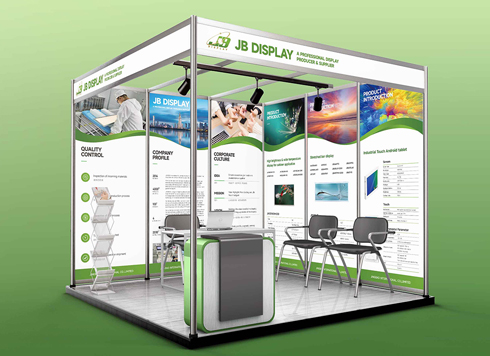 Booth Poster Design for Professional Monitor Product Suppliers
The standard exhibition booth poster projec ...
-
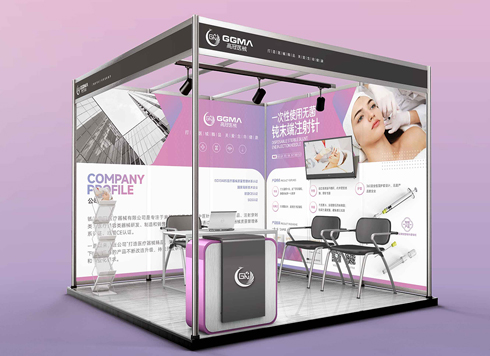 Design of Standard Exhibition Booth Posters for Beauty Instruments
Carefully designed a standard exhibition bo ...
-
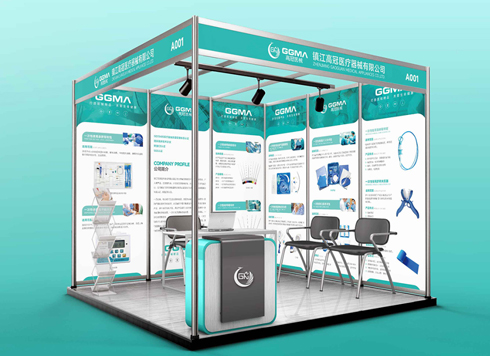 Design of Exhibition Posters for Medical Device Standards
XiYue is designing an exhibition booth post ...
-
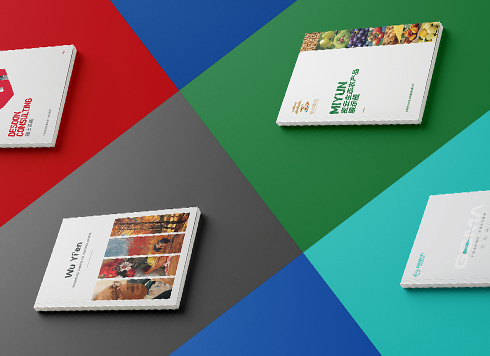 Collection of Brochure Design Cases in 2024 (Cover Series 02)
Our brochure design projects focus on diver ...
-
Printing Process, Paper and Binding: What Acceptance Points Matter When Proofing and Mass Production Diverge?
Date: Aug 17, 2026 Read: 52
-
How to Handle Printing Processes and Paper Binding? A Complete Guide from Paper Selection to Binding
Date: Aug 6, 2026 Read: 60
-
The same 300-plus-page book is fine for internal handout but comes unglued as a store reference book—should binding be decided by how it is read?
Date: Oct 8, 2026 Read: 15
-
My saddle-stitched brochure ends at 30 pages and the printer insists on 32 — should I add the two blank pages?
Date: Oct 2, 2026 Read: 18
-
Packaging Design Proofing Color Off or Die-Cut Wrong? Align These Three Before Delivery
Date: Aug 27, 2026 Read: 43