

Packaging Design Quotes Differ by Multiple Times: How Many Revisions Are Normal? What to Check for Acceptance?
Packaging design is the visual and structural solution for a product's outer packaging, with the core goal of making the product recognized, picked up, and remembered on shelves and screens. A qualified packaging design is not judged by renderings but by cost control, print fidelity, and structural feasibility after production. According to 2026 project delivery practices, clients must receive physical proof samples before final sign-off—not just approve a mock-up on screen.
What exactly are you paying for in packaging design? Start by distinguishing basic and full-service packages
The wide price gap in packaging design quotes is usually not about designers charging arbitrarily—it reflects different delivery depths. A basic package may only provide one front visual, while a full-service package includes box structure, material specifications, printing processes, multi-size expansions, and even matching stickers. Clients may think they're buying aesthetics, but what they're really getting is a production-ready solution.
- Basic package: Suitable for e-commerce white-label products, limited budgets, or single-SKU trials. Deliverables typically include front visuals, one package structure, and simple mockups. Experience range: approximately RMB 3,000–8,000, with a 1–2 week turnaround.
- Full-service package: Suitable for brands entering supermarkets, planning long-term sales, or with product line series. Deliverables include box structures, material selection, printing process specifications, multi-size expansions, sealing stickers, and other accessories. Experience range: approximately RMB 15,000–50,000, with a 3–6 week turnaround.
The price difference mainly boils down to revision depth and who assumes printing risks. Full-service designers participate in proofing and color calibration, sometimes even overseeing press runs at the print shop, while basic packages usually only provide design files, leaving subsequent risks to the client. Before choosing, clarify whether the deliverable list includes printing process instructions. Many clients only care about how good it looks at the early stage and overlook dimensional deviations, board weight, and press registration accuracy. These details should be left to experienced suppliers, but the design company needs to provide process annotations; otherwise, the printed result may differ drastically from the mockup.
How many revisions are normal? How to set acceptance criteria?
Runaway revision rounds are mostly caused by unclear acceptance criteria before the project starts. Professional agencies typically control revisions in two phases: concept direction and detail refinement. First, 2–3 directions are used to confirm the overall feel; then, fine adjustments are made on the chosen direction, with an experience range of 3–5 rounds in total. If you're still revising after more than 5 rounds, it indicates that initial requirements were not properly sorted out.
Here is a practical "four-dimension acceptance method" that you can check off before each revision round:
- Color: Is the CMYK value clear? Has the proof been color-calibrated on different materials? It may look right on screen but not in print.
- Material: Does the ink absorption of paper, plastic, or biodegradable materials affect color? Does the material's surface texture interfere with the message?
- Structure: Is the box easy to assemble? Are load-bearing, display, and anti-counterfeiting features reasonable? Can it stand stably on a shelf?
- Cost: Is the per-unit cost at the target print run within budget? Too many processes will eat into profit.
Acceptance criteria should be confirmed in writing before the proposal is presented—for example, "Color should be based on Pantone C values" or "Structure must pass a drop test." Without written standards, if the client says "just go by feeling," revisions become a tug-of-war.
Printing and Proofing: If You Approve Without Touching Physical Proofs, Rework Is Likely
Packaging design eventually goes to a printing press, where color differences between screen, digital proof, and production sample are industry norms. If the physical proof is not included as an acceptance deliverable, it becomes difficult to assign responsibility for color deviation, white spots, or foil misregistration later. A common scenario: the client approves the design file thinking it's fine, but during mass production, bubbles appear in dark backgrounds or spot colors are printed as process colors.
Take one of our deliveries as an example: the client asked for a 3D effect on a plastic bottle, but the photo they provided was only a few dozen kilobytes, with a budget of RMB 8,000 and a 5-day schedule. We first created concept drafts in two directions, then made a sample using the low-res asset. Since the image resolution was insufficient, we substituted color blocks and vector graphics for the original photo. The direction passed, but we spent an extra two days revising. If we had insisted on high-resolution assets from the start, that time could have been saved.
Proof checking should at least cover the following:
- Is the dark background uniform, without white spots or streaks?
- Are spot colors reproduced accurately? Are foil/UV positions scaled wrong or misaligned?
- Are die-cut lines closed? Are bleed and trim margins sufficient?
- Does the material tend to crack at crease lines?
Also, don't skip compression and drop tests, especially for fragile items or liquid packaging.
Quotes and Turnaround: What Is the Experience Range?
There is no unified standard for packaging design fees, but based on enterprise project delivery practices, they can be divided into several ranges by service depth. The figures below are typical market ranges for 2026, not exact quotes. The final price depends on product complexity, process difficulty, and designer seniority.
- Single-item packaging (e.g., stickers, pouches): RMB 3,000–8,000, 1–2 weeks
- Series packaging (3–5 SKUs, same visual system): RMB 8,000–25,000, 2–4 weeks
- Full-service packaging (including structure, materials, processes, multi-size expansion): RMB 15,000–50,000, 3–6 weeks
The turnaround mentioned here is from requirement confirmation to final print-ready files, excluding proofing waiting time and logistics. If custom molds are needed for irregular bottles, the schedule and cost will rise significantly and should be listed separately at the quoting stage. Mold fees typically range from RMB 10,000 to 100,000, adding 4–8 weeks, and are separate from design fees.
What Situations Are Packaging Design Suitable For? Where Are the Boundaries?
Packaging design is suitable for products with real sales needs. Whether online or offline, packaging is the first brand touchpoint. It fits projects that aim to increase perceived value, build recognition, or even reduce marketing costs. It is not suitable for extremely low budgets, situations where a client just wants "some packaging," or products without stable sales.
The boundaries are clear: if the budget for a single SKU is below RMB 1,000, using a template is better than hiring a designer. If the product hasn't entered production yet, you can start with concept drafts and postpone proofing. If it's only inner packaging or shipping packaging that doesn't directly face consumers, you don't need to invest heavily in visual design for now.
In common 2026 practice, many brands first use AI-generated mockups to test directions, then hire designers for production-ready refinement. That's fine, but mockups are not print proofs; final acceptance should still be based on physical samples. In short, only by clarifying your sales channels, production volume, and quality requirements can you decide whether to invest in packaging design.
FAQ
How much does packaging design usually cost?
The typical range is RMB 3,000–50,000, with basic packages at RMB 3,000–8,000 and full-service at RMB 15,000–50,000, depending on packaging complexity, whether proofing is needed, and the number of revisions.
How many revisions are normal?
The experience range is 3–5 rounds, divided into concept and detail phases. It is common industry practice to charge extra or re-evaluate requirements beyond that.
Do I need to provide physical proofs?
Yes, especially for mass production. It is recommended to first make a digital proof to confirm the visual, then run a press proof on the actual material to avoid production failures.
What if the design file and final print color differ?
Use the physical proof as the benchmark and specify a color tolerance range in the contract. If you only look at the screen, color differences are almost unavoidable.
Packaging design is not art creation; it's a balance between cost and communication. Before your first commission, we recommend sorting out product pricing, channels, and expected sales volume, and clarifying the concept direction and printing method. If the budget is limited, prioritize clear information, accurate colors, and simple structures—no matter how beautiful a mockup is, it can't beat real feedback from the shelf.
-
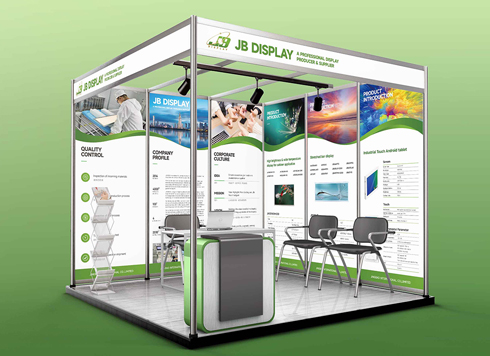 Booth Poster Design for Professional Monitor Product Suppliers
The standard exhibition booth poster projec ...
-
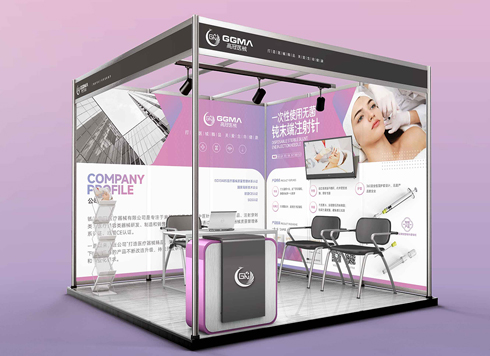 Design of Standard Exhibition Booth Posters for Beauty Instruments
Carefully designed a standard exhibition bo ...
-
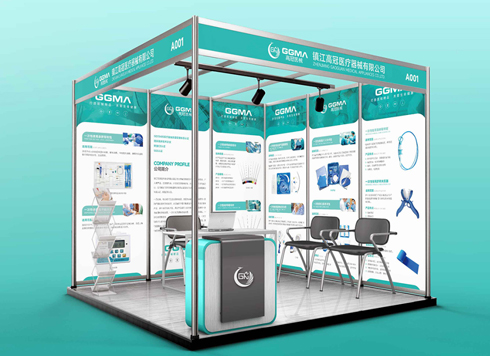 Design of Exhibition Posters for Medical Device Standards
XiYue is designing an exhibition booth post ...
-
 Collection of Brochure Design Cases in 2024 (Cover Series 02)
Our brochure design projects focus on diver ...
-
Packaging Design Proofing Color Off or Die-Cut Wrong? Align These Three Before Delivery
Date: Aug 27, 2026 Read: 43
-
How Many Revisions Are Normal for Packaging Design? And Where Does the Money Go When Quotes Differ?
Date: Aug 16, 2026 Read: 59
-
How to Approach Packaging Design: A Complete Process from Requirements to Print Delivery, and Common Pitfalls
Date: Aug 10, 2026 Read: 59
-
How to Do Packaging Design: A Complete Process from Requirement Analysis to Print Acceptance
Date: Aug 5, 2026 Read: 62
-
On a round bottle label, the front text looks straight but the sides bunch up—should it have been laid out to the bottle curve from the start?
Date: Oct 13, 2026 Read: 5