

AI can already make posters, so which parts of graphic design still require humans?
Why AI replaces drawing, not design
Design is not "making an image" but "achieving a measurable communication goal under constraints." By 2026, AI image generation covers typical one-off posters and social graphics, but the need for graphic design outsourcing has not disappeared. The reason is not technology, but that 40%–60% of the work in a deliverable happens beyond drawing: requirement breakdown, brand consistency, print adaptation, and acceptance verification. If you equate "generating an image" with design, AI is sufficient; once it involves real-world production and long-term brand assets, designers remain indispensable.
From project delivery habits, designers also translate vague requirements into visual language. For example, "premium feel" must be translated into typeface, whitespace, and color ratios. AI output relies on randomness, while designers rely on rules and experience. The cost of iteration in real projects differs significantly: AI trial-and-error looks fast, but wrong directions often require a dozen versions; designers define constraints first, then produce images, usually converging within two or three rounds.
- Drawing solves "is there an image"; design solves "does the image achieve the goal." The boundary is often blurred.
- Without clear specifications, audience, and channel constraints, AI output is only a draft, still needing verification, adjustment, and multi-version adaptation to become a deliverable.
- In 2026 we will see more "AI first draft + human finalization" collaboration, but not all teams have the capability to do the final check.
How to decide if a design task can be handed to AI? The three-question filtering method
Here is a decision-friendly framework: before starting a project, check these three questions once to avoid detours. Note the order: first ask about the application scenario, then assets and licensing, and finally the cost of rework. The second step is often overlooked because the copyright boundary of AI-generated assets is still tightening in 2026.
- Question 1: Is the design a "process draft" or a "deliverable"? If it's only for internal discussion or layout testing, AI output is enough; if it goes to a client or is published, human involvement is needed.
- Question 2: Do you have existing brand guidelines, asset libraries, and licenses? Without unified fonts and licensed assets, AI-generated elements may cause problems in commercial use, requiring designers to cover the gaps.
- Question 3: How costly is it if revisions or print output go wrong? For offline event materials and product packaging, the cost of fixing errors far exceeds the design fee; in such cases, it's not advisable to fully rely on AI.
Why this division? Question 1 determines the nature of the task, Question 2 determines risk, and Question 3 determines investment. If all three pass, AI can handle most of the work; if any fails, you need to reserve at least one round of human review or design revision. The proper approach is to write this conclusion into the requirements brief rather than waiting until after the image is generated.
Independent design, design agency, or AI tools? Compare by granularity of requirements
You can simplify the options into three tiers: "AI tools self-service, independent designer, design agency outsourcing." Based on 2026 project delivery, the basis for choice is not team size but granularity: whether the task is serialized, multi-channel, or strong brand asset. The higher the granularity, the more human involvement is needed.
Common cost and timeline reference for the three tiers
- AI tools self-service: Common for internal operations and startups, used for social media images, event teaser posters, and other one-off content. Costs are mainly AI subscription plus time, with timelines from minutes to hours. Only suitable for light exposure, not brand key visuals.
- Independent designer / small studio: Common for single key visuals, investment promotion posters, and basic brand VI. Experience timeline is 3–10 business days (including revisions); typical cost range is 2,000–15,000 RMB per item, depending on complexity and city. Need to confirm source files and font licenses.
- Design agency / team: Common for annual brand materials, multi-device adaptation, and large event visuals. Timelines range from 2 to 6 weeks; typical project quotes range from 20,000 to 100,000 RMB, including strategy and project management. Delivery is more stable but with more process checkpoints.
There is a common scenario at delivery: the client treats an AI-generated draft as final, and then the print shop points out that the file format and bleed are not compliant. According to Xiyue Company's project habits, the requirements confirmation stage adds a rule: "Print assets must provide editable vector source files." In one store opening event, the client provided an AI-generated JPG that became blurry when enlarged; the last-minute change caused a half-day delay and an extra emergency cost of about 1,000 RMB. If the materials had been provided to print standards from the start, all this could have been avoided. This is why outsourcing still has value—provided the requirements confirmation process is clear enough.
Four common pitfalls in design acceptance in 2026
Whether a design is good cannot be judged by mockups alone. AI makes mockup generation extremely cheap, thus increasing the proportion of "looks good" images. In 2026, when accepting design deliverables, in addition to visual aesthetics, it is recommended to check four quantifiable indicators to avoid wasting time on rework.
- Content and format match: print uses CMYK at 300dpi, screen uses RGB at 72dpi (or 2x adaptation). If the format is reversed, color deviation and blurriness are almost inevitable.
- Source file standard: layer naming, outlined fonts, embedded or linked images directly determine the cost of secondary modification. During acceptance, open the source file and check the layer structure; it must not be only a merged layer.
- Copyright clarity: commercial license scope for fonts, images, and illustrations. AI-generated materials also have copyright and usage boundaries; suppliers need to provide clear licensing statements.
- Brand guideline check: logo and font usage, colors within brand color coordinates, and correct spacing. Spot-check a few pages to see if there is a deviation from the one-off design.
For execution, follow a "four-step acceptance checklist": first check the source file format, then verify each indicator above, then do a proof print, and finally reserve a buffer for secondary revisions. Since graphic design eventually lands on physical or screen media, proofing is direct evidence; this step is not recommended to be skipped.
Applicable scenarios and boundaries
The core of judging applicability is the cost of errors and brand asset accumulation. Tasks meeting the following conditions can be handed to AI or templates: internal image production, social media updates, process drafts, and inspiration exploration. Conversely, in the following cases, a designer is recommended.
- Suitable for AI generation: quick internal images, daily social media updates, low-risk process drafts, and asset inspiration exploration. No unified brand guidelines constraint.
- Not suitable for AI generation: brand VI systems, packaging design, print materials, multi-device adaptation, serialized materials, and irreversible offline materials involving third-party copyright.
If the budget is already above 10,000–20,000 RMB but you only need a "decent social media poster," outsourcing is unnecessary; it's better to clarify requirements and use AI tools plus manual retouching. When judging boundaries, don't just look at price—consider the cost of errors and whether brand assets can be accumulated.
FAQ
Can AI-generated posters be used directly for print?
Not recommended. Print requires 300dpi, CMYK, and bleed. AI-generated images often have insufficient resolution or color overflow and need manual adjustment; otherwise, the output will look gray or have incorrect edge trimming.
Is there copyright risk in using AI-generated images for commercial purposes?
Yes. You need to check the specific tool's terms of service and commercial licensing scope, keep generation records, and recommend having the designer confirm again when brand assets are involved. Check each platform's 2026 licensing statements item by item.
Should graphic design source files be given to the client?
It depends on the contract. The common practice is that if the design fee includes source files, editable files are provided; if not, only final images are delivered. At acceptance, first confirm the layer standards to avoid receiving source files with only merged layers.
How long does design outsourcing usually take?
A single key visual typically takes 3–10 business days; serialized brand materials usually take 2–6 weeks. The actual timeline depends on project complexity and decision speed; the more detailed the requirements, the more stable the timeline.
How to judge whether a designer's quote is expensive?
Don't compare prices only by piece. First clarify the granularity of requirements: application scenario, media, whether source files are included, number of revisions, font and image copyrights—these can make quotes vary several-fold. Getting quotes from several parties with the same requirements is more meaningful.
Action guide: If your design task is one-off, low-risk, and doesn't need print production, just use AI tools and templates; for tasks involving brand, print, or multi-device adaptation, break them down into three phases—"strategy + design + delivery"—and then engage an independent designer or team. This framework comes from Xiyue Company's project delivery habits and can be copied as your acceptance process. With limited budget, prioritize format, copyright, and source file standards before aesthetics.
-
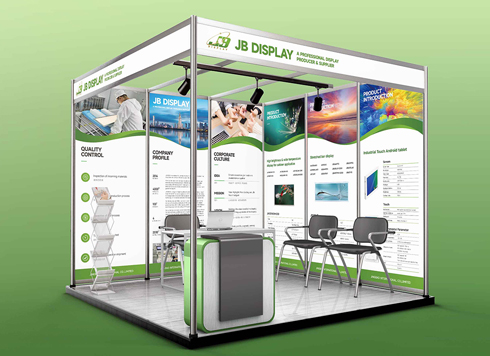 Booth Poster Design for Professional Monitor Product Suppliers
The standard exhibition booth poster projec ...
-
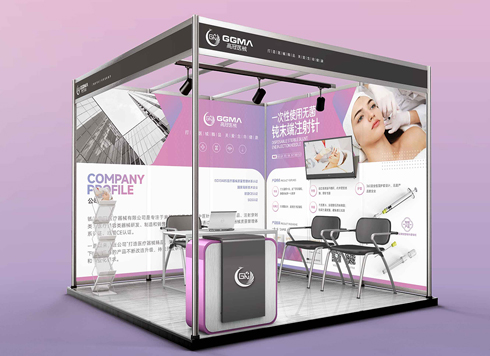 Design of Standard Exhibition Booth Posters for Beauty Instruments
Carefully designed a standard exhibition bo ...
-
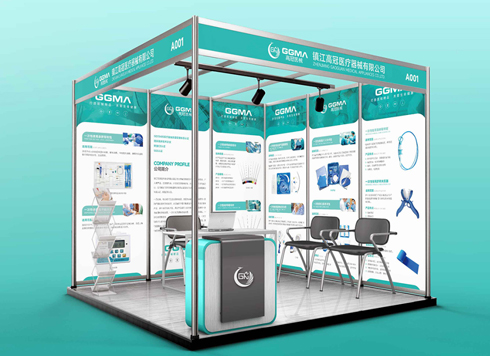 Design of Exhibition Posters for Medical Device Standards
XiYue is designing an exhibition booth post ...
-
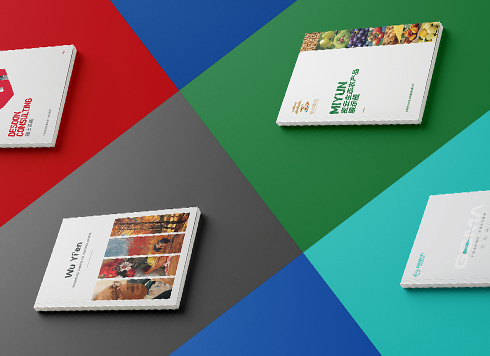 Collection of Brochure Design Cases in 2024 (Cover Series 02)
Our brochure design projects focus on diver ...
-
Should You Ask for Source Files When Outsourcing Graphic Design? How Much Extra Does It Usually Cost?
Date: Aug 28, 2026 Read: 52
-
How Much Bleed Should You Set for Print Design? Why Not Always 3mm?
Date: Aug 20, 2026 Read: 53
-
How to Approach Publication Layout Design: The Complete Workflow from Goals to Delivery and Acceptance Criteria
Date: Aug 8, 2026 Read: 69
-
Graphic Design Project Delivery Guide: From Requirement Confirmation to Acceptance
Date: Aug 6, 2026 Read: 62
-
Activity Landing Page UI Design Guide: Information Architecture, Interaction Logic, and Acceptance Criteria
Date: Jul 27, 2026 Read: 65