


How Many Revisions Are Normal for Packaging Design? And Where Does the Money Go When Quotes Differ?
Packaging design is the opening statement of a brand on the shelf. Its primary goal is to help target consumers recognize, remember, and pick up the product within about 3 seconds. There are three bottom-line criteria for judging whether a packaging design is good: clear information hierarchy, strong recognition on shelves or screens, and faithful reproduction of the design after printing. Based on project experience in 2026, if any of these three is missing, even the most beautiful solution may not be feasible.
What Problems Does Packaging Design Actually Solve?
Packaging design is not just about drawing a pretty picture. It simultaneously serves three tasks: product communication, brand expression, and sales conversion. According to common project delivery practices in 2026, a complete packaging design solution should at least cover: visual extension of brand identity, hierarchical presentation of product information, recommendations on material and printing process matching, and adaptive layout for different sizes.
- Information communication: Consumers look for key information such as product name, net weight, and shelf life at first glance; the design must not hide these for the sake of aesthetics.
- Scenario differentiation: Shelf display, e-commerce detail pages, unboxing experience, and transportation protection require different materials and structures.
- Cost control: The more complex the design, the higher the printing and process costs. Production costs must be considered during the design phase.
A common situation in projects is that the client focuses only on appearance, ignoring that the packaging must be manufacturable, shelf-ready, and pass regulatory review. A qualified design solution should include process descriptions, material recommendations, and printing notes—not just a single rendering.
Why Do Packaging Design Quotes Differ by Several Times?
Packaging design quotes range from a few thousand to tens of thousands of yuan. The gap mainly comes from design depth, number of revisions, and post-launch follow-up services. A basic package usually only provides the front main visual and a box die-cut template, essentially draft-level. A full package includes market research, brand strategy sorting, multi-option designs, structure suggestions, and print color matching. The typical experience range is: basic version 3,000–8,000 yuan, standard version 8,000–20,000 yuan, and full package above 20,000 yuan.
The price difference mainly lies in three areas: whether pre-project competitive analysis and consumer insights are conducted; how many design directions are offered for the client to choose from; and whether pre-press checks and production follow-up are handled by the designer. According to industry practice in 2026, pre-press checks are usually billed separately, though some full packages may include them.
- Basic version: Suitable for short-term promotional items or small-batch trial packs, with low requirements for brand continuity.
- Standard version: Suitable for new product launches or upgrades of existing products, including 2–3 design directions and fine-tuning of 2 proposals.
- Full version: Suitable for brand series packaging, requiring a unified visual language covering multiple specifications and materials.
If the budget is limited, prioritize making the main-selling product solid before expanding the series. Do not ask the designer to copy competitors' style to save money, as the resulting packaging will lack recognition and easily get lost on the shelf.
How Many Revisions Are Normal for Packaging Design?
Revision count is a common point of dispute between clients and designers. Based on the experience range, it is normal for a packaging design to go through 5–8 rounds of minor adjustments from initial draft to final version. If it exceeds 10 rounds, it usually indicates unclear requirements or a long decision-making chain. The key is whether each round of revisions focuses on brand direction and core information, rather than personal preferences on details.
In 2026, many projects adopt a stage-by-stage confirmation mechanism: one confirmation for creative direction, one for initial draft feedback, one for detailed revisions, and one for pre-press confirmation. It is recommended that clients specify a cap on revision rounds in the contract, with additional rounds billed individually. This encourages both parties to treat each round of feedback seriously.
Packaging Design Acceptance: Key Points to Avoid Rework
During acceptance, first check whether the design files include printing-essential elements: bleed, safe margins, color mode (usually CMYK), embedded fonts, and image resolution of at least 300 dpi. If these basic items are not up to standard, the printer will reject the files. Stricter requirements may also include material recommendations and process annotations.
Common disputes at the delivery stage revolve around color: it looks brighter on screen but darker in print, due to the different color rendering principles of screens and printing. Common experience is: when a color difference appears, first check the paper coating and printing process before deciding whether to change materials. In one project, repeated color adjustments were made because the red was not vivid enough. The final proof showed that the matte film material absorbed light; switching to a glossy film with an additional UV coating solved the problem. The cost was an increase of tens of yuan per thousand packages. The experience range is: extra revisions caused by color disputes account for about one-third of total revisions, and one proofing session can avoid most rework risks.
- Information verification: Are the product name, ingredient list, barcode, and production date placement accurate? Is any production license information missing?
- Structural execution: Do the box dimensions match the actual product? Will the cardboard thickness prevent the lid from closing?
- Process annotations: Are the positions and color codes for processes such as foil stamping, UV, and embossing clearly specified?
The acceptance pass line is: the files can be sent directly to print without requiring the designer to provide additional explanations on the spot. Only when this is achieved is the delivery truly complete.
When Should You Do a Full Design Package, and When Not?
Applicable boundaries: new product launches, brand upgrades, and entering new channels. In these three cases, a full packaging design package is recommended, because the visual needs to be derived from strategy and the product family language unified. If it is just a single short-term promotional item, a regional trial pack, or only the copy needs updating on an existing package, you do not need to spend a lot on a complete redesign. You can make localized adjustments to the existing template.
To be more specific: when the budget is below 3,000 yuan, it is difficult to obtain a complete service that includes strategy and follow-up; when the budget is above 50,000 yuan, you need to confirm that the designer really covers a full package for multiple specifications and materials, rather than repeatedly changing the main visual to delay the schedule. The experience range is: a full design for a single SKU usually costs 8,000–20,000 yuan, and series packaging (3–5 SKUs) costs 20,000–50,000 yuan. If the quote exceeds this range, be wary of additional charges or over-design.
If the decision chain is long, it is recommended to first clarify brand keywords and the mandatory information list internally before hiring a designer. This reduces unnecessary revisions and makes it easier to assess whether a quote is reasonable.
Frequently Asked Questions
How long does packaging design usually take?
The experience range is: 7–15 days for the initial plan, plus 10–20 days for revisions and proofing. If you are in a hurry to get on the shelf, at least 5 days should be reserved for pre-press and proofing, otherwise accidents are likely.
Is it worth outsourcing packaging design for a single product?
If the product is a key promotional item, yes. If it is just a regional trial pack, you can first modify the copy on the existing template to save design costs. The criterion is how long the packaging will be used and how much impact it has.
Is it normal for a design company to not provide source files?
Common practice is to give JPG or PDF during the initial payment stage, and AI or PSD source files after full payment. If the source files are provided at the beginning, the designer would be in a passive position. It is recommended to specify the source file delivery conditions in the contract.
Is it necessary to do a printing proof after packaging design?
Yes. Digital proofs differ from actual printing, especially for processes like foil stamping and UV. It is recommended to make a few samples before mass production. The loss from a batch rework far outweighs the cost of proofing.
How can you tell if a packaging design is effective?
You can conduct small-scale consumer tests, such as placing the design alongside competitors on a simulated shelf and taking photos to see if your product can be recognized within 3 seconds. Another hard metric is whether e-commerce click-through rates or trial pack redemption rates change.
Before initiating packaging design, first clarify the product positioning, channels, and budget, then decide whether to do a full package or partial adjustments.
-
 Booth Poster Design for Professional Monitor Product Suppliers
The standard exhibition booth poster projec ...
-
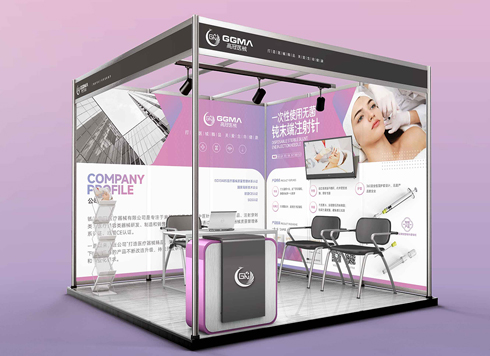 Design of Standard Exhibition Booth Posters for Beauty Instruments
Carefully designed a standard exhibition bo ...
-
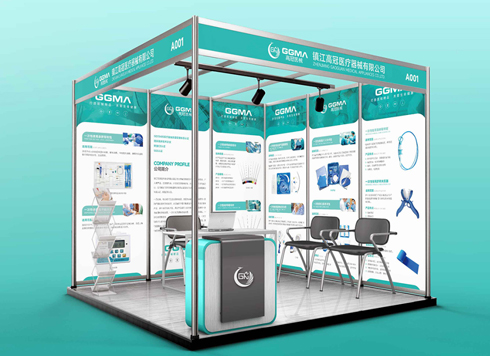 Design of Exhibition Posters for Medical Device Standards
XiYue is designing an exhibition booth post ...
-
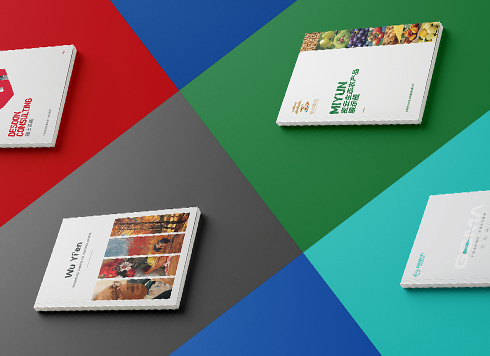 Collection of Brochure Design Cases in 2024 (Cover Series 02)
Our brochure design projects focus on diver ...
-
Can't Finalize Your Packaging Design? What Should You Check for Acceptance?
Date: Sep 1, 2026 Read: 38
-
Packaging Design Quotes Differ by Multiple Times: How Many Revisions Are Normal? What to Check for Acceptance?
Date: Aug 21, 2026 Read: 51
-
How to Approach Packaging Design: A Complete Process from Requirements to Print Delivery, and Common Pitfalls
Date: Aug 10, 2026 Read: 60
-
How to Do Packaging Design: A Complete Process from Requirement Analysis to Print Acceptance
Date: Aug 5, 2026 Read: 62
-
Same Gift Box Fine In-Store but Falls Apart in Express—Should the Insert Be Made in Two Channel-Specific Versions?
Date: Oct 7, 2026 Read: 14