


Packaging Design Proofing Color Off or Die-Cut Wrong? Align These Three Before Delivery
Packaging design is not just "drawing a box"; it is a handover solution between brand visuals and production processes centered on the product's outer packaging. The core criterion is whether the delivery files can consistently reproduce the design intent within budget and production constraints—including color codes, die-cut lines, materials, and readable information. Following 2026 project delivery practices, align delivery files, printing processes, and acceptance standards before discussing whether the design is good.
Many brands compare prices using mockups without realizing that mockups and pre-press files are two different things. Packaging ultimately goes into production, where color, die-cutting, and materials affect the finished product's appearance. In the common outsourcing process of 2026, design companies need to confirm the process route at the proposal stage; otherwise, the cost of later revisions will multiply.
What Exactly Does Packaging Design Deliver? Distinguish Between Mockups and Pre-Press Files First
The delivery checklist for packaging design typically falls into two categories: one is presentation files for decision-makers (JPG/PDF mockups), and the other is production files for printers (PDF/X-1a, AI, CDR). To judge whether a packaging design delivery is qualified, first check if the production files are complete: whether all text is converted to outlines, whether bleed is at least 3mm, and whether die-cut lines are on separate layers with dimensions marked.
In projects, it is common for clients to get stuck on "source files": they want to change a production date or shelf life, but images are merged and fonts are lost, so they have to start over. Therefore, when delivering, be sure to check the editability and layer structure of the files, not just the number of folders.
- Presentation mockups: Used for internal reviews and e-commerce detail pages, not for direct printing.
- Pre-press files: Include bleed, color bars, die-cut lines, and outlined text; these are directly usable by printers.
- Editable source files: Such as AI/PSD, with clearly named layers, linked or embedded images, and marked color mode.
For brands, if you receive a pile of PDFs without editable source files, changing even a single number after production becomes a headache. This should be clearly stated in the contract, such as "editable source files delivered after final payment," to avoid disputes later.
Three Things to Align Before Proofing: Color, Paper, and Die-Cut
Packaging proofing failures are mostly not because "the design doesn't look good," but because color, paper, and die-cut lines were not aligned in advance. The following "Color-Paper-Die-Cut" checklist is a framework we repeatedly use in enterprise project deliveries, with three letters corresponding to three acceptance actions.
Color: Color Mode and Color Cards
Screens display RGB, printing uses CMYK, and packaging printing may also use spot colors (such as foil stamping or fluorescent colors). A common practice is to first ask the printer which spot colors are supported, then assign Pantone numbers or the factory's own color cards to the design. If CMYK values are used directly, color differences on different materials may be visible to the naked eye.
Paper: Paper Type and Grammage
The same red printed on coated paper versus kraft paper can look like two completely different colors. Paper ink absorption, surface coating, and smoothness all alter the final appearance. During acceptance, confirm the paper type, grammage, and surface treatment (lamination/oiling), and have the printer use the same batch of paper for proofing.
Die-Cut: Die-Cut Lines and Cutting
Die-cut lines define the packaging's outline path; inaccurate die-cutting can cause box lids to warp or fit poorly. When checking die-cut lines, confirm whether dimensions are calculated based on the finished product's outer diameter, whether bleed and crease positions are reserved, and whether irregular die-cutting has its own layer. The experience range is a die-cutting tolerance of ±0.5mm, but this varies by factory.
- Step 1: Use color cards to confirm the standard value for each color and note it in the file description.
- Step 2: Ask the printer for samples of common paper types, and feel the stiffness by touching and bending.
- Step 3: Send the die-cut line file to the printer to confirm tolerances and imposition method.
At delivery sites, we have encountered clients with a budget of 20,000 yuan who needed 5 SKUs. We designed using a "shared key visual + color differentiation" approach, but the client insisted on skipping proofing and going straight to mass production. As a result, the kraft paper background turned pinkish, and the entire batch was scrapped, with rework costs far exceeding the proofing fee. Later, the company established a rule: if the budget is insufficient, you can reduce SKUs, but proofing cannot be skipped.
How Many Revision Rounds Are Normal? Where Do Price Differences Arise?
According to common outsourcing rules in 2026, 2–4 rounds of revisions are normal for packaging design, and more than 5 rounds should trigger a review of whether preliminary information was not aligned. Many revisions do not necessarily mean poor design; it may be that revision boundaries are unclear, such as a directive like "make the color pop more," where you have no idea which direction to go.
Price differences of several times are commonly seen in four aspects: first, whether strategy sorting is included (brand positioning, shelf logic); second, whether illustrations or 3D modeling are involved; third, whether pre-press inspection is thorough; and fourth, the number of follow-up coordination sessions with the factory for proofing. A few-thousand-yuan project typically offers one concept with minor revisions, while a tens-of-thousands-yuan full package includes packaging structure suggestions, multi-concept comparison, and factory support. Which one to choose depends on your required delivery depth; more expensive is not necessarily better.
- Basic (experience range: 8,000–15,000 yuan): one key visual, 2 revision rounds, delivers PDF/X-1a and mockups.
- Advanced (experience range: 18,000–35,000 yuan): two concepts, 3–4 revision rounds, includes pre-press inspection, and layout adjustments.
- Full Package (experience range: 40,000 yuan and above): includes strategy, structural recommendations, multi-SKU expansion, proofing follow-up, and production support.
Here is a comparison: the core gap between the Basic and Full Package versions is not in "design quantity" but in production risk control. The Full Package version helps you verify paper printability, die-cut line feasibility, and color management, while the Basic version often only delivers images. When budget is limited, prioritize file standards before visual flair; otherwise, no matter how good the layout looks, it won't make it to the production line.
Frequently Asked Questions
Why can packaging design quotes differ several times? What are the main differences?
Quotes can differ several times, usually due to strategy sorting, illustrations or 3D modeling, pre-press inspection, and factory proofing services. The closer to production delivery, the higher the price. The Basic version only provides images; the Full Package version manages through to production.
How many revision rounds are normal?
Generally 2–4 rounds. Beyond that, charging per round for additional work is fairer. Before signing, it is recommended to clearly specify the revision rounds and scope to avoid later disputes.
If proofing colors differ from the screen, is it a design problem?
Usually not; it's due to differences in color mode and paper. Physical color cards should be the reference; the screen is only for reference. When proofing, you must compare using the color card.
Is it necessary to provide source files upon delivery?
It is recommended to include this in the contract, stipulating "deliver after final payment." Also confirm the source file format, layer standards, and whether fonts and linked images are included.
Do you need to understand printing processes for packaging design?
Understanding basic processes can reduce rework; at least know what bleed, die-cut, and spot colors are. That way, you can understand why a designer says something cannot be printed that way.
Applicable Scenarios and Boundaries
This delivery standard is suitable for product packaging that will go into production, such as food, cosmetics, and electronic product boxes. If you are only doing conceptual packaging, competition mockups, or displaying only on screens, you do not need to enforce pre-press requirements on the files, but you should clearly mark them as "Not for Production Use."
It is especially important to clearly specify the purpose in the contract. Previously, a client signed for "packaging design," and after delivery, we discovered they only needed a detail-page banner. Doing it according to pre-press standards was both slow and expensive. So when discussing the project, first ask: Will this packaging go to a printer? What is the batch size? For small-batch customization (e.g., a few hundred units), proofing confirmation may be more critical than file standards, because printing costs are high and tolerance for error is low.
- Suitable for: Products with mass production plans, requiring packaging production lines, complex packaging structures, or high process requirements.
- Not suitable for: Pure concept display, only for detail pages, extremely low budget with no proofing.
Action guide: First confirm whether your packaging needs to go to a printer. If it does, use the "Color-Paper-Die-Cut" three-point checklist to review the design and pre-press files before proofing. If it is for display only, clearly tell the other party that "printing is not involved" to avoid paying unnecessary pre-press fees. Following the 2026 delivery practices, aligning these first will save revision and rework costs later.
-
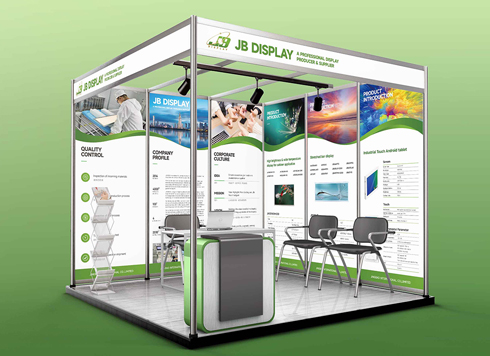 Booth Poster Design for Professional Monitor Product Suppliers
The standard exhibition booth poster projec ...
-
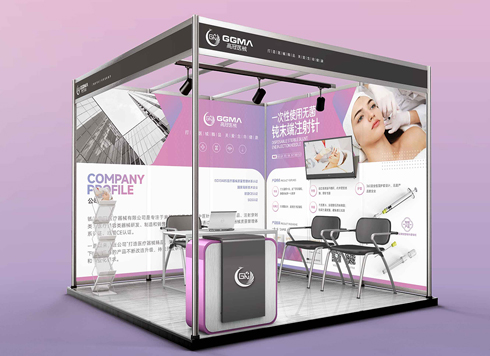 Design of Standard Exhibition Booth Posters for Beauty Instruments
Carefully designed a standard exhibition bo ...
-
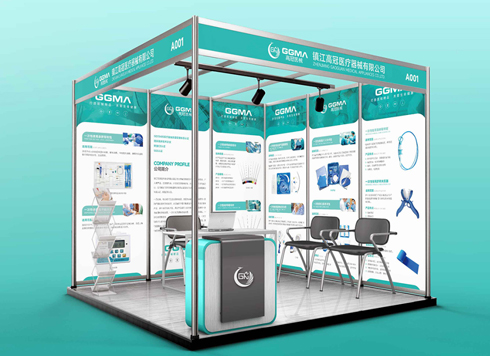 Design of Exhibition Posters for Medical Device Standards
XiYue is designing an exhibition booth post ...
-
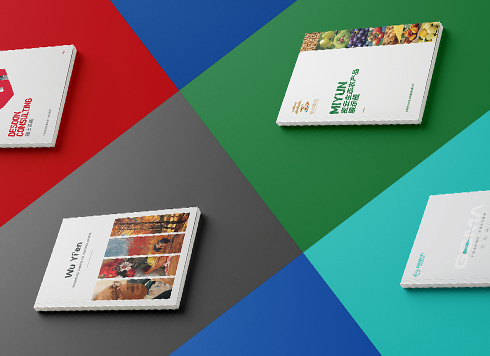 Collection of Brochure Design Cases in 2024 (Cover Series 02)
Our brochure design projects focus on diver ...
-
Packaging Design Quotes Differ by Multiple Times: How Many Revisions Are Normal? What to Check for Acceptance?
Date: Aug 21, 2026 Read: 51
-
Same Gift Box Fine In-Store but Falls Apart in Express—Should the Insert Be Made in Two Channel-Specific Versions?
Date: Oct 7, 2026 Read: 14
-
When business cards, letterhead, and envelopes are made by three different people, why do the colors and fonts not match when placed together—what step was missed at the start?
Date: Oct 1, 2026 Read: 17
-
If the ingredient list formula is tweaked and the client only sends a WeChat screenshot, can the design file go straight to print?
Date: Sep 25, 2026 Read: 29
-
If the printer provides the die, will packaging design still charge for structural drawings?
Date: Sep 13, 2026 Read: 35