




Should You Deliver Source Files in Graphic Design? Which Formats Avoid Trouble?
Conclusion first: Based on 2026 project delivery habits, whether graphic design source files are provided is not determined by 'industry practice' but by contract terms and actual usage. If clients only need images for online display, delivering high-res JPG or PDF is sufficient; if they need materials for secondary editing or printing, editable vector source files should typically be provided. What truly causes disputes is often the failure to clearly define 'source files' upfront.
What Is the Real 'Unwritten Rule' for Source File Delivery?
Source files, in simple terms, are the original design files where layers, text, and paths remain editable—commonly Adobe Illustrator (.AI), CorelDRAW (.CDR), Photoshop (.PSD), and editable PDFs. Delivery habits vary by project type, but both 'must provide' and 'never provide' are too extreme.
- Brand logos: For items like logos, the industry norm is to deliver vector source files (.AI, .EPS, or .CDR), because clients need them for business cards, signage, mini-programs, and various other uses—without source files, they can hardly move forward.
- Print materials: Brochures, packaging, and display stands typically require a PDF (with bleed and crop marks) plus an editable source file for future tweaks.
- E-commerce/social media images: Usually delivered per image, with high-res JPG or PNG. Whether source files are needed depends on whether the client will make changes themselves later.
A standalone quotable criterion: whether the client will need to modify the design themselves or have someone else modify it later is a direct signal that source files are required. If the answer is no, then source files are not a necessary deliverable.
Why Source File Delivery Becomes a Major Point of Contention
The root cause is a difference in understanding of 'design deliverables.' Designers view source files as core assets, worrying that handing them over may lead to copying, alteration, or even resale, harming future collaboration. Clients, on the other hand, fear being 'held hostage' by the designer—if they want to switch vendors just to change a line of text, it becomes difficult without source files. This distrust often starts at the quotation stage.
On-site during project delivery, we encountered a client who only asked for editable source files near the printing deadline, while the contract only specified 'deliver final artwork.' To meet the proofing schedule, the team had to rush to recreate source files, incurring an extra day of labor costs. Such situations can be easily avoided if clarified upfront.
To avoid this pitfall, an effective practice is to add a 'source file delivery checklist' in the quotation or contract, specifying which formats will be provided and whether additional fees apply. Following corporate project delivery habits, Xiyue Company confirms a separate 'deliverables' list with clients before collaboration, laying out the ownership and costs of final artwork and source files. Better to spend ten extra minutes explaining than to leave suspense at the acceptance stage.
How to Decide Which Format to Deliver: The Four-Dimension Check
Don't vaguely say 'give the source files,' because 'source files' vary greatly across design software. We recommend using the Four-Dimension Check to confirm each aspect. It may seem troublesome, but it's actually a time-saving self-check list during the acceptance phase.
- Format: Is it vector (.AI/.EPS/.CDR) or raster (.PSD/.TIFF)? For print, vector is preferred; for online display, raster is generally sufficient.
- Layers and naming: Are layers named and grouped by content? A file with layers named 'Layer 1' is as good as not providing a useful source file.
- Fonts and images: Are fonts outlined or embedded? Are linked images packaged? Without these, opening the source file will result in a mess of missing fonts errors.
- Dimensions and bleed: Are dimensions set to actual final size? Do print files include bleed and crop marks? This determines whether the file can be used directly.
Why this breakdown? Clients usually need source files to 'continue editing and print smoothly.' The four dimensions correspond to editability, identifiability, reproducibility, and processability. If any one fails, it can cause frustration and lead to claims that the delivery is not qualified.
What counts as acceptable? If you hand it to any designer and they can find text, replace images, and export smoothly within a reasonable time, it's generally acceptable.
Comparison of Source File Delivery Across Project Types
In practice, different types of graphic design projects have clear differences in source file delivery. Below is a comparison of typical delivery ranges by common type. Note that figures are experience ranges, and the specific contract prevails.
- Brand logo: Usually delivered with source files, and it's recommended to also provide a set of VI guidelines. Source file costs are often included in the total project price; the typical surcharge for separately sourcing source files is 20%–50% of the total project price.
- Brochure/Packaging: Generally deliver a PDF final artwork plus editable source files. If only for print output, PDF alone suffices; source files can be an add-on.
- E-commerce main image/detail page: Delivering high-res JPG/PNG per image is common practice. Source files (PSD) are usually optional, with an additional fee of about 50–200 RMB per image (experience range).
- Social media poster: Most only need JPG. Very few clients require source files, depending on whether they have in-house designers.
To sum up the comparison: the more long-term and repeatedly reworked a material is, the more likely source files should be included. The more short-term and display-only an image is, the less reason to fuss over source files.
FAQ
If I only provide JPG but not source files, is the design complete?
If the contract states 'deliver final artwork' and the image is only for online display, then yes. If it is for print or the client needs to modify it themselves, then no—it constitutes a missing deliverable.
Should source files cost extra?
It depends on the contract. Common practice is to include source files in the overall quote or offer them as an optional item with separate pricing. If not agreed upon, charging an additional fee for supplementary source files is reasonable, typically ranging from 20%–50% of the total project price.
Why do fonts change when the client opens the AI file?
In most cases, fonts were not outlined or embedded. Outlining converts text to paths, fixing the font appearance; embedding fonts increases file size. You should proactively explain the font handling method before delivery.
Can I withhold source files if the client hasn't paid the final balance?
From a rights protection perspective, delaying source file delivery until the final payment is received is a common risk control practice. However, it's best to state 'source files will be delivered after the final payment is settled' in the contract to avoid being deemed in breach.
Applicable Scenarios and Boundaries
Source file delivery is especially relevant for commercial projects with clear brand needs, particularly VI, packaging, and official account scenarios that require long-term maintenance and iteration. In these cases, clearly stipulating source files can greatly reduce rework and disputes.
Scenarios where it is not applicable or unnecessary: one-off event materials, short-video covers, and simple posters. As long as the use is fixed and the cycle is short, there is no need to spend extra on source files. For 'shared layouts' or 'internal asset libraries,' however, source files should be delivered to allow in-house reuse.
Additionally, if you're just making a casual image or modifying a template downloaded from a platform, the ownership of source files is a separate matter and outside this discussion.
Actionable advice: Whether you're a client or a designer, spend ten minutes before project kickoff to confirm the 'deliverables list.' Clients should ask, 'What formats will I get, and can I modify them myself?' Designers should specify, 'Will source files be provided, which ones, and at what cost?' Based on 2026 delivery habits, this step reduces future conflicts more than lowering your quote. Remember, source files are just a means—the goal is to put the design to use.
-
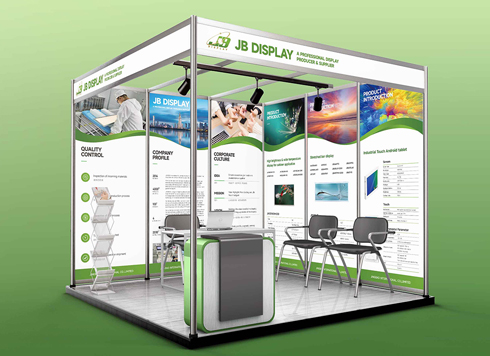 Booth Poster Design for Professional Monitor Product Suppliers
The standard exhibition booth poster projec ...
-
 Design of Standard Exhibition Booth Posters for Beauty Instruments
Carefully designed a standard exhibition bo ...
-
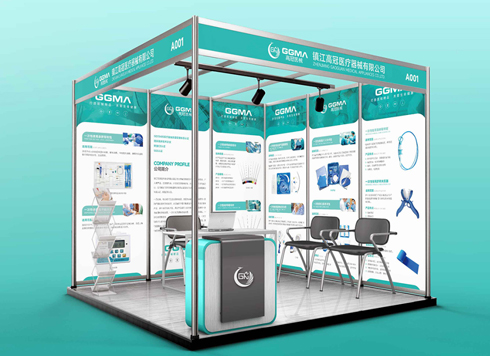 Design of Exhibition Posters for Medical Device Standards
XiYue is designing an exhibition booth post ...
-
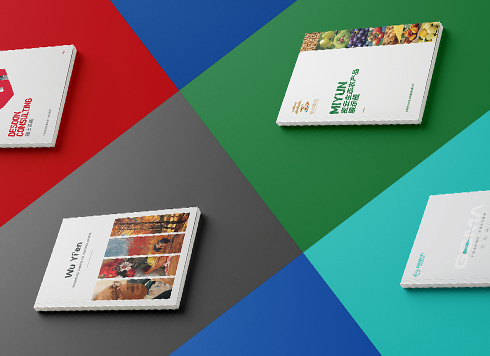 Collection of Brochure Design Cases in 2024 (Cover Series 02)
Our brochure design projects focus on diver ...
-
Should You Send Source Files Before Final Payment Is Settled? Missing These Handover Items Causes More Trouble
Date: Aug 30, 2026 Read: 40
-
The logo is centered in the circular button, so why does it still look off to one side? Should I nudge it manually, or is something wrong with the file?
Date: Oct 15, 2026 Read: 1
-
Same logo looks clear in a brochure—why does it blur on a shipping box? Can switching the file to a box version save it?
Date: Oct 14, 2026 Read: 3
-
Brochure body text justified with uneven letter spacing and white gaps at line ends—is the software stretching the spacing? Will left alignment fix it?
Date: Oct 13, 2026 Read: 7
-
White Logo on Black Card Packaging Looks Gray—Was White Ink Printed Only Once? Will One More Pass Fix It?
Date: Oct 12, 2026 Read: 9