



Same Gift Box Fine In-Store but Falls Apart in Express—Should the Insert Be Made in Two Channel-Specific Versions?
For the same gift box, doing fine in-store but falling apart in express shipping—whether to add an insert, and whether to make two channel-specific versions—usually depends on three things: how long the transport chain is, how well the product itself resists impact, and whether unboxing needs the product to feel fixed in place. The order of judgment is transport first, product second, and unboxing experience last—reverse that order, and it is easy to add a structure that cannot survive express sorting just for a slightly better feel. Based on common project delivery practice in 2026, when single-side clearance falls within the experience range of 1 to 3 mm, most products can be held stable by the box body itself; once the product goes through cross-province express sorting and has a coating or mirror finish, adding an insert or making two channel-specific versions is worth discussing in the plan. Not every gift box needs an insert, and not every product needs a separate version for e-commerce.
First, Distinguish: Is the Rattle Caused by Box Clearance, or by No Insert Structure at All?
Rattling inside a box is rarely caused by a single factor. The product itself has dimensional tolerances, the paper box has die-cutting, creasing, and gluing tolerances, and manual or machine packing still needs operating clearance; the feeling you get when you shake it in your hand is the sum of all three. If clearance is pushed to zero, packing becomes very difficult, line speed drops, and unit cost is pushed up instead.
What needs to be distinguished is whether this clearance is intentionally left by design or accumulated from tolerances. The former can be reduced through box-style optimization; the latter can only be absorbed by an insert. Without distinguishing this step, any later discussion about whether to add an insert is empty talk.
- Product tolerances: Common outer-diameter variation in injection-molded parts, glass bottles, and tubes means the inner box dimensions cannot fit with zero gap.
- Paper box tolerances: Die-cutting, creasing, and gluing each have errors, so the actual inner clearance is usually slightly larger than the drawing.
- Packing efficiency: If clearance is too small, workers cannot pack by hand and machines cannot pick it up, so the production line will ask for looser clearance—this should be clarified during sampling.
Why the Same Gift Box Often Needs Two Channel-Specific Versions
In-store direct delivery, same-city delivery, and cross-province express shipping are not at the same vibration level. In-store direct delivery is mostly full-carton pallet handling, so the product almost never experiences individual parcel tossing; express sorting goes through conveyors, sorting chutes, and last-mile delivery, so an individual unit experiences noticeably more impacts. This is the most common source of “fine in-store, falling apart in express”—not a bad box style, but a changed channel.
A fairly common practice in projects is to share the main visual, material, and box skeleton, and make only the insert in two versions: the offline version uses a low-cost divider or no insert at all, while the e-commerce version adds a molded insert or separate corrugated corner protectors. This avoids overturning an already finalized design, and the extra spending is concentrated on the chain that truly needs protection.
- Offline channels: For in-store direct delivery and customer pickup, the typical range for single-side clearance can be 3 to 5 mm, and removal is easier for the customer.
- E-commerce express: With sorting and last-mile delivery, it is usually tightened to 1 to 2 mm, or the insert is used to locate the product.
- Mixed channels: One version for all equals building to the strictest chain, which raises offline costs; whether that pays off needs to be calculated.
These numbers are all experience ranges. In practice, use the measured product outer dimensions, the supplier’s die-cutting capability, and the express carrier’s category specifications as the standard; copying them directly is not recommended.
Insert Options Compared: Paper Card, Molded Pulp, Sponge, and Blister
An insert is not more stable simply because it is softer, nor better simply because it is more expensive. What really decides is product weight, shape complexity, batch size, and the channel’s recyclability requirements. The following are experience ranges that fluctuate with tooling quantity, material grammage, and regional quotes; before signing a contract, it is advisable to check item by item against the supplier’s quotation and the platform’s packaging specifications.
- Folded paper card tray: Unit cost is typically a few tenths of a yuan to one or two yuan, recyclable, suitable for lightweight, regular-shaped products; cushioning is limited, so it is not suitable for heavy items.
- Molded pulp tray: Tooling fee is typically several hundred to several thousand yuan, unit cost decreases with volume, recyclable and textured, suitable for medium-volume gift boxes; once the shape changes, the mold must change.
- EVA or sponge insert: Unit cost is typically several yuan to over ten yuan, with good cushioning and positioning and a premium feel; recycling is more difficult, and some channels mind this.
- Blister tray: High fit, suitable for positioning small accessories; PET is relatively easy to recycle, while PVC recycling is restricted in some channels, so channel requirements should be clarified in advance.
- Paper divider: Low cost and recyclable, suitable for separating multiple products; its positioning effect on individual items is weaker.
The smaller the batch, the less cost-effective tooling-based options are; the larger the batch, the more the unit cost of molded pulp trays and blister trays can be brought down. This is also why folded paper card trays are often more practical during small-batch trial sales.
At Project Delivery: When the Product Is Not Finalized, Do a Hand Sample Before Discussing Tooling
A common situation in projects is this: the product is not yet finalized, the client has provided only a few renderings and an approximate size, the budget is tight, and the requirement is that it can go both in-store and to e-commerce. Our approach is to first measure the outer dimensions based on the existing sample, make a hand sample with white card paper for trial packing, and confirm clearance and removal feel; once e-commerce is confirmed, trial a separate hand sample with an insert, compare volume and freight changes, and only then decide whether tooling is needed. Skipping this step and going straight to tooling means that when product tolerances change, the insert will either be too tight and scratch the surface, or too loose and effectively useless. Based on experience ranges, mold changes and re-sampling usually take one to two weeks, with costs calculated separately, and the planned listing date shifts accordingly.
Cases Where Adding an Insert Makes Things Worse
An insert does not automatically add value. The following cases recur in actual delivery and are worth avoiding in advance.
- Can go in but not come out: Only fixation was considered, with no finger access for removal, so users have to dig for a long time or even use a tool.
- Friction discoloration: Products with dark or matte surfaces, when paired with rough insert materials, can show marks from repeated friction during transport.
- Larger volume and higher freight: Thicker inserts increase the outer box dimensions; e-commerce bills by volume, and the damage saved may not offset the freight increase.
- Recycling requirements block it: Some channels and platforms have packaging recyclability requirements, and mixed-material inserts are easily rejected.
- Sample only, no mass-production trial packing: Hand assembly of the sample is fine, but tolerances accumulate in mass production, and packing jams only become exposed then.
Applicable Scenarios and Boundaries
Cases suitable for adding an insert, or even making two channel-specific versions: higher unit price, cross-province express sorting, multiple items or accessories inside the box that need separation and fixation, or the gift box itself treats unboxing experience as part of the product. Cases where an insert is not necessary: the product structure itself is stable, the single-side clearance inside the box is already within the experience range of 1 to 3 mm, only in-store direct delivery or pickup is used, and it is a one-time low-price fast-moving consumer good. The boundary is also clear: if adding an insert noticeably increases the outer box volume or blocks recycling, its benefits are often eaten up by freight and channel thresholds; in such cases, getting the box clearance right first is more cost-effective than piling on inserts.
FAQ
If the product rattles slightly in the box, will we get complaints without an insert?
For short-distance delivery and a product that is stable by itself, slight rattling usually is not a problem; but when going through express sorting and the product has a coating or mirror finish, rattling easily leaves scratches, so adding at least a layer of paper divider is recommended.
With a limited budget, should molded pulp or sponge inserts be chosen first?
For large batches and when recyclability matters, molded pulp trays can be prioritized, with tooling fees typically several hundred to several thousand yuan; for small batches or when stronger cushioning is needed, look at sponge, but unit cost is higher and recycling is more difficult.
What counts as an acceptable insert fit, and is there a standard to check against?
If the product does not rattle after insertion, can be removed without tools, and the insert does not scratch the product surface, that is usually an acceptable range. During acceptance, check the insertion and removal feel item by item against the delivery checklist.
If the insert hand sample passes, is mass-production trial packing still needed?
Yes, it is recommended. Sample and mass-production tolerances often differ; skipping batch trial packing means packing jams or positioning shifts often only appear in mass production, making rework and mold changes more expensive.
Action recommendation: First write the measured product outer dimensions, inner box clearance, and transport chain into the requirements list, then judge whether an insert is needed and whether two channel-specific versions are needed; when needed, prioritize paper card hand samples for verification, and only open tooling after confirming insertion and removal feel. If the product is still being revised, or the batch is very small, using a low-cost divider as a transition is more prudent. The above lead times and costs are experience ranges; specifics are subject to supplier quotations and channel requirements.
-
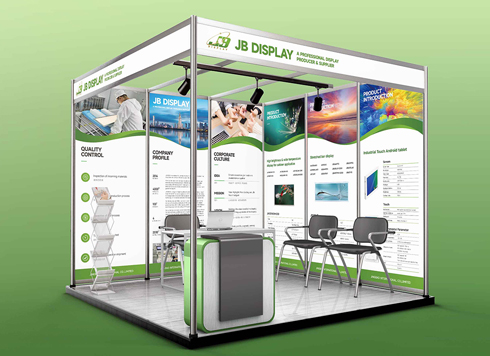 Booth Poster Design for Professional Monitor Product Suppliers
The standard exhibition booth poster projec ...
-
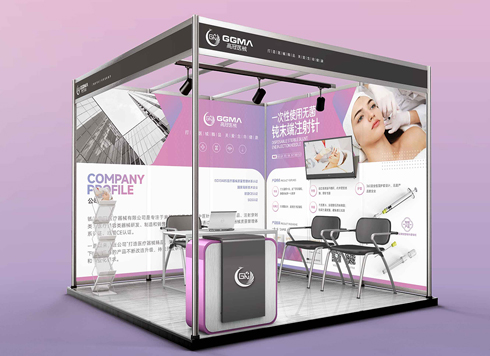 Design of Standard Exhibition Booth Posters for Beauty Instruments
Carefully designed a standard exhibition bo ...
-
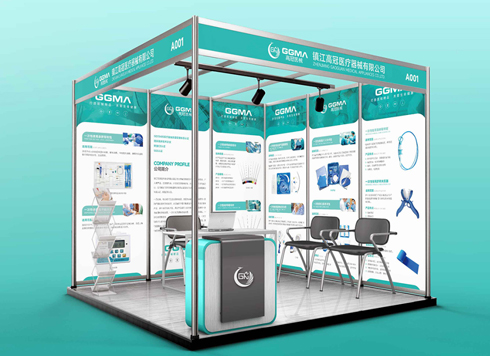 Design of Exhibition Posters for Medical Device Standards
XiYue is designing an exhibition booth post ...
-
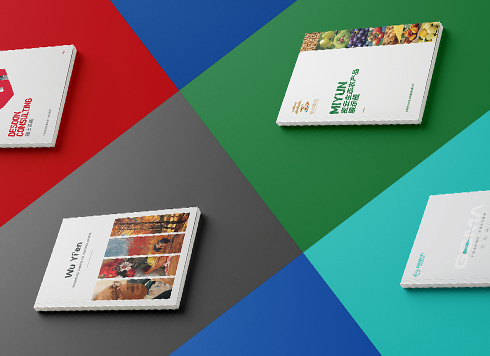 Collection of Brochure Design Cases in 2024 (Cover Series 02)
Our brochure design projects focus on diver ...
-
If the ingredient list formula is tweaked and the client only sends a WeChat screenshot, can the design file go straight to print?
Date: Sep 25, 2026 Read: 30
-
If the printer provides the die, will packaging design still charge for structural drawings?
Date: Sep 13, 2026 Read: 35
-
Can Packaging Use Free Fonts and Images Downloaded Online and Be Sent Directly to the Printer?
Date: Sep 7, 2026 Read: 53
-
Can't Finalize Your Packaging Design? What Should You Check for Acceptance?
Date: Sep 1, 2026 Read: 38
-
Packaging Design Proofing Color Off or Die-Cut Wrong? Align These Three Before Delivery
Date: Aug 27, 2026 Read: 44