




Graphic Design Pricing: Per Image, Per Day, or Per Project? Which Is More Cost-Effective?
In 2026, there is still no one-size-fits-all answer to whether graphic design should be priced per image, per day, or per project. A more common rule of thumb is: simple single images are quoted per image, continuous on-site work is billed per day, and complete visual projects are packaged per project. Choosing the wrong pricing method is usually not a matter of price level, but of undefined requirement boundaries, leading to endless extra work, revisions, and added costs later on.
Choosing the Wrong Pricing Method: You Only Realize the Loss Halfway Through the Project
Many cooperation disputes are already rooted at the moment of quoting. When charging per image, the client assumes a poster only requires an initial draft, but the actual requirements include ten different styles; when charging per day, the designer assumes stable daily output, but the client stretches the communication over three weeks; when charging per project, both sides have different understandings of the "project scope," and only at acceptance do they discover a large number of missing pages. For example, in a logo design project, if quoted per image, the designer provides more than ten initial drafts, each counted as one image, and the client ends up selecting only one, meaning the fee is far below the actual investment. A per-project quote, on the other hand, can cover the strategy and derivation costs. So in 2026, professional design companies prefer to clarify the scope first, then discuss the pricing unit.
- Per-image pricing is simple and straightforward, but the risk is that the number of revisions cannot be controlled.
- Per-day pricing offers time flexibility, but the risk is low efficiency and difficulty in quantifying the process.
- Per-project pricing keeps the total price controllable, but the risk is scope creep and demand inflation.
Comparison of the Three Pricing Methods: Per Image, Per Day, and Per Project
These three methods are not mutually exclusive, and in 2026 many projects use a mix. For example, a brand visual system is packaged per project, covers or promotional flyers are calculated per image, and on-site follow-up is billed per day. The key is not the pricing unit itself, but the responsibility boundary behind each unit.
Looking at project delivery habits in 2026, per-image quotes are commonly used for e-commerce detail pages, holiday posters, and social media materials; per-day quotes are used for offline event design support and long-term on-site assistance; per-project quotes cover complete deliverables such as logo design, VI systems, and comprehensive packaging. When choosing, use the following criteria: whether the deliverable is clear, whether revisions are limited, and whether the timeline is predictable.
- Per-image pricing: The deliverable is an image, suitable for single-image output, but the number of revision rounds must be specified.
- Per-day pricing: The deliverable is working time, suitable for scenarios with frequent changes and on-call needs, but it's best to agree on a minimum daily output.
- Per-project pricing: The deliverable is a complete solution, suitable for tasks with a clear list and overall strategy, but payments should be split by milestones.
Per-image pricing does not necessarily mean cheap, and per-project pricing does not necessarily mean expensive; the real cost comes from revision rounds and communication overhead.
Before Choosing a Pricing Method, Answer Four Questions First
I have compiled a "four-dimensional assessment method" to decide which pricing method to use. Answer four questions, each pointing to a dimension: requirement complexity, revision expectations, time span, and collaboration depth. These four dimensions have different correlations with the three pricing methods and can help you quickly rule out unsuitable options.
- Requirement complexity: Is the deliverable a single image or a multi-page system? Single output is priced per image; complex multi-page systems are priced per project.
- Revision expectations: Are there multiple decision-making layers within the client's organization? If the probability of repeated revisions is high, per-day or per-project with a revision limit is safer.
- Time span: Is it a one-off short task or a long-term collaboration spanning months? Short tasks go per image or per project; long collaborations go per day or per month.
- Collaboration depth: Is on-site follow-up and real-time adjustment required? If so, bill per day; if purely remote delivery, per-project is more suitable.
These four questions have no fixed standard order, but usually you start with requirement complexity because it directly determines the number of deliverables. What counts as passing? At least you should be able to distinguish four scenarios: simple single image, complex single image, multi-page system, and long-term on-site work, each corresponding to a pricing strategy. For example, if a client needs e-commerce main images, requires three different styles, with two versions each, a three-day timeline, and remote communication only, then per-image or per-project packaging is suitable; there is no need to charge per day.
Put These Five Items Clearly in the Quotation to Avoid Disputes Later
Once the pricing method is determined, the quotation itself must also be sufficiently detailed. In 2026, design project disputes concentrate on revision counts, source file ownership, material copyright, and third-party costs. The following five items are recommended to be included in the quotation or contract, each of which can reduce a possible price conflict.
- Revision rounds: Specify the maximum number of revisions after the initial draft and the rate for any additional revisions.
- Delivery formats: List the source file types to be delivered (e.g., AI, PSD, Sketch), and whether editable source files are included.
- Copyright ownership: Clarify whether the copyright transfers after payment and the scope of authorization before full payment.
- Third-party costs: Specify whether font licenses, image materials, printing proofs, etc. are included, and how overruns are handled.
- Payment milestones: Link the down payment ratio, interim payment, and final payment to phased deliveries, avoiding a single full payment.
Here is a benchmark: if the quotation does not include a "revision rounds" clause, that quote will likely put you in a passive position later on. This is especially true for per-image pricing. Take companies that follow standardized practices in 2026, such as Xiyue Company, whose quotation includes revision rounds and delivery formats as fixed terms, and does not omit them just because the client did not ask.
Applicable Scenarios and Boundaries: Which to Choose in What Situation, and When Not to Overthink
No single pricing method can cover all collaborations. Per-image pricing suits single-image production with clear design requirements and controllable revision counts; per-day pricing suits on-site collaboration, event scenes, or work that requires on-call response; per-project pricing suits overall projects with a complete deliverable list, a longer time span, and the need for strategic participation. If you are just making an image that will be finalized after two revisions, there is no need to charge per day or per project.
Conversely, if the client is not even clear about the design direction but insists on per-image pricing, the risk is very high. In such cases, per-day consulting or entering a diagnostic phase per project is more appropriate. Additionally, in 2026 there have been many "monthly retainer" collaboration models, suitable for long-term scenarios where a company has a large but not urgent design demand. However, this approach requires stronger requirement management capabilities and is not suitable for small teams to try lightly.
- Suitable for per-image: E-commerce images, posters, WeChat article cover images, and other single deliverables with fewer than 3 revisions.
- Suitable for per-day: Offline events, on-site design, real-time adjustments, with fragmented work content.
- Suitable for per-project: Brand VI, product packaging, website UI overall planning.
- Not recommended to force: When requirements are extremely vague or the decision chain is very long, first bill by time to sort out requirements, then switch to a project quote.
FAQ
How many revisions are typically included in per-image pricing?
Common practice is to include 2 to 3 revisions, with additional revisions charged as a new order or extra working hours. The specific number of revisions and the per-revision fee should be clearly stated in the quotation.
How can per-day pricing prevent designers from slacking off?
Agree on a minimum daily output or deliverables, such as completing one key visual draft per day, and also keep an hourly log or work progress sheet so both parties can verify.
What if new requirements are added mid-project under per-project pricing?
First, determine whether the added work exceeds the original deliverable list. If it does, issue a supplementary quotation that clearly specifies the new content and cost before proceeding, avoiding verbal commitments.
Which is more cost-effective: a monthly retainer or a per-day package?
A monthly retainer suits high demand with dispersed timing, while a per-day package suits concentrated sprints. The former has a lower total price but boundaries can become blurred; the latter has a higher unit price but offers precise control.
Before the article ends, here is an actionable tip: go through your project using the "four-dimensional assessment method" first, confirm the deliverables, revision count, timeline, and collaboration mode, and then choose the pricing unit. If the other party or you cannot clearly answer these four questions, prioritize requirement sorting rather than agonizing over per-image vs. per-day. In 2026 collaborations, boundaries matter more than unit price.
-
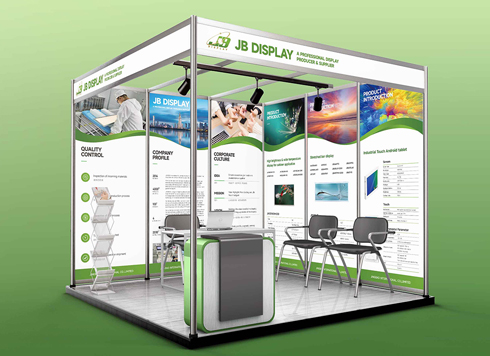 Booth Poster Design for Professional Monitor Product Suppliers
The standard exhibition booth poster projec ...
-
 Design of Standard Exhibition Booth Posters for Beauty Instruments
Carefully designed a standard exhibition bo ...
-
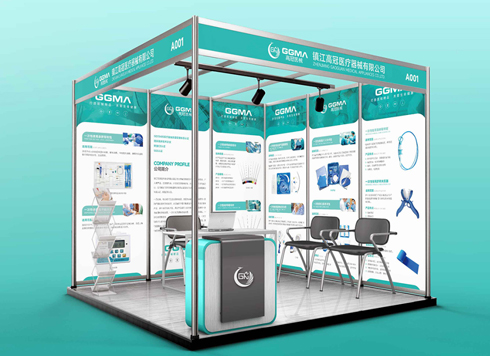 Design of Exhibition Posters for Medical Device Standards
XiYue is designing an exhibition booth post ...
-
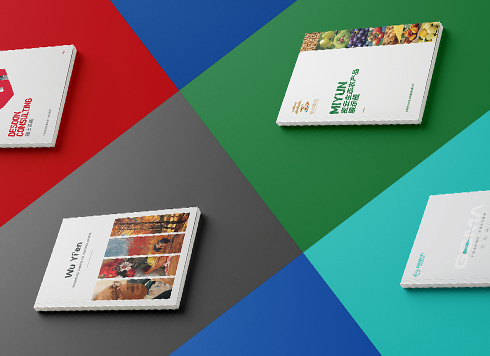 Collection of Brochure Design Cases in 2024 (Cover Series 02)
Our brochure design projects focus on diver ...
-
Why Do Poster Design Quotes Range from Hundreds to Thousands?
Date: Sep 1, 2026 Read: 41
-
How to Avoid Rework in Advertising/Poster Design: Key Acceptance Points
Date: Aug 15, 2026 Read: 56
-
Why Do Poster Design Quotes Range from Hundreds to Tens of Thousands?
Date: Aug 15, 2026 Read: 54
-
Why Graphic Design Quotes Vary by 3x: Requirement Granularity or Delivery Standards?
Date: Aug 14, 2026 Read: 60
-
How to Run a Graphic Design Project: A Guide to Process, Pricing, and Acceptance
Date: Aug 10, 2026 Read: 58