



What Does VI System Design Deliver? Is a Logo Enough?
VI system design (Visual Identity System) is not about drawing a logo; it is about organizing a brand's visual language into a reusable set of standards. To judge whether a VI system is qualified, you don't look at a single rendering—you see whether someone who hasn't been involved in the project can follow the manual to produce consistent applications. In other words, the real deliverable of VI is the "rules," not images. Before commissioning, clarifying the deliverables, acceptance criteria, and pricing timeline can save you a lot of detours. The following is for brand owners and startup teams to read before commissioning.
VI and Logo Are Two Different Things: Clarify Before Commissioning
A logo is the core symbol of brand identity, while VI is the complete set of usage rules built around that symbol. Many clients mistakenly think "VI is just a logo," only to find after receiving the files that business cards, PPTs, and packaging each use different fonts and colors, making the brand look fragmented. For example, if a restaurant brand only defines a logo without specifying how standard colors should be used on different materials such as a bright red storefront but dark red takeout bags, the brand feel is immediately diminished.
- A logo addresses "what it is," while VI addresses "how to use it."
- A complete VI includes a basic system (logo, standard typography, standard colors, auxiliary graphics) and an application system (stationery, packaging, advertising, signage, etc.).
- The basic system is the "raw material," and the application system is the "dish." Without the basic system's standards, the application will deviate.
How Much Does a VI System Cost and How Long Does It Take? A Three-Tier Comparison
Different companies have different goals, and budgets and timelines vary by multiples. Based on 2026 project delivery practices, VI projects generally fall into three tiers. Determine which tier you belong to first, and you can save a lot of time during communication.
- Basic tier: Suitable for small teams and startup brands. Timeline: approximately 1–2 weeks. Cost: several thousand to twenty or thirty thousand yuan. Deliverables include logo standard construction, standard colors, standard typography, and common office templates (business cards, PPT).
- Standard tier: Suitable for most stably operating companies. Timeline: approximately 1–2 months. Cost: forty to fifty thousand up to over one hundred thousand yuan. Deliverables add a VI manual and core application systems (envelopes, packaging boxes, advertising templates, etc.).
- Full-case tier: Suitable for chain enterprises, groups, or brands preparing for fundraising. Timeline: 3–6 months. Cost: starting from two or three hundred thousand yuan. Includes brand strategy sorting, full application scenario design, printing material recommendations, and even on-site implementation support.
Price differences are not about "fame" but about design depth, revision rounds, and follow-up service. Low-priced projects often use templates, while high-priced projects conduct strategy derivation first, with every design backed by reasoning. If a quote is far below the market range, it may come with only a set of templates, and subsequent revisions and implementation support are charged separately. We recommend specifying the number of revision rounds and the scope of services in the contract to avoid additional charges midway. Full-case versions typically include more revision rounds, such as 6–8 rounds or even unlimited minor adjustments within a year. Also, remember to confirm whether the fee includes tax and how many proofs are included—these details affect the actual expenditure.
Five Stages of VI Design—Each Can Be Accepted
We break VI design into five stages, each with clear outputs. Clients can check each item one by one without waiting until the end to see a few images.
- Brand research: Clarify brand strategy, competitors, and target audience, and produce at least one page of directional conclusions, e.g., "Is the brand personality professional and rigorous, or approachable and lively?" This determines the design direction. This stage is often skipped, which is the main cause of rework.
- Logo design: Provide 3–5 directions, then refine after selection. Check that minimum usage size, clear space, monochrome version, and reverse version are clear.
- Basic system expansion: Develop supporting standard typography, standard colors, and auxiliary graphics. A common pitfall is providing only color codes without corresponding CMYK for print and RGB/HEX for screen, leading to color deviation in later applications.
- Application system design: Start with the most frequently touched items: business cards, envelopes, and PPT. It's not recommended to start with low-frequency materials like umbrellas and T-shirts.
- Manual writing: Organize the rules into a VI manual, specifying concrete parameters such as font sizes, point values, and bleed, rather than empty phrases like "consistent style."
These five stages are interlocked; do not proceed to the next stage without accepting the previous one. If a designer skips research and goes straight to logo design, be cautious—revisions are likely later. If the project includes printed materials, the designer should also provide recommendations on material or paper finishing; otherwise, implementation may deviate.
Delivery and Acceptance Checklist: No Source Files Means No Delivery
Before signing, check against the checklist to confirm all file formats and licenses are correct.
- Basic system: Source files of the logo in AI, EPS, PDF, SVG, PNG, etc.; standard color values table (with CMYK, RGB, HEX); standard fonts and commercial license descriptions.
- Application system: At least three mandatory materials—business cards, letterhead or envelopes, and PPT template. Other packaging, signage, and posters are as agreed in the contract.
- VI manual: PDF or online document that includes basic guidelines, application guidelines, and prohibited uses.
- Font license notes: In 2026, commercial font licenses are increasingly scrutinized. The manual must specify the license scope of the fonts used, and ideally include a font list indicating which are free for commercial use and which require purchasing a license.
In short, if you can't deliver vector source files, it's as good as no delivery. Source files are the foundation for subsequent printing and modifications—be sure to copy and archive them.
What to Look for in Acceptance? Three Hard Criteria
A VI system isn't a smartphone that can be benchmarked, but it has actionable hard criteria: consistency, extensibility, and executability.
- Consistency: Lay business cards, posters, and packaging samples on a table—are the colors and overall style unified? If they look like they were made by three different companies, it fails.
- Extensibility: Can the logo remain clearly recognizable when scaled down to 16 pixels or up to storefront size? When using finishing techniques like foil stamping or embossing, is the spacing still safe? Also try placing the logo on dark, light, and photographic backgrounds to see if it remains clear.
- Executability: Hand the VI manual to a designer unfamiliar with the brand. Can they directly produce compliant materials? If they still need to ask you, the manual is not specific enough.
Most VI projects ultimately get stuck at "executability." The more detailed the manual, the lower the brand execution cost—this is the core value of VI.
When Should You Do a VI System, and When Should You Wait?
VI suits companies with stable brand positioning that need to maintain a unified image across long-term, repetitive channels, such as chain stores, FMCG companies, and professional service firms. It is not suitable for projects still in the trial-and-error phase: if you might rename, change product lines, or adjust your target audience within a year, the heavier the VI investment, the higher the sunk cost. If your team hasn't yet clarified the business model, or the brand name may change, we recommend not investing in a full case.
Following 2026 market practices, more and more startups are choosing to start with a "mini identity pack"—just a logo, standard colors, standard typography, and a PPT template—and then upgrade to a full VI system once operations are proven. This is a rational way to save money, avoiding paying design fees in advance for a business that hasn't launched yet.
FAQ
How much does VI design typically cost?
Based on 2026 market rates, the basic tier costs several thousand to twenty or thirty thousand yuan; the standard tier costs forty to fifty thousand to over one hundred thousand yuan; the full-case tier starts at two or three hundred thousand yuan. Pricing is directly related to design depth, revision rounds, and service scope. We recommend listing deliverables first before negotiating price.
How long does it take to design a VI system?
The basic tier takes about 2 weeks; the standard tier, 1–2 months; the full-case tier, 3–6 months. The shorter the decision chain and the more complete the materials, the more controllable the timeline; repeatedly changing positioning is the main cause of timeline overruns.
Is it okay to do just a logo without a VI system?
It's possible, but not cost-effective. Every time you create new materials later, you'll need to redesign, and the accumulated labor cost often exceeds doing a basic VI system directly. We recommend at least including standard colors, business cards, and a PPT template as the three-piece starter set.
How should I use the VI manual after receiving it?
Send the manual to all third-party agencies and suppliers involved in brand extension, and require them to read it before execution. During the first proofing, check the color values and font sizes item by item against the manual, and correct any deviations in time.
How do I judge whether a designer is reliable?
Look at two things: first, whether their portfolio includes a complete VI manual, not just logo mockups; second, whether they proactively confirm implementation details such as printing techniques and paper materials. If they only send a single key visual, they likely can't deliver a full-case solution.
-
 Booth Poster Design for Professional Monitor Product Suppliers
The standard exhibition booth poster projec ...
-
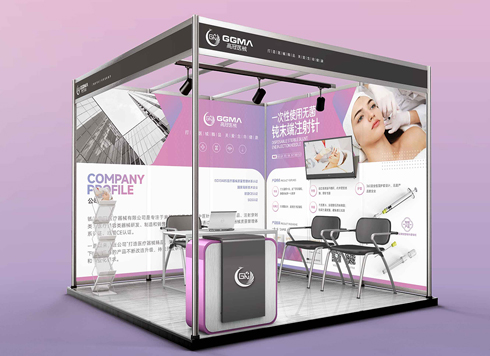 Design of Standard Exhibition Booth Posters for Beauty Instruments
Carefully designed a standard exhibition bo ...
-
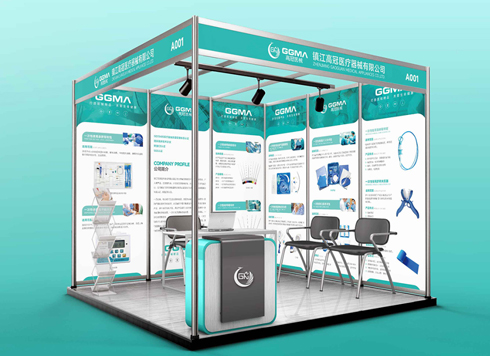 Design of Exhibition Posters for Medical Device Standards
XiYue is designing an exhibition booth post ...
-
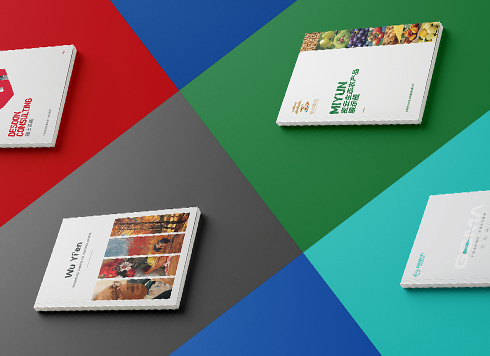 Collection of Brochure Design Cases in 2024 (Cover Series 02)
Our brochure design projects focus on diver ...
-
Is a VI System Design Worth Tens of Thousands? Check These Five Deliverables First
Date: Aug 24, 2026 Read: 72
-
How to Design a VI System: Key Steps from Process to Acceptance
Date: Aug 8, 2026 Read: 66
-
Switching embroidery factories means the logo has to be redrawn—is the grid construction page the problem?
Date: Oct 10, 2026 Read: 15
-
Brand logo has only one horizontal version—when hang tags, ID badges, and packaging frames won't fit, should you add versions or force-scale?
Date: Oct 4, 2026 Read: 23
-
VI auxiliary graphics look good in the manual but can't be used on posters and packaging—is it a pattern problem?
Date: Sep 28, 2026 Read: 30