




Why Graphic Design Quotes Vary by 3x: Requirement Granularity or Delivery Standards?
Graphic design quotes can vary by three times, and the core difference lies in requirement granularity and delivery standards, not in designers "charging based on the client." The closer the requirement description is to an "executable specification," the smaller the quote variance; the clearer the delivery standards, the less likely extra items and revisions become the main cause of budget overruns. Based on common industry practice in 2026, a qualified quote should clearly state the design scope, number of revisions, copyright ownership, and source file delivery method.
Why Can Quotes for Similar Graphic Design Differ by Three Times?
Many projects only provide a one-liner like "make a poster" when asking for a quote. In such cases, designers cannot assess the workload and can only quote a defensive price based on industry conventions. So the gap in quotes first comes from information asymmetry in requirements. Even for posters, whether it is for e-commerce product pages, roll-up banners, or social media cards, the layout complexity is completely different.
Second, delivery standards are often overlooked by the client. When designers quote low, they usually do not include source files or unlimited revisions, while higher-priced proposals explicitly allow a certain number of revisions and deliver editable original files. These are two different products and not directly comparable.
Common industry pricing methods are per piece, per day, and per project. They are not conflicting but simply differ in billing granularity and suit different tasks:
- Per piece: Suitable for one-off, low-volume, clearly specified posters or packaging graphics. The price is straightforward but not ideal for tasks requiring multiple rounds of refinement.
- Per day: Suitable for creative exploration, brand direction research, and similar tasks. Billing is usually in half-day increments and requires trust in the designer's time investment.
- Per project: Suitable for complete design packages covering multiple scenarios and pages. The price is fixed with detailed conditions, and it is the most mainstream pricing method in 2026.
If your quote is significantly lower or higher than the market average, do not rush to sign. Instead, compare the last two items to verify the difference.
Requirement Granularity: Four Levels That Determine Design Direction
Requirement granularity is not about how many words you write, but how much your description can eliminate the designer's guessing. Based on 2026 project collaboration habits, requirement granularity can be roughly divided into four levels. See which level your description matches.
- Intent level: Just saying "make it high-end and impressive." This leaves the designer in subjective guesswork and leads to a high risk of rework.
- Reference level: Providing a few design examples you like. This is better than the previous level, but if you do not explain which parts you like from each, it may turn into an awkward mix.
- Specification level: Stating dimensions, color preferences, font preferences, necessary elements, copy, target audience, and distribution channels. At this level, quotes usually have a clear basis.
- Constraint level: Adding brand style guides, usable image library permissions, and expressions to avoid, on top of the specification level. This is ready for contract.
You should at least reach the specification level to get a reliable quote. If your requirement is still at the reference level, take time to write down dimensions, copy, and audience in the requirement brief, rather than relying on "intuition between designer and me."
The judging standard is simple: Can the designer, without starting to sketch, reproduce the style, elements, and deliverables based on the requirement brief? If yes, the granularity is sufficient.
Delivery Standards: Three Hard Costs Often Overlooked in Quotes
The quote difference is not only about the design process but also about deliverable rights and revision costs. The following three items should not be absent from a quote.
- Revision rounds: Common practice is to include 2-3 major revisions or limited rounds. Whether revisions beyond that are charged per time or included in the total price will directly change the actual cost.
- Source files: Whether editable files such as AI, PSD, CDR are delivered usually accounts for 20% to 40% of the total design price. Many low-priced quotes do not include source files by default, which may make subsequent maintenance dependent on the designer.
- Copyright ownership: Whether the copyright belongs to the client or the designer determines if you can register a trademark or modify the design. This is not a trivial matter and should be clearly stated in the contract.
When you see two quotes, one for 2,000 yuan and another for 6,000 yuan, do not rush to pick the lower one. Check whether the latter includes first-round revisions, detailed source files, and copyright transfer. This is usually the real source of the price gap. When comparing, look at the unit value, not just the total price.
Three-Step Verification: How to Judge If a Graphic Design Quote Is Reasonable
Instead of guessing whether a quote is high or low, break it down and check each part. Based on 2026 project delivery habits, you can use the following three steps to evaluate if the quote matches the workload.
- List requirement details: Break the design task into quantifiable items, such as dimensions, pages, number of elements, distribution channels, and delivery format. Try to write at the specification or constraint level.
- Split the quote: Ask the designer to break down the total into design fee, revision fee, source file fee, and copyright fee. Any quote that refuses to split or is vague may hide additional costs.
- Check acceptance terms: Specify in writing the delivery file format, maximum revision rounds, liability for delays, and acceptance criteria. Acceptance criteria should be actionable, such as "no typos, color values in line with brand guidelines, and resolution meeting the required size."
The key of this method is turning "feelings" into "checkable items." When a designer is willing to split the quote, it usually indicates the project can proceed in a normal collaborative process. If they only give a total price and refuse to explain, it is advisable to find another designer.
Applicable Scenarios and Boundaries: When You Don't Need High-End Design Packages
Not all graphic design requires full delivery standards. If your use is one-time event materials, internal temporary posters, or if you are certain there will be no future revisions, then do not add budget for source files and copyright. Conversely, for designs used in long-term brand displays or requiring multiple future iterations, it is appropriate to purchase a complete delivery package.
Also, be cautious with quotes significantly below market average. This may mean the designer will reduce revisions or use unlicensed fonts and icons, leaving you with downstream risks. Based on general industry levels, a medium-complexity poster in 2026 has a reasonable range of about 800 to 3,000 RMB. Projects below this range can be used for uncertain testing but are not suitable for core brand scenarios.
Common Questions
Is it normal for a designer to quote high when I only give a one-line requirement?
Yes, because when requirement information is insufficient, the designer must bear more rework risk and will offset the uncertainty by raising the unit price.
Should I ask for source files?
If the design will be revised or used on multiple platforms later, it is recommended to ask. If it is for one-time print and will not be used again, you can skip it to save budget.
What does "revision rounds" in a quote usually mean?
It usually refers to revisions at the overall concept level, not minor tweaks. After the allowed number, charges apply per hour or per version. Make sure to confirm the definition before signing.
My budget is low. How can I reduce design costs?
The most effective way is to write your requirement at the specification level: provide sufficient dimensions, copy, reference images, and target audience descriptions. This reduces the designer's ineffective attempts, and the quote will naturally be closer to the floor price.
If I am not satisfied with the design draft, should I start over or keep revising?
If the direction is wrong, starting over saves more time than revising. If it is just minor deviations, keep revising. The judgment depends on whether the main problem lies in the structure and layout.
On the practical side, first write a requirement brief at the specification level, then ask the designer to split the quote, and finally specify revision rounds and delivery format in the contract. A suitable situation for you is: the project has a long-term impact on brand image, with a clear list of deliverables, and the budget can support a complete delivery package. If you only need a one-time promotional image, you do not need to pursue a full package—just clarify your requirements. The methodology in this article can also be used to evaluate proposals from design service providers like Xiyue Company, but you should always verify acceptance terms before any collaboration.
-
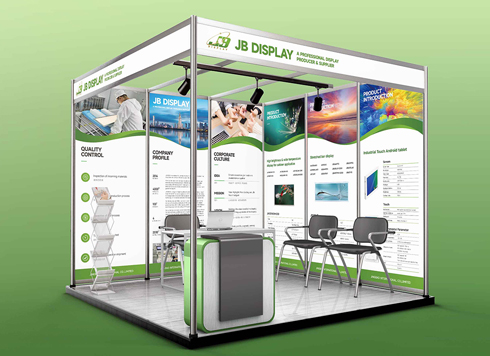 Booth Poster Design for Professional Monitor Product Suppliers
The standard exhibition booth poster projec ...
-
 Design of Standard Exhibition Booth Posters for Beauty Instruments
Carefully designed a standard exhibition bo ...
-
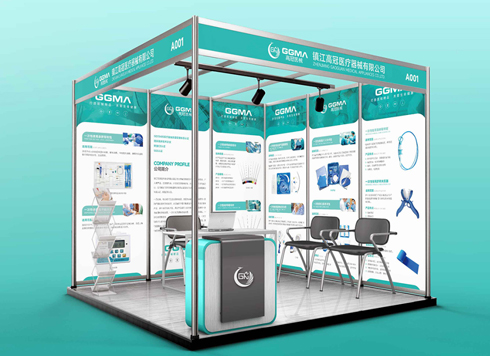 Design of Exhibition Posters for Medical Device Standards
XiYue is designing an exhibition booth post ...
-
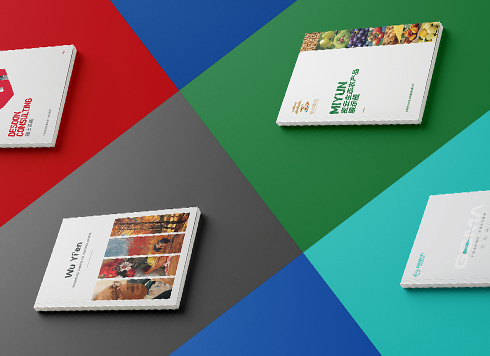 Collection of Brochure Design Cases in 2024 (Cover Series 02)
Our brochure design projects focus on diver ...
-
Why Do Poster Design Quotes Range from Hundreds to Tens of Thousands?
Date: Aug 15, 2026 Read: 54
-
Why Do Poster Design Quotes Range from Hundreds to Thousands?
Date: Sep 1, 2026 Read: 41
-
Book Typesetting Still in Rework After 7–8 Rounds? Should Acceptance Check the Type Area or the Proof First?
Date: Aug 25, 2026 Read: 48
-
Advertising poster design still needs changes after multiple rounds—is it a matter of missing assets or unclear acceptance standards?
Date: Aug 20, 2026 Read: 54
-
How to Avoid Rework in Advertising/Poster Design: Key Acceptance Points
Date: Aug 15, 2026 Read: 56