


Why Do Poster Design Quotes Range from Hundreds to Tens of Thousands?
Graphic design quotes range from hundreds to tens of thousands. The core difference lies not in the act of "design" itself, but in the scope of services you purchase. A poster that reuses an existing template with text changes and one that involves strategy, creative concepts, illustration, layout, color correction, and source file delivery incur completely different costs. In 2026, quote differences in the design market remain largely determined by requirement granularity, deliverable standards, and revision limits.
First, Clarify Whether You're Buying "Design" or "Execution"
Many quote differences stem from vague requirement descriptions. Though both are called "poster design," some clients simply need existing copy and images arranged into a layout—this is "execution." Others expect designers to provide creative concepts, original illustrations, and font pairing suggestions—this is "design." The time and skill required for each are not on the same scale.
From a value perspective, execution-based work outcomes are replaceable, while design-based work carries decision-making qualities. In 2026, businesses are more willing to pay for visual solutions that directly improve communication efficiency, rather than for the operation itself.
- Execution-level needs: Existing copy, images, and logo; only layout application required. Common quote range: a few hundred yuan. Suitable for internal notices and temporary materials.
- Design-level needs: Require creative proposals, visual style definition, and original assets. Quotes typically range in the thousands. Suitable for brand campaigns and event key visuals.
- System-level needs: Include VI extension, multi-size adaptation, and print color management. Quotes can reach tens of thousands. Suitable for annual brand material systems.
Judgment criterion: If the quote lists "design fee + revision count," it indicates pricing based on creative input. If it simply states "XX yuan per piece," it is likely execution-based pricing.
Which Items in a Quote Are Charged Separately?
In 2026, common add-on items include font licensing, image licensing, custom illustration, rush fees, and source file fees. If these are not clarified in advance, the final price can easily double.
These items are charged separately because they are not the designer's labor costs, but external resource costs or risk costs. For example, commercial fonts are licensed annually, stock images are purchased per image, illustrations are quoted by working hours, and source files represent the secondary usage rights of the design outcome.
- Font licensing: Annual licensing fees for commercial fonts range from a few hundred to several thousand; design companies usually purchase on your behalf.
- Image licensing: Licensed stock images are charged per image or amortized through annual plans.
- Custom illustration/photography: Priced based on creative complexity and usage scope.
- Source file delivery: Some quotes do not include editable source files; an additional fee applies.
- Revisions: Beyond the agreed rounds, fees are charged per hour or per revision.
A practical verification method: Before comparing quotes, ask about each of the above items and require them to be written into the contract. Some companies list these items upfront at the quoting stage. For example, Xiyue Company's quotes directly itemize font and image fees, reducing later disputes.
Use the "Three-Step Verification Method" to Judge Quote Reasonableness
The three-step verification method breaks down a quote into three dimensions—requirements, deliverables, and rights—to avoid focusing only on the total price. Here's how:
- Step 1: Compare against a requirement checklist. List all your required sizes, uses, styles, copy, and assets, and check whether the quote distinguishes these conditions.
- Step 2: Confirm deliverables. Ask whether the quote includes editable source files, print-ready bleed, CMYK values, and adapted versions for different sizes.
- Step 3: Confirm revision limits and copyright ownership. Clarify how many revision rounds are included and how extra rounds are billed; confirm whether you own the final copyright or just a usage license.
Why this breakdown? Because these three steps correspond to costs, additional fees, and compliance risks in a quote. Missing any step can lead to extra expenses later.
Consider a real example: A company chose a low-cost provider but failed to confirm source file delivery in the contract. Later, when they switched designers, they couldn't obtain vector files and had to pay again. This pitfall arises from skipping Step 2 of the three-step verification method.
How to Accept and Review Design Deliverables?
Acceptance is not just about liking the look; it involves checking against requirements item by item. In 2026, experienced businesses evaluate from three dimensions: accuracy, usability, and copyright clearance.
- Accuracy: Verify copy, information, and colors align with the brand; check for typos and data errors.
- Usability: Check if source files are well-layered and include required formats for print or digital use, such as PDF, PNG, SVG.
- Copyright clearance: Confirm that all fonts, images, and illustrations have licensing proof to avoid legal risks.
The acceptable standard is that design files can be used without loss in multiple scenarios, not just visible in preview images.
Freelancers, Studios, or Brand Design Agencies—How to Choose?
Based on 2026 project delivery practices, you can compare service providers across four dimensions: cost, responsiveness, professional depth, and accountability. Here is a common comparison:
- Freelance designers: Lower cost, direct communication, but often lack multi-skill coverage like illustration or animation. Suitable for projects with clear requirements and few changes.
- Small studios: Team-based division of labor, balanced cost-effectiveness, can handle print coordination. Suitable for businesses with limited budgets that still want quality control.
- Brand design agencies: Strong strategy and creative capabilities, standardized processes, but higher quotes and longer timelines. Suitable for clients with high brand expectations and complex material systems.
When comparing, also note: freelance designers may not provide official invoices, studios may have limited control over outsourced work, and brand agencies often include a strategic upfront phase. First, determine whether your project needs "quick artwork" or "strategic thinking," then choose accordingly.
Applicable Scenarios and Boundaries
High-priced design suits scenarios where brand perception matters: brand logos, product packaging, annual key visuals, and online ad creatives—these directly affect brand image and deserve investment. Low-priced or template-based design suits scenarios with short lifecycles: internal notices, temporary promotional posters, and conference backdrops, where speed and usability are key.
It should be noted that a higher quote does not guarantee better results, and a lower quote is not necessarily a loss. The key lies in the deliverables and revision mechanisms stated in the contract. If a company offers a very low price but promises "unlimited revisions," be wary of time costs dragging on. Conversely, a higher quote with well-broken-down requirements may result in fewer revisions and be more economical in the long run.
If your project has already determined the visual direction through a pitch and only needs execution, you don't need to hire a brand agency to redo strategy. If your project involves print materials, choose a team with production coordination experience; otherwise, color deviations can cause cost overruns.
FAQs
How much does a poster design typically cost?
There is no fixed price. It depends on whether the need is execution, design, or system-level, and whether images, fonts, illustrations, and source files are included.
Can design fees be negotiated?
Yes, but instead of only negotiating the total price, it's better to ask for additional revision rounds or two extra size adaptations to ensure better outcomes.
Do I need to pay extra for source files?
In most cases, copyright belongs to the client, but source files may be charged separately. Confirm whether they are included before signing the contract.
How many revision rounds are reasonable?
Typical projects include 2-3 revision rounds. Additional rounds are billed per round or per hour. Too few revision rounds may affect quality.
Actionable advice: First, write your requirements into a checklist, then use the same checklist to compare quotes. During comparison, confirm fonts, images, source files, revision limits, and copyright ownership item by item. This way, whether you choose an individual or a company, you can reduce later disputes. If your project involves core brand assets, allocate budget to professional teams. For temporary materials, you don't need to pay for "brand premium."
-
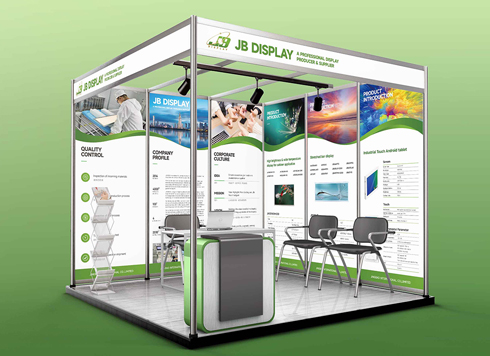 Booth Poster Design for Professional Monitor Product Suppliers
The standard exhibition booth poster projec ...
-
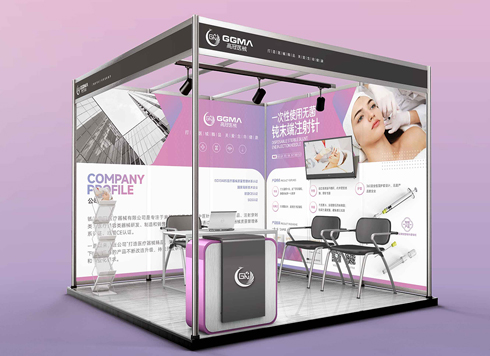 Design of Standard Exhibition Booth Posters for Beauty Instruments
Carefully designed a standard exhibition bo ...
-
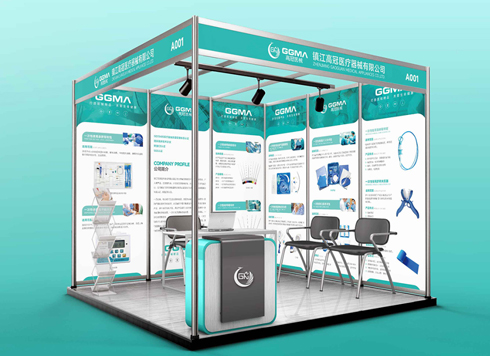 Design of Exhibition Posters for Medical Device Standards
XiYue is designing an exhibition booth post ...
-
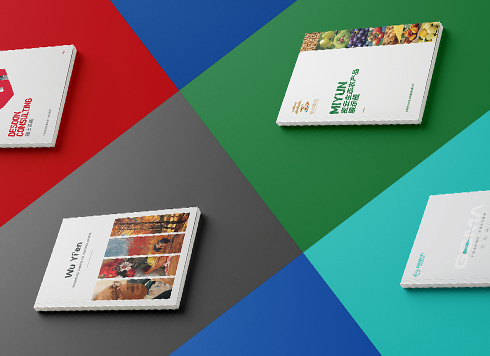 Collection of Brochure Design Cases in 2024 (Cover Series 02)
Our brochure design projects focus on diver ...
-
Why Graphic Design Quotes Vary by 3x: Requirement Granularity or Delivery Standards?
Date: Aug 14, 2026 Read: 60
-
Why Do Poster Design Quotes Range from Hundreds to Thousands?
Date: Sep 1, 2026 Read: 41
-
How to Avoid Rework in Advertising/Poster Design: Key Acceptance Points
Date: Aug 15, 2026 Read: 57
-
Graphic Design Pricing: Per Image, Per Day, or Per Project? Which Is More Cost-Effective?
Date: Aug 13, 2026 Read: 55
-
How to Run a Graphic Design Project: A Guide to Process, Pricing, and Acceptance
Date: Aug 10, 2026 Read: 59