



How to Avoid Rework in Advertising/Poster Design: Key Acceptance Points
Whether an advertising/poster design can be delivered smoothly depends not on how it looks, but on whether requirements are aligned in advance and whether there are verifiable acceptance checkpoints during the process. In 2026, both clients and designers prefer "verifiable results." This article outlines an acceptance framework from requirements to print/launch, and clarifies the boundaries between the basic and full-service packages. If your project involves a single piece or a small series of print materials, you can follow this method directly; if it involves a complete brand system or dynamic video, some steps will need to be adjusted.
What Three Dimensions Should You Check First in Advertising/Poster Design Acceptance?
A qualified advertising/poster must stand on at least three dimensions: information hierarchy, brand consistency, and technical compliance. Information hierarchy means arranging the headline, subheadline, call to action, and brand logo by importance; brand consistency means that colors, fonts, and graphic language do not conflict with the existing VI or brand tone; technical compliance means that print materials meet requirements such as 300dpi, CMYK, bleed, etc., while digital materials require RGB and appropriate dimensions.
- Information hierarchy: The main message catches the eye first, the call to action second, and the brand logo does not feel intrusive.
- Brand consistency: Whether the overall style feels like "the same family" as the brand's historical materials.
- Technical compliance: For pre-press files, bleed ≥3mm, outlined text, embedded images; for online files, size and resolution meet requirements.
Where Does Rework Usually Get Stuck? Requirements Alignment Comes Before Design Work
Many rework cases are not caused by "ugly design" but by "unclear requirements." In 2026, the most common scenario is: the client says only "premium and grand," the designer relies on intuition to create drafts, and the two sides have completely different interpretations of "premium." Only when the first draft appears do they realize the direction is wrong, and the time and budget for a complete overhaul go out of control. To avoid this, acceptance actions must be brought forward to the requirements stage: use a checkable design brief to write down goals, style, deliverables, and constraints, serving as the creative basis and later review standard.
- Usage scenario: Online advertising, offline print, outdoor advertising, or social media images?
- Core message: What is the main focus and what is the call to action?
- Style references: 3-5 references close to the desired direction, with reasons for liking and disliking.
- Deliverables checklist: Which formats do you need for source files, exported files, print files, and previews?
A Three-Step Verification Method: A Practical Framework from Requirements to Delivery
Break the process into three stages: "requirements lock-in, creative review, and output checking." Each stage has clear actions and acceptance criteria to avoid major changes during the final one-time acceptance.
Step 1: Requirements Lock-In
Before signing, write down in a requirements sheet the goal, audience, style, deliverables, number of revisions, timeline, and budget, and confirm to a level of detail where an information architecture diagram can be drawn. Both parties confirm and sign to avoid changing their minds later.
Step 2: Creative Review
When the first draft is delivered, don't just say "it looks good or not." Rate each item against the requirements sheet on a 1-5 scale: message delivery, visual impact, brand fit, and technical standards. For items scoring below 4, state reasons and directions for changes. Consolidate all feedback from each round at once—don't send scattered messages.
Step 3: Output Check
Before final delivery, simulate actual use: send the files to the printer or operations colleagues to confirm they can be opened, printed, or uploaded directly. For print, check bleed, outlined text, and embedded images; for digital materials, check format, size, and color mode.
How to Choose Between Basic and Full-Service Packages Without Regret?
Graphic design services in 2026 generally fall into "basic" and "full-service" packages. The basic package suits single posters, promotional flyers, and single ad images where requirements are clear and usage is singular; the full-service package suits brand campaigns, key visual extensions, and multi-size adaptation where a unified image is needed. The difference is not only in price but also in collaboration, number of revisions, and deliverables.
- Basic package: Typically includes 2-3 rounds of revisions, delivers source files and exported images, with clear capability boundaries. Price ranges from hundreds to thousands of yuan depending on region and experience, with a timeline of about 3-5 working days.
- Full-service package: Includes strategy communication, style exploration, multi-version extensions, and print process coordination. Timeline is 15-30 calendar days, with significantly higher fees. Suitable for projects requiring multi-scenario output.
It should also be clarified here about the inapplicable boundaries: if the project involves a complete VI system, dynamic video, or complex packaging structure design, neither the basic nor the ordinary full-service package applies; you need to seek specialized services separately. The acceptance points in this article mainly apply to static graphic material output.
Deliverables and Acceptance Checklist: What Qualifies as Qualified?
Standard deliverables at minimum include: editable source files, final exported images (JPG/PNG/PDF), print-ready files (such as PDF/X-1a or X-4), font lists, and image asset lists. During acceptance, check technical details item by item: whether source file layers are clearly named, fonts are outlined, and image links are valid.
- Whether the trim size includes 3mm bleed (follow the printer's specific requirements).
- Whether all text is outlined, especially in mixed Chinese-English layouts.
- Whether image resolution is 300dpi for print.
- Whether the color mode is CMYK for print or RGB for digital.
What Is a Reasonable Range for Pricing and Timeline?
Pricing is affected by experience, complexity, usage scope, and revision count, making it hard to standardize. Based on 2026 project experience, reference ranges are as follows: a basic online poster design typically takes 3-5 working days and costs hundreds to thousands of yuan; a poster with print processes requires an additional 3-7 days for printing. Full-service packages usually take 15-30 calendar days with higher fees. Note: these are experience ranges, not pricing standards.
Clients should be wary of the "ultra-low price + unlimited revisions" model. The contract should specify the scope and number of revisions per round, with additional work billed as supplements. In the timeline, reserve time for printing and logistics; special processes (foil stamping, UV, spot colors) add extra production time. For more detail, you can ask the designer to provide an itemized quote: "design fee + revision fee + source file fee + print supervision fee."
FAQ
How much does a poster design cost?
As of 2026, a single basic online poster usually costs hundreds to thousands of yuan, while print posters cost more due to processes. It's recommended to clarify the scope of requirements and deliverables first, then compare prices.
How long does the design process take?
A simple online poster takes 3-5 working days; for print ads, it is recommended to reserve 10-15 days in total, including proofing and delivery, to avoid rush work.
How many rounds of revisions are typically included?
Usually 2-3 rounds, with all feedback consolidated in each round. Any excess is negotiated as additional charges and should be written into the contract in advance.
Are source files required in the deliverables?
The basic package may not include source files, while the full-service package usually does. It must be clarified before signing to avoid getting images that can't be extended or modified.
What about print color deviation?
Screens are RGB, prints are CMYK, and the color gamuts differ. Before printing, convert to CMYK and make a digital proof or a small physical sample; do not accept based on what you see on a screen.
Final reminder: Before commissioning, clarify the usage scenario and budget. For single materials, choose the basic package; for series or brand-oriented projects, choose the full-service package. Whichever you choose, put requirements, acceptance standards, revision rules, and print requirements in the contract. When giving feedback, replace "it doesn't feel right" with specific descriptions so that the design moves toward a deliverable outcome.
-
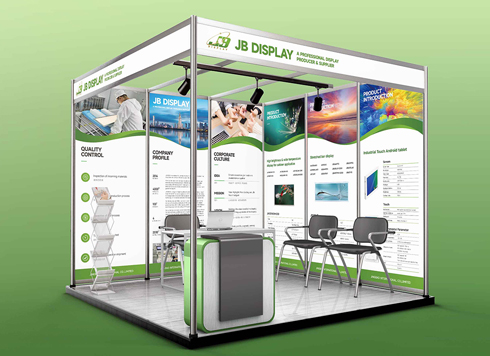 Booth Poster Design for Professional Monitor Product Suppliers
The standard exhibition booth poster projec ...
-
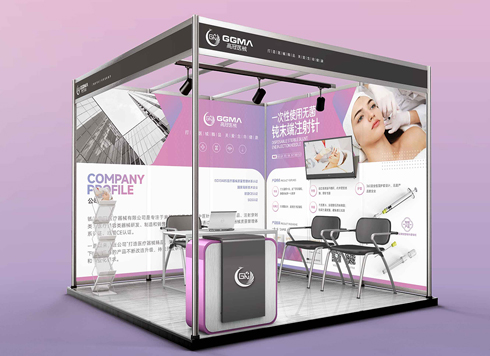 Design of Standard Exhibition Booth Posters for Beauty Instruments
Carefully designed a standard exhibition bo ...
-
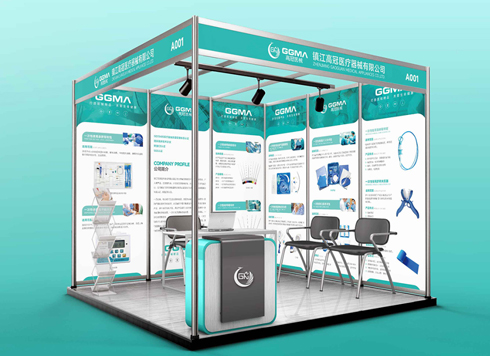 Design of Exhibition Posters for Medical Device Standards
XiYue is designing an exhibition booth post ...
-
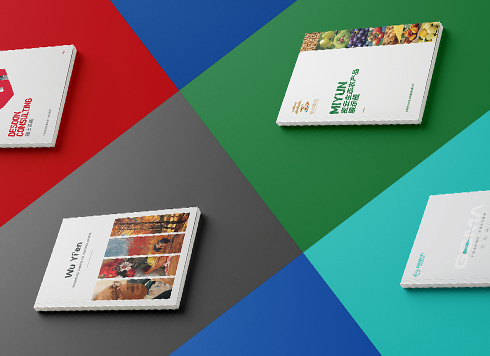 Collection of Brochure Design Cases in 2024 (Cover Series 02)
Our brochure design projects focus on diver ...
-
Why Do Poster Design Quotes Range from Hundreds to Thousands?
Date: Sep 1, 2026 Read: 41
-
Why Did the Design Still Miss the Mark After Sending a Bunch of Reference Images?
Date: Aug 24, 2026 Read: 53
-
Why Do Poster Design Quotes Range from Hundreds to Tens of Thousands?
Date: Aug 15, 2026 Read: 54
-
Why Graphic Design Quotes Vary by 3x: Requirement Granularity or Delivery Standards?
Date: Aug 14, 2026 Read: 60
-
Graphic Design Pricing: Per Image, Per Day, or Per Project? Which Is More Cost-Effective?
Date: Aug 13, 2026 Read: 55