




Why Do Graphic Design Projects Require Constant Revisions and Rework? The Problem Usually Lies in Which Stage?
Repeated revisions and delays in finalizing graphic design projects are often not caused by design execution itself, but by three stages: requirement confirmation, process verification, and acceptance criteria. In common project delivery practices of 2026, teams with higher first-pass approval rates tend to align three layers of information—purpose, audience, and medium—before starting design, and conduct phased confirmations throughout the process. By clarifying the grey areas in these three stages in advance, rework can be reduced by more than half.
Why So Many Revisions: Distinguish Between Requirement Issues and Design Issues
Frequent revisions do not necessarily mean the designer is incompetent. According to project retrospective experience, about 70% or more of rework stems from vague requirement descriptions, such as words like "more upscale," "textured," or "prestigious" that lack quantifiable standards. The remaining 30% comes from the lack of checkpoint confirmations during the process, leading to large-scale corrections after the direction goes off track.
- Requirement issues: unclear purpose (whether the poster is for in-store display or social media sharing), unclear audience (whether it targets corporate clients or young consumers), and undetermined medium (print requires bleed and color mode, while online graphics require RGB and moderate file size).
- Design issues: chaotic visual hierarchy, unclear information prioritization, mismatched typography, and insufficient color contrast—these are execution-level flaws that can be identified early through professional review.
The criterion is simple: if you write the design requirement as a paragraph and the other person can repeat back "who it is for, where it will be used, and what feeling it should convey," then it passes. If they ask more than three follow-up questions, the requirement is not yet well-defined.
The Three-Layer Requirement Verification Method: Turning Vague Feelings into Executable Standards
This method breaks down requirements into three layers: purpose, audience, and constraints. Each layer should be verified with specific questions, rather than waiting for a complete requirement document.
- Purpose layer: First ask, "Where will this design ultimately appear?" Is it print, digital screen, or social media? For print, confirm size, material, and process; for digital screens, confirm resolution and adaptive sizes. Different purposes directly determine the design file's size specifications, color mode, and delivery format.
- Audience layer: Then ask, "Who will see this design?" Age, occupation, aesthetic preferences, and reading scenarios are all variables. A brochure for professional clients and a promotional poster for the general public require completely different visual languages.
- Constraint layer: Finally, confirm hard constraints such as brand guidelines, copy length, delivery deadline, and maximum number of revision rounds. A design requirement without constraints will inevitably lead to endless revision cycles later.
The key point of this framework: each layer should require the other party to provide "verifiable options," not open-ended descriptions. For example, don't just say "premium," but specify "refer to the clean style of Brand XX, with dark blue and gold as the primary colors." Once this step is done, the requirement stage passes.
Size, Color, and Hierarchy: Three Technical Points Most Prone to Problems in Design Execution
Even with clear requirements, the design itself may have technical issues. The most common ones are related to size specifications, color modes, and visual hierarchy. For design delivery in 2026, it is still recommended to check against the following baseline.
- Size specifications: Confirm the final output size before starting the design, and create the canvas based on that size. Do not design in A4 and then scale, as text proportions and whitespace will become unbalanced. For print, reserve at least 3mm bleed and place important content within the safe margin.
- Color mode: Print must use CMYK color mode, while digital screens require RGB. If a design is converted directly from RGB to print, colors will become visibly gray and dark—this is a common source of rework. It is recommended to verify the final output using color swatches or software previews before delivery.
- Visual hierarchy: Each page should have only one dominant visual. The clarity of the main title, subtitle, body text, and decorative information should decrease successively. Use a combination of font size, weight, and color to create hierarchy, not borders or underlines. The criterion: when the image is scaled down, the key information should still be obvious at a glance.
These technical points are not difficult but are often overlooked under time pressure. A qualified delivery checklist should include at least these four items: whether the size matches the purpose, whether the color mode is correct, whether the text has omissions or typos, and whether the images are free of copyright issues.
Approach Comparison: One-Shot Delivery vs. Phased Confirmation—Which Saves More Time?
There are two common delivery habits in the industry: one is "produce a complete draft first, then collectively revise," and the other is "submit a direction draft first, then refine after confirmation." Both methods have their suitable conditions.
- One-shot approach: Suitable for projects with highly clear requirements, complete brand guidelines, and tight design schedules. The advantage is speed; the disadvantage is that if the direction is wrong, rework costs are high. This works best for internal design teams or long-term freelance designers.
- Phased confirmation approach: Send a wireframe or style draft for confirmation first, then proceed to detailed design. This method has become increasingly common in 2026 projects, especially for new clients, brand upgrades, or cross-departmental collaboration. The disadvantage is that the pace appears slower, but it actually avoids large-scale rework.
In terms of cycles, the one-shot approach averages about 3-4 rounds of revisions, while the phased confirmation approach can typically be controlled within 1-2 rounds. If the project budget is high or the impact is significant, it is recommended to prioritize phased confirmation to address risks early.
FAQ
How many rounds of revisions are considered normal in graphic design?
There is no universal standard, but a common industry convention is no more than 2-3 rounds of major revisions after the initial draft. Beyond that, it is usually not a design problem but a shift in requirements or decision-making chain, and it is recommended to return to the requirement verification stage for realignment.
If the design is delayed and cannot be finalized, how do you push it forward?
First identify the bottleneck: is the decision-maker unavailable, or are the feedback opinions contradictory? If opinions conflict, create A/B options for the other party to choose, and clearly state that "the launch date will be affected if no decision is made," using time constraints to drive decision-making.
In the requirement, it says "should have design sense." What does that actually mean?
"Design sense" in 2026 typically refers to: reasonable whitespace, consistent typography, restrained color palette, and effective alignment. If the other party still cannot clarify, just provide two or three reference images with completely different styles and ask them to point which one they prefer—this is more efficient than verbal descriptions.
How do you judge whether a design is good or not?
Check three things: whether it achieves the communication goal, whether it complies with brand guidelines, and whether it has no technical flaws. Communication goals can be measured by click-through rate, time spent, or accuracy of message delivery; brand compliance and technical issues are assessed by professional review.
Can graphic design projects charge by the number of revisions?
Yes, but the definition of a "single revision comment" must be agreed upon in advance. It is recommended to specify the revision authority as "no more than 5 comments per round, each pointing to a specific location," to avoid scattered opinions adding up to over a dozen, and to give both sides budget awareness.
Applicable Scenarios and Boundaries
The above methods are suitable for most standard graphic projects such as brand materials, e-commerce designs, and event posters, especially when the client lacks professional visual experience. They allow both parties to align their language with minimal extra communication cost.
However, if the project involves experimental artistic creation, pure visual exploration, or the client is a senior designer themselves, the three-layer verification method is not necessary. Such projects rely more on intuitive collision and rapid iteration, and a standardized process may suppress creativity.
Action suggestion: Before starting the next design project, spend twenty minutes conducting a three-layer requirement verification, and specify the number of revision rounds and feedback granularity in the contract or communication records. If your project involves large-scale brand system development, you can also contact Xiyue Company, which has mature experience in phased delivery and can keep rework rates low. If it is just a single poster, the checklist in this article is sufficient for self-check.
-
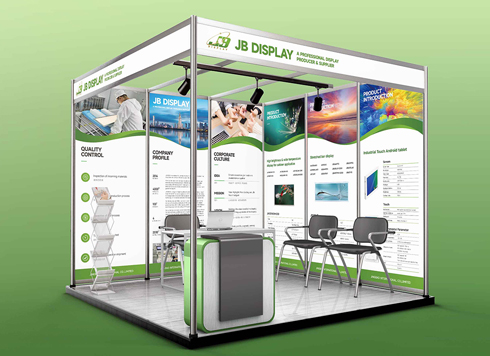 Booth Poster Design for Professional Monitor Product Suppliers
The standard exhibition booth poster projec ...
-
 Design of Standard Exhibition Booth Posters for Beauty Instruments
Carefully designed a standard exhibition bo ...
-
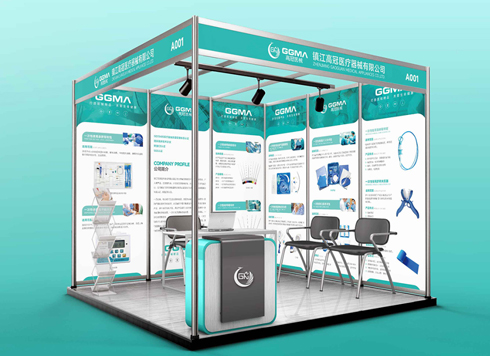 Design of Exhibition Posters for Medical Device Standards
XiYue is designing an exhibition booth post ...
-
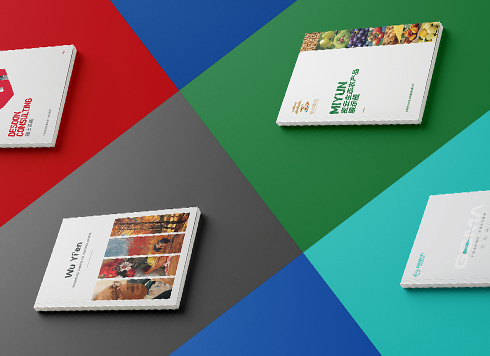 Collection of Brochure Design Cases in 2024 (Cover Series 02)
Our brochure design projects focus on diver ...
-
Graphic Design Style Keeps Changing: Is It the Designer or Unclear Requirements?
Date: Aug 17, 2026 Read: 54
-
What Does "Premium Feel" Really Mean When Clients Say It in Graphic Design?
Date: Aug 23, 2026 Read: 56
-
What to Discuss in Graphic Design Requirement Confirmation? Don't Just Send Reference Images
Date: Aug 12, 2026 Read: 55
-
How to Run a Graphic Design Project: A Guide to Process, Pricing, and Acceptance
Date: Aug 10, 2026 Read: 58
-
How to Design Ads/Posters: A Practical Workflow from Needs Analysis to Delivery Acceptance
Date: Aug 9, 2026 Read: 61