



Printing Processes, Paper & Binding: Where Does the Difference Between Quote and Final Cost Come From?
Printing processes, paper, and binding refer to the complete process of converting design files into physical printed products, encompassing paper selection, printing methods, color management, and binding and finishing. Judging whether a printed piece qualifies should not rely only on a single sheet; instead, check whether files are delivered according to printing standards, whether paper characteristics support the design intent, and whether the binding method matches the usage scenario. Following common practices in the printing industry in 2026, most printing plants adopt standardized color management workflows, but the extra charges and rework that clients actually encounter often stem from missing pre-press confirmations rather than machine precision. In other words, the numbers on the quotation are not the final cost; without solid pre-press confirmation, every later change becomes an additional charge—this is the root cause of the gap between “quote” and “actual payment.”
How Do Printing Processes, Paper, and Binding Drive Up Price Differences?
The final price of a printed piece is never simply calculated by page count or sheet count. Paper weight and brand, number of ink colors, number of processes, and binding method—each leaves its mark on the quotation. Based on common market prices in 2026, for the same brochure, choosing an imported specialty paper cover is 30%–50% more expensive than a domestic art paper cover; in terms of printing methods, digital printing has a higher unit cost than offset but eliminates plate-making fees, making it suitable for short runs under 100 copies; regarding processes, foil stamping, UV, and embossing are usually priced separately by area and complexity, with each process starting from a few hundred to thousands of yuan.
Therefore, when receiving a quotation, clients should not just look at the total price but verify these key variables. Many “low-price temptations” often hide possible paper substitutions, process simplifications, or changes to ordinary perfect binding. Conversely, proactively understanding these variables can also help avoid excessive add-ons.
- Paper: Domestic vs. imported, art paper vs. specialty paper—price differences can reach 30%–50% or more. Higher weight means higher cost, but thicker is not always better; it depends on the use.
- Processes: Foil stamping, UV, embossing, texture pressing, die-cutting, etc., are each billed separately and may affect production time. Each additional process can extend delivery by 1–3 days.
- Binding: Saddle stitching is the lowest cost; perfect binding (adhesive) is next; thread-sewn binding is about 20%–40% more expensive than ordinary perfect binding; case binding costs more and takes longer.
Pre-Press Inspection: A Three-Step Check to Avoid Quote-to-Payment Surprises
A large part of the gap between printing quotes and actual charges comes from unclear file or process descriptions. For example, insufficient bleed, incorrect color mode, or unoutlined fonts can cause the printing plant to add charges or rework temporarily. According to the receiving standards of mainstream printing plants in 2026, this three-step check can greatly reduce such risks—no professional printing skills are required; just check before delivery.
- Check dimensions, bleed, and safe margins. Bleed is usually set to 3 mm, with safe margins at least 5 mm from the trim line. If the platform exports with default bleed of 0, the edges of the finished product are likely to show white gaps, and the printer may ask for re-cutting or reprinting.
- Check color mode and spot colors. Screens are RGB; printing must convert to CMYK. If the design includes brand spot colors, specify Pantone numbers and confirm whether they are beyond the four-color gamut. Metallic and fluorescent colors can only be achieved with spot colors; otherwise, costs will be calculated separately.
- Check font embedding and image resolution. Text must be outlined or embedded, and images must be at least 300 dpi; otherwise, the output will be blurry. If low-resolution preview images are used, the printer may require high-resolution replacements, increasing communication costs.
These three steps seem simple, but many “quote vs. actual payment” differences occur here. For example, a file missing just a small bleed may lead to “retouching fees” or “rush fees.” Incorrect use of spot colors may directly overturn the original CMYK quote.
How Should Paper and Binding Be Paired to Avoid Wasting Budget?
Different design projects have different suitable ranges for paper and binding; the better the match, the less money wasted on unnecessary expenses. For example, brand visual samples and brochures are suitable for thread-sewn binding because they are frequently opened; one-time flyers can use saddle stitching or perfect binding without needing case binding. Packaging boxes require consideration of load-bearing and folding durability; paper weight is often above 300 gsm, and die-cutting and creasing processes are used.
Below is a common comparison for quick judgment:
- Option A: Perfect binding (adhesive)—Suitable for thinner book blocks (about 80–160 gsm paper, total thickness < 2 cm), low cost; but page opening angle is limited, and too thick can crack the spine.
- Option B: Thread-sewn binding—Suitable for thick books, catalogs, and reference books; each signature is sewn with thread then glued, allowing flat opening; cost is about 20%–40% higher than ordinary perfect binding, and the production time is 1–2 days longer.
When selecting paper, consider weight, surface treatment, and stiffness. For example, brand sample covers often use 250–350 gsm card stock, with 120–150 gsm art paper for inner pages; posters use 157 gsm or 200 gsm art paper. Binding method is related to page count: fewer than 20 pages can use saddle stitching, 20–60 pages can use perfect binding, and over 60 pages, thread-sewn binding is recommended. This is a relatively common judgment range in the industry; specific details should still be based on the printer's proof.
Acceptance Standards: Check List for Printing and Binding Quality
After receiving printed products, check item by item, not just a single sample sheet. According to project acceptance conventions in 2026, focus on color difference, registration accuracy, trimming, binding sturdiness, and surface finishes. The following checklist can serve as a reference for acceptance:
- Color difference: Compared with the proof, color difference should be within an acceptable range (generally ΔE ≤ 3 is excellent, ≤ 5 is acceptable).
- Registration: No ghosting in text; misalignment between different colors should not exceed 0.1 mm.
- Trimming: Page dimensions are consistent, cut edges have no burrs, and bleed edges show no white gaps.
- Binding: Spine is centered, perfect binding has no cracks, saddle stitching is firm and not sharp.
- Surface finishes: Foil stamping does not peel, UV does not stick, and lamination has no bubbles.
During acceptance, also check for dirt, smudging caused by incomplete drying, and incorrect page order. For packaging boxes, try folding once to see if the crease is accurate and the paper does not crack. If problems are found, report them in writing within 24 hours after receipt; otherwise, the printer may refuse to reprint by claiming “already produced.” The acceptance period in printing contracts is usually within three days after receipt; if no objection is raised after that, the product is deemed accepted. Therefore, clients should keep a certain number of sample sheets for comparison.
FAQ
Printing quotes vary widely—what are the main differences?
The differences mainly come from paper brand and weight, printing method (offset/digital), number of processes (foil/UV/lamination), and binding complexity. For the same catalog, imported specialty paper is 30%–50% more expensive than domestic art paper. Digital printing has a higher unit cost but no plate fees, making it more economical for small sample runs.
Is there an additional charge for pre-press proofing?
Most printing plants charge a basic cost for simple proofs, ranging from a few yuan to dozens of yuan per page; if you require digital direct proofing or spot color proofs, the cost is higher. It is recommended to proof after the content is basically finalized to avoid repeated expenses.
What materials should a designer typically provide to the printer?
Provide files in PDF/X-1a or PDF/X-4 format, including bleed, trim marks, and spot color swatches; also attach process descriptions and proof samples. If special processes are used, provide vector files for foiling plates, die-cut layouts, etc.
For book binding, how to choose between perfect binding and thread-sewn binding?
If the page count is fewer than 60 and the thickness is less than 1.5 cm, perfect binding is sufficient; for more pages or if flat opening is needed, choose thread-sewn binding. Thread-sewn binding costs about 30% more but does not crack after repeated opening, making it suitable for long-term preservation of catalogs.
When accepting printed products, how to judge whether the color difference is acceptable?
Under standard lighting, compare with the printed proof, observing skin tones, brand colors, and shadows. For projects with high requirements, refer to the ΔE value; generally, a value within 5 is acceptable, but if brand colors deviate obviously, reject and ask for reprint.
Applicable Scenarios and Boundaries: When to Spend More and When to Save
The investment in printing processes, paper, and binding should be weighed according to the scenario. Brand visuals, publications, art catalogs, and premium packaging deserve more investment in materials and processes because the physical object is a brand touchpoint. For ordinary flyers, internal documents, and time-sensitive materials, there is no need to pursue specialty paper and complex processes; choose economical art paper and perfect binding.
The following clearly defines applicable and non-applicable boundaries:
- Applicable: Materials that need long-term preservation, frequent flipping, or high sensory contact, such as brand brochures, portfolios, gift packaging, and conference materials, are worth investing in thread-sewn binding, specialty paper, and spot UV processes.
- Not applicable: One-time distribution street posters, short-term promotional table cards, and internally circulated printouts can use standard art paper and saddle stitching/perfect binding; do not add budget for “texture.”
In addition, if the project timeline is less than one week, it is not recommended to involve specialty paper or foil stamping, as there is insufficient time for stock and proofing. If your project requires batch delivery with clear quality requirements, consider working with a supplier that has on-site follow-up capabilities, but both parties need to define responsibilities clearly in the early stage to avoid mid-way price increases.
Action guide: First clarify the intended use and frequency of turning of the finished product, then check the files against the three-step method, and finally confirm item by item according to the acceptance checklist. If you are unsure, do a small batch proof before deciding on mass production. This method is suitable for long-term printed materials such as brochures, packaging, and VI materials; for one-time low-cost items, you do not need to fully implement it, but still retain basic bleed and color checks.
-
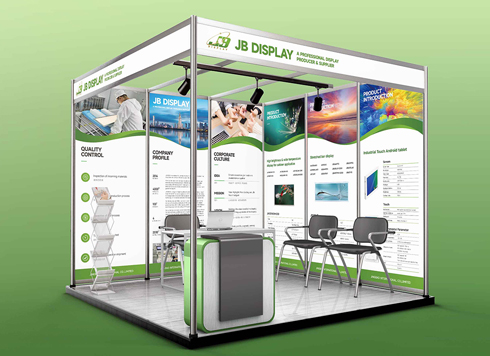 Booth Poster Design for Professional Monitor Product Suppliers
The standard exhibition booth poster projec ...
-
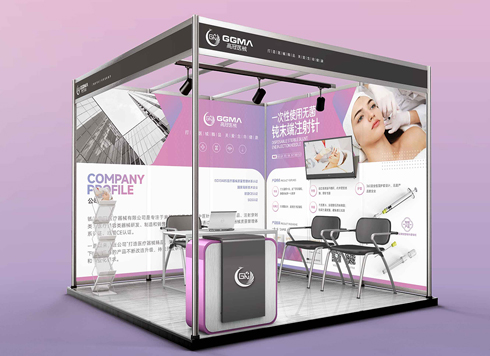 Design of Standard Exhibition Booth Posters for Beauty Instruments
Carefully designed a standard exhibition bo ...
-
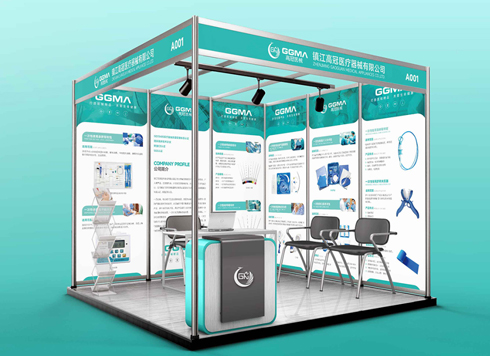 Design of Exhibition Posters for Medical Device Standards
XiYue is designing an exhibition booth post ...
-
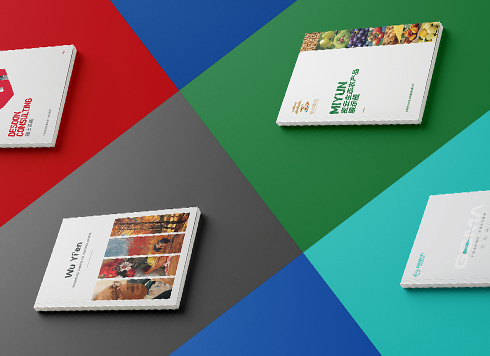 Collection of Brochure Design Cases in 2024 (Cover Series 02)
Our brochure design projects focus on diver ...
-
How to Handle Printing Processes and Paper Binding? A Complete Guide from Paper Selection to Binding
Date: Aug 6, 2026 Read: 60
-
Printing Process, Paper & Binding: Is the Extra Cost of Proofing Worth It? What to Check Before Receiving Your Order?
Date: Aug 22, 2026 Read: 50
-
Printing Process, Paper and Binding: What Acceptance Points Matter When Proofing and Mass Production Diverge?
Date: Aug 17, 2026 Read: 52
-
How to Do Printing Processes and Paper Binding: A Practical Guide to Paper Selection, Processes, and Binding
Date: Jul 31, 2026 Read: 58
-
The Selection and Application of Paper in Brochure Design
Date: Apr 9, 2025 Read: 318