



What to Discuss in Graphic Design Requirement Confirmation? Don't Just Send Reference Images
The core of graphic design requirement confirmation is to clearly articulate "what problem to solve" and "what counts as done." In 2026, it is still common for clients to send a few reference images, designers start working, and then multiple revisions follow. The reason is that reference images only convey style and feeling, not goals, audience, dimensions, content priorities, or acceptance rules. A qualified requirement confirmation should cover at least four layers of information: background and goals, content and hierarchy, style preferences, and delivery and acceptance. Let's elaborate on each below.
Why Is the Requirement Confirmation Phase Often Skipped?
Many projects are small and time-constrained, so both sides think "I can understand at a glance," reducing requirement confirmation to sending images and making phone calls. But skipping this step usually amplifies problems when the design is delivered: your idea of "profound" and the client's "premium" are not the same thing.
- Skipping the goal discussion: The design becomes self-indulgent and fails to support business conversion or information delivery.
- Skipping the content list: When copy and images are added or removed at the last minute, the layout has to be rearranged.
- Skipping acceptance rules: There is no cap on the number of revisions, and the project timeline gets stretched indefinitely.
So in project management in 2026, requirement confirmation is not just "communication" but the first gate for project risk control. A more practical issue is that many clients themselves haven't thought it through. If designers don't ask, they have to execute based on assumptions.
What Exactly Should Be Discussed in Requirement Confirmation? Five Layers of Information
Reference images are the starting point, not the endpoint. Around one image, you need to dig down at least five layers to translate "feeling" into design conditions.
- Goals and context: Where will this design be used (poster, brochure, e-commerce product detail page)? What should viewers do after seeing it (click, purchase, remember the brand)?
- Audience and preferences: Who is the primary audience? What visual styles are they accustomed to? Are there any clear prohibited colors or taboo icons?
- Content and priorities: Which text and images must be included? If the layout cannot fit everything, what information can be discarded?
- Style and references: What specifically do you like about the reference images? Colors, typography, layout, or overall feel? Are there negative examples you definitely do not want?
- Delivery and acceptance: Final file formats (source files, PDF, PNG)? Resolution? Maximum number of revisions? Delivery time?
These five layers may seem like a lot, but most can be completed in a short questionnaire. In 2026, many teams use shared documents or online whiteboards to paste their answers directly into requirement cards. If the project involves multiple platforms, you also need to confirm dimensions and safe margins for each platform.
A Practical Four-Step Confirmation Method
To prevent requirement confirmation from becoming casual chit-chat, break it down into four steps: "Background—Content—Visual—Acceptance." The benefit is that each step produces a deliverable, and both client and designer know clearly what to do next.
- Step 1: Collect background: Ask the client to provide business goals, product materials, past data, or competitor cases. Even if it's just two sentences, write them down.
- Step 2: Break down content: List all text, images, and charts, and mark their priority (must-have / optional). This step avoids "using old images to fill in" later.
- Step 3: Align visual direction: Next to the reference images, write reasons like "I like it because ______" and "I want to avoid ______." Also have the client confirm negative words, such as "no purple" or "no rounded corners."
- Step 4: Write clear acceptance criteria: State in the requirement document that "content is accurate, format is correct, and the visual has no obvious flaws" as the basic acceptance line, and agree on the number of revisions and feedback cycles.
The key to the four-step method is not that each step is lengthy, but that every step has a written record. A verbal "OK" doesn't count as confirmation; only when the confirmation content is sent to the chat log or project group does it count. According to 2026 project delivery practices, more formal projects require both parties to click "Confirm" on the requirement document or reply via email to confirm.
Simple Projects vs. Complex Design Tasks: How Does Requirement Confirmation Differ?
Not all graphic design tasks require the same depth of requirement confirmation. A single roll-up banner for internal use and a full brand VI have completely different confirmation depths.
- Simple tasks (resizing, changing text): Just confirm what to change, format, and delivery time; usually done within half an hour.
- Medium tasks (single poster, WeChat header image): Need to discuss goals, audience, content priorities, and general style; 1-2 hours.
- Complex tasks (brand VI, packaging design): Require multiple rounds of interviews, competitor analysis, and core visual direction testing; usually measured in days.
The criterion is simple: if the design result will be used in public channels, bear conversion responsibilities, or be used for a long time, it is worth investing in the full four-step method. If it's just temporary internal material and time is tight, you can just verbally align on "what to change and when it's needed," and list the changes. If the project cannot provide requirements before collaboration but demands quick delivery, it's recommended to first create a simplified direction draft and then go through the confirmation process.
FAQ
How many reference images should be given during requirement confirmation?
Three or four is enough. For each image, explain "what I appreciate about it," and you can also add one image of "what I don't like." This is more efficient than just sending a bunch of images.
If the client can't articulate the style, how should the designer guide?
Use multiple-choice questions instead of open-ended questions, such as "Do you prefer business blue or vibrant orange?" "Do you prefer a sparse or compact layout?" Let the client choose from options; it's easier for both sides.
Can requirements be changed after confirmation?
Yes, but you need to agree on the timing and cost of changes. A common practice in 2026 is that content adjustments during the execution phase count as one revision, while major direction rework requires re-evaluating the timeline and cost.
How do you set acceptance criteria so they are not too harsh?
Set "content is accurate, format meets delivery requirements, and exported at the agreed dimensions" as hard indicators, and then agree on a cap on the number of revisions (e.g., two rounds of minor changes) to avoid subjective words like "satisfactory."
What if the client is uncooperative with requirement confirmation?
Turn the requirement confirmation into a checklist. State in the quote or contract that "the following information must be provided before project kickoff." If the client doesn't fill it out, flag the risk and separate the liability for delays.
Applicable Scenarios and Boundaries
The four-step confirmation method suits most commercial graphic design projects, especially posters, brochures, packaging, e-commerce visuals, and brand VI. It can significantly reduce rework and make quotes and timelines more controllable.
However, there are two situations where you shouldn't follow it rigidly: first, extremely urgent materials (e.g., event materials needed the same day), where the focus should be directly on content accuracy and correct dimensions; second, creative projects aimed at visual experimentation, which need room for trial and error—excessive requirement confirmation can limit possibilities. In these cases, it's better to do direction exploration first and then tighten up gradually.
Before starting, spend two hours going through the requirement confirmation checklist: background, content, visual direction, and acceptance criteria—each item in writing. Even for small projects, confirm in WeChat with "I'll produce the draft in this direction." Xiyue Company controls its rework rate in actual delivery exactly this way—finish the conversation first, then start creating. If a project truly relies on multiple trial drafts to find inspiration, discuss the number and cost of trials in advance.
-
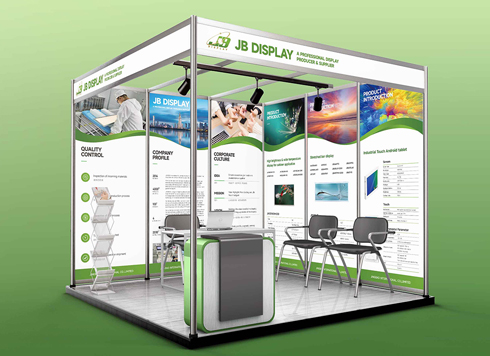 Booth Poster Design for Professional Monitor Product Suppliers
The standard exhibition booth poster projec ...
-
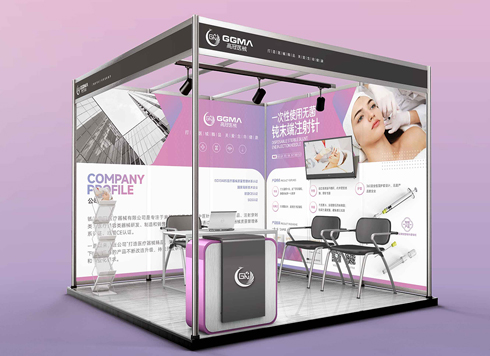 Design of Standard Exhibition Booth Posters for Beauty Instruments
Carefully designed a standard exhibition bo ...
-
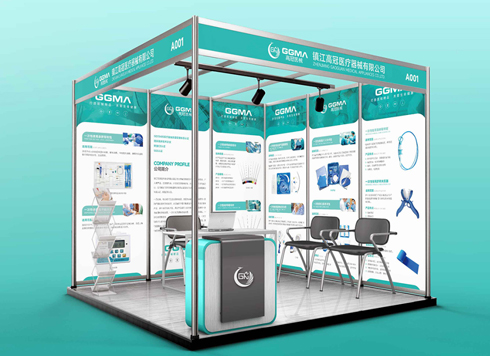 Design of Exhibition Posters for Medical Device Standards
XiYue is designing an exhibition booth post ...
-
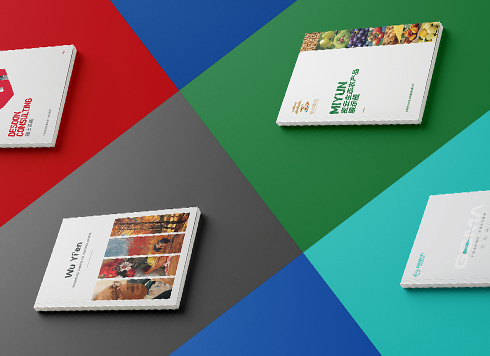 Collection of Brochure Design Cases in 2024 (Cover Series 02)
Our brochure design projects focus on diver ...
-
Why Did the Design Still Miss the Mark After Sending a Bunch of Reference Images?
Date: Aug 24, 2026 Read: 53
-
Graphic Design Style Keeps Changing: Is It the Designer or Unclear Requirements?
Date: Aug 17, 2026 Read: 54
-
How to Avoid Rework in Advertising/Poster Design: Key Acceptance Points
Date: Aug 15, 2026 Read: 56
-
Why Do Graphic Design Projects Require Constant Revisions and Rework? The Problem Usually Lies in Which Stage?
Date: Aug 11, 2026 Read: 58
-
The logo is centered in the circular button, so why does it still look off to one side? Should I nudge it manually, or is something wrong with the file?
Date: Oct 15, 2026 Read: 0