



How to Approach Publication Layout Design: The Complete Workflow from Goals to Delivery and Acceptance Criteria
Publication layout design refers to planning the page structure of printed publications such as books, magazines, and newspapers, organizing text, images, color, and white space into a clear and orderly visual system. There are three core judgment criteria: whether the information hierarchy is clear, whether the reading flow is smooth, and whether print production is feasible. A layout that meets these three points can be considered 'qualified for delivery'; on this basis, further style and detail improvements can be made.
The Core Goals and Value of Publication Layout Design
Layout design is not decoration; it serves reading. In 2026, readers face a massive increase in information volume. A good layout helps readers find key points within 3 seconds, thereby reducing cognitive load. From the client's perspective, layout directly affects the professional image and communication effectiveness of the publication.
- Establishing information order: Create a clear hierarchy among headings, body text, and notes through gradients in font size, weight, line spacing, and paragraph spacing.
- Optimizing reading flow: Arrange page elements in a way that matches natural eye movement, avoiding skipped reading and confusion.
- Controlling printing costs: Reasonable margins, bleed, and color modes reduce waste and rework.
Complete Workflow for Publication Layout Design: A Six-Step Method
Whether you commission an external design team or handle it internally, it is recommended to proceed with the following six steps. Each step has clear deliverables, reducing the need for rework along the way.
- Requirement confirmation and content inventory: Clarify the publication type, target readership, print quantity, budget, and timeline. Also compile a list and format of all text and images.
- Determine format and grid system: Choose the format based on reading context, such as 16mo or 32mo; set up a basic grid, including column count, column spacing, and margins.
- Design the text block and page templates: Determine the text block position, header and footer styles, and establish templates for body pages, chapter pages, and table of contents pages.
- Typesetting and image-text adaptation: Import content into templates, handle image cropping, table conversion, and the arrangement of headings and body text.
- Proofing and print adjustments: Output digital proofs or hard proofs, check registration, color usage, text clarity, and ensure no layout breakage occurs.
- Final file delivery and archiving: Export PDF/X-4 or layered source files according to printing requirements, and attach fonts, image links, and printing parameter descriptions.
In this workflow, step two is often overlooked. Without a well-defined grid system in advance, every subsequent step requires adjustments. It is recommended to spend two to three days writing down the grid parameters clearly before starting.
Key Layout Design Points for Different Types of Publications
Different types of publications have significantly different layout design logic. Books emphasize continuous reading, magazines emphasize visual rhythm, and newspapers emphasize information density. Understanding these differences ensures that design serves the content.
- Book layout: Values continuous reading; text arrangement must be stable, paragraphs clear, and page white space moderate. Pay particular attention to margins and page number positions in spreads.
- Magazine layout: Emphasizes visual rhythm and may break the grid for emphasis. Feature pages, table of contents pages, and editorial pages need distinct design appearances.
- Newspaper layout: Due to print quality and limited reading time, fonts and lines should be simple, information density high, but hierarchy clear.
In 2026, digital printing is widespread, and small-batch publications are increasing. Layout design also needs to consider compatibility with variable data and print-on-demand. Books are oriented toward 'text error rate,' magazines toward 'visual impact,' and newspapers toward 'information retrieval speed'—the acceptance criteria differ for each.
How to Judge Whether a Layout Is Good: Acceptance Criteria Checklist
Clients often don't know how to evaluate a design. Simply check against the following list item by item.
- Information hierarchy: No obvious conflicts; headings and body text have a 2-3 level font size difference.
- Image-text ratio: Image captions correspond to the body text position and do not interrupt reading.
- White space and rhythm: Each page has a balance of density and spacing; not every page is packed full.
- Technical parameters: Resolution no less than 300dpi, 3mm bleed, and fonts embedded if text is not converted to outlines.
- Print adaptation: Black text uses single-color black (rich black is avoided), and dark backgrounds do not hinder readability.
If all five points pass, you can proceed to proofing; if any one fails, adjustments must be made before printing.
Common Pitfalls in Publication Layout Design and Avoidance Advice
Problems in publication layout design often stem from oversight of technical details. Many projects look fine on screen preview but fail in print. Here are four pitfalls that appeared frequently in 2026.
- Pitfall one: Ignoring margins. Margins that are too small cause content to be trimmed off during binding, especially the 'dead margin' near the spine. It is recommended to reserve at least 12mm or more depending on the binding method.
- Pitfall two: Fonts not embedded. If fonts are not embedded when submitting files, the printer may lack the fonts, causing automatic substitution and layout errors. Check 'embed fonts' when exporting PDFs.
- Pitfall three: Insufficient image resolution. Screen screenshots used directly for printing appear blurry. Print images should be at 300dpi of the final print size.
- Pitfall four: Wrong color mode. Using RGB mode for print files causes severe color shifts. Use CMYK or spot colors uniformly.
The fundamental way to avoid pitfalls is to establish a 'Print Delivery Checklist' and run through it after every revision.
Solution Comparison: Basic Layout Service vs. Full-Service Design
When selecting services, clients commonly see two tiers: basic layout service and full-service design. The differences lie in scope and timeline.
- Basic layout service: Only layout execution, including template application, image placement, and text typesetting. Suitable for internal publications, reports, and manuals where content is already determined and requirements are low. Timeline is about 5-10 business days.
- Full-service design: Starts from format, grid, and style positioning, through page templates, visual specifications, and print supervision. Suitable for formally released books, magazines, and brand IP publications. Timeline is about 15-30 business days, depending on content volume.
The selection basis is 'the degree of impact the publication has on brand image.' For formal client-facing publications, full-service design is recommended; for internal printed forms, basic layout is sufficient.
Applicable Scenarios and Boundaries
Publication layout design is suitable for: books, magazines, newspapers, art books, and product manuals that need printing; series topics that require a fixed visual specification for subsequent publications; and clients who want a professional design team to directly liaise with the print shop to save communication costs.
However, it is not suitable for: electronic-only reading documents (such as PDF documents) with no printing needs—quick typesetting software is sufficient; or interactive digital publications, where screen adaptation and user experience design should take priority over traditional print layout logic. In 2026, many organizations publish both print and digital versions, and layout design should reserve for both output scenarios.
In a word: layout design is worth investing in when there is a printing need, a fixed visual system requirement, or a batch publishing need.
Action advice: Before starting design, take one week to complete content inventory and communicate with the print shop, confirming paper stock, format, and binding method, then let the design team intervene. If delivery deadlines are tight, a third-party team can be specified, for example, Xiyue Company, when undertaking full publication design, will clearly output the grid system and printing parameters for later review. Ultimately, whether the design is qualified is judged by the actual printed product matching expectations, not by the screen preview.
Frequently Asked Questions
What is the typical price for layout design?
Basic layout is charged per page, approximately 20-80 yuan per page; full-service design totals range from 8,000 to 30,000 yuan, depending on content volume and revision rounds.
How long does the design cycle take?
For a 200-page book, an experienced team takes about 15-20 business days, including 7 days for typesetting, 5 days for proofing and revisions, and 2 days reserved for contingencies.
Is there a limit to the number of revisions?
Full-service design usually includes 2-3 rounds of revisions; additional rounds are charged per round to avoid endless modifications. It is recommended that clients consolidate all change requests and submit them at once.
What materials need to be provided?
At minimum, you need all text source files (Word or Markdown), high-resolution images (above 300dpi at print size), and font license files or purchase records.
How to judge if a design team is reliable?
Review their past print products, not just screen images. Also confirm whether they understand printing processes such as spot color, foil stamping, and UV coating.
-
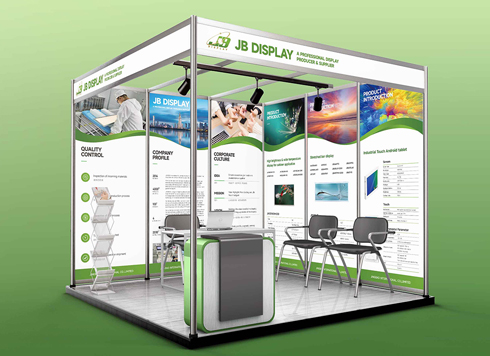 Booth Poster Design for Professional Monitor Product Suppliers
The standard exhibition booth poster projec ...
-
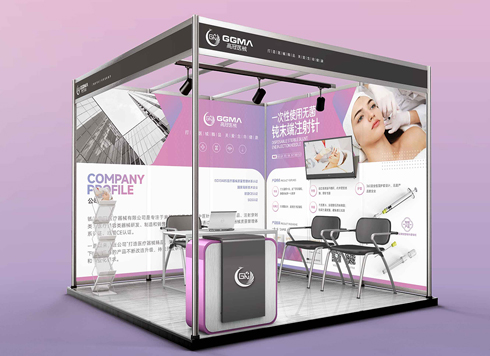 Design of Standard Exhibition Booth Posters for Beauty Instruments
Carefully designed a standard exhibition bo ...
-
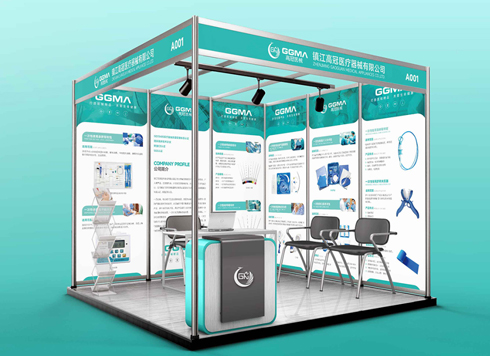 Design of Exhibition Posters for Medical Device Standards
XiYue is designing an exhibition booth post ...
-
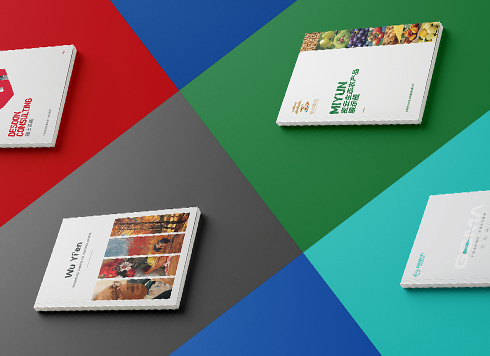 Collection of Brochure Design Cases in 2024 (Cover Series 02)
Our brochure design projects focus on diver ...
-
Book Layout Design Quotes Can Vary Severalfold, and After Five or Six Revisions You're Still Not Satisfied—Where's the Problem?
Date: Aug 19, 2026 Read: 52
-
Single-column text with two-column figures: is a missing column-grid rule behind reflowing text every time a figure moves?
Date: Oct 11, 2026 Read: 11
-
For a book series, if you create a master first and then apply it, why does the layout still drift when someone else takes over?
Date: Oct 5, 2026 Read: 15
-
Body text one size smaller and fewer signatures: why do trial readers say they can't get into it?
Date: Sep 29, 2026 Read: 27
-
Print is already at the printer, but the ebook goes live two months later — can the earlier layout still be reused?
Date: Sep 23, 2026 Read: 32