




Should You Send Source Files Before Final Payment Is Settled? Missing These Handover Items Causes More Trouble
When the final payment is not settled, do not send source files first. This is the most common starting point for disputes in graphic design outsourcing: once the source files are sent, the client can modify them on their own, and you lose leverage over final payment, revisions, and print coordination. Based on project delivery experience, the safe approach is: first send a watermarked PDF for acceptance, and after confirmation and final payment, deliver the source files and supporting assets. The following checklist will help you determine what to send and when.
First clarify what “source files” actually include
Source files are not a single file, but a complete set of editable deliverables. They typically include design source files (AI, PSD, Figma, CDR, INDD, etc.), font files, linked image assets, and exported PDF print files. Many disputes arise from inconsistent understanding of “source files”: the client thinks “source files” are the original files they can open and edit, while the designer thinks sending a PDF counts as delivery.
Based on typical project delivery practices as of 2026, the more common approach is to split deliverables into three parts: editable source files, final files, and an asset folder. The editable source files are the original working files; the final files are the PDF/JPG for print or screen; and the asset folder contains linked images, fonts, logos, etc. All three are indispensable.
- Editable source files: AI, PSD, Figma, etc., preserving layers, effects, and editable text.
- Final files: PDF/X-4 (for print) or RGB JPG/PNG (for screen).
- Asset folder: linked images, font files, brand guidelines, etc.
Why you should not rush to send source files before final payment
Once source files are delivered, the designer’s leverage diminishes significantly. The client can modify them themselves, ask someone else to edit, or even switch designers, and you basically lose your bargaining power for final payment and subsequent revisions. A more practical risk is that source files may contain non-standard fonts or low-version plugin effects; if the client makes unauthorized changes, they may blame the designer when problems arise.
A common situation in projects is that the client urges: “Send the source files first, we’ll take a look internally.” After reviewing, they directly change a few words and send it to print, then later claim the design has problems. In that case, the designer has no basis for revision requests or additional payments. Based on experience, the final payment proportion is generally controlled at 30%–50%, and providing only a watermarked PDF preview before full settlement is a generally safe practice in the industry. For situations where the client insists on getting source files, you can agree in the contract that “delivering source files implies final payment is settled by default,” or ask for a separate source-file licensing fee before sending.
An example from a real delivery: a chain-brand project with a budget between RMB 20,000 and 30,000 and a three-week timeline. After the mid-term review, the client insisted on getting source files for internal evaluation. We sent a watermarked PDF plus low-resolution composite images, while explaining that the source files would be provided after acceptance. As a result, the client could view but not modify, and the final payment was settled according to process. The cost was one extra day of communication, but it avoided the risk of unclear revision disputes later.
- Send a watermarked final PDF first, labeled “preview only.”
- After acceptance is confirmed, issue an invoice, and send the full source files only after receiving final payment.
- If the client insists on receiving them early, include in the contract that “delivering source files implies final payment is considered settled.”
What you should actually deliver to the client (the Four-Item Checklist)
Instead of agonizing over “whether to give source files,” it is better to organize the delivery package according to the Four-Item Checklist. This checklist is also summarized from enterprise project delivery practices: editable files, fonts, linked images, and copyright statement—only when all four are complete can it be considered a qualified delivery. Missing any one leaves room for rework or disputes.
Why divide it this way? Because print, secondary revisions, and legal risks all lie in the details. If fonts are not packaged, the files will display incorrectly on another computer; if linked images are not sent, the print shop will only see low-resolution previews; if the copyright statement is unclear, the client may use the work commercially and both sides will have conflicting claims in a dispute.
- Editable files: AI/PSD/Figma source files; be sure to preserve layers and effects, do not flatten them.
- Font files: confirm whether they are free for commercial use or properly licensed, package them and note the license.
- Linked image assets: organize all embedded images, logos, and graphics according to their original paths.
- Copyright/licensing statement: specify the scope of the license (purpose, duration, territory) and attach it with the files.
What counts as qualified? Before sending, open the files yourself to make sure there are no missing fonts or links, and that the file version opens properly. If it is a print item, also include a PDF/X-4 or a PDF that meets the print shop’s requirements, and mark the bleed and spot color information. This PDF copy is often more important than the source files, because print shops do not use source files directly; they use the PDF. In addition, if the client needs a template for further editing, keep text and effect layers in the source files—do not outline all text for simplicity. Of course, for print-ready artwork, converting text to outlines can prevent missing-font issues; the two cases need to be distinguished.
Other common dispute points after source file handover
Even after the source files are sent, friction can still arise over version compatibility, font licensing, or revision counts. For example, the client says “cannot open,” but they are using an outdated software version; or the client changes the fonts to non-commercial fonts for printing, gets pursued by the font company, and then asks why the designer did not warn them. These are not inherent problems with the source files, but writing these details clearly during handover can save a lot of communication cost.
Based on common practice as of 2026, it is recommended to clearly note in the delivery notes: the software version (e.g., Adobe Illustrator 2024 or above), font license status, and precautions for modifying source files. Also agree on the number of revisions: typically 2–3 rounds of partial revisions are included, with additional revisions billed separately. If the revision count is not specified, you may end up in a situation where the client asks for ten rounds of changes and still says it is not done.
- Software version: note the version used to create the files to avoid confusion over inability to open in older versions.
- Font licensing: distinguish between free-for-commercial-use, licensed, and fonts that the client must purchase.
- Revision boundaries: specify the number of revisions and pricing after the first draft or approved version.
The difference between sending source files first and sending them later is essentially a trade-off between trust cost and risk cost. Sending first gives better client experience, but the designer may bear the risk of collecting final payment; sending later makes the process more stable, but you need to clarify the timeline with the client in advance. Based on experience range, most outsourcing projects adopt the “settle after acceptance, then send” approach, while a few long-term clients may use an arrangement of “send source files first, settle the final payment according to the billing cycle.”
Frequently Asked Questions
The final payment is not settled, but the client says they want the source files during the “draft stage.” What should I do?
Source files are usually not needed at the draft stage; a watermarked PDF is sufficient. If it is for internal review, you can also send a set of low-resolution JPG composites.
After the source files are sent, the client says they cannot open them. Who is responsible?
First check whether the files were saved in the agreed version. If the software version was specified at delivery and the client uses an older version, it is a client-side issue; if it was not specified, the designer should assist in exporting a compatible format.
Can the client infringe copyright if they use the fonts from the source files for commercial purposes?
If the fonts are free for commercial use or properly licensed, yes. If they are a designer’s personal free version limited to personal use, they cannot be used commercially. In this case, you should proactively replace the fonts or remind the client to purchase a license.
If the client does not pay the final payment, does the designer have the right to withhold the source files?
Before the payment milestone agreed in the contract, the designer has the right to withhold the source files until the corresponding payment is received, but you should check whether the contract has other provisions. It is recommended to specify in the contract that “source files will be delivered after the final payment is settled.”
Applicable scenarios and boundaries
This Four-Item Checklist and final payment milestone control are suitable for graphic design outsourcing, corporate brand materials, print design, and similar scenarios. Any project that involves source file handover and requires subsequent revisions or reprints can benefit from this approach.
However, for a one-time personal commission, such as a WeChat Moments poster where no source files are needed and it is agreed that “only JPG will be delivered,” the process can be simplified. Or if the client has an in-house design team and explicitly requires source files for internal secondary development, you can agree in the contract that the final payment is considered settled upon delivery of the source files, and add a source-file licensing fee. There is no need to let a project fall through just to insist on “payment first”—the key is to write the conditions clearly and follow the contract.
Action suggestions: when signing a new project, include “source file delivery milestone, font license status, and revision count” in the contract or quotation. During handover, check against the Four-Item Checklist, and open and verify the files yourself before sending. This way, you can reassure the client and reduce losses related to final payment, copyright, and rework.
-
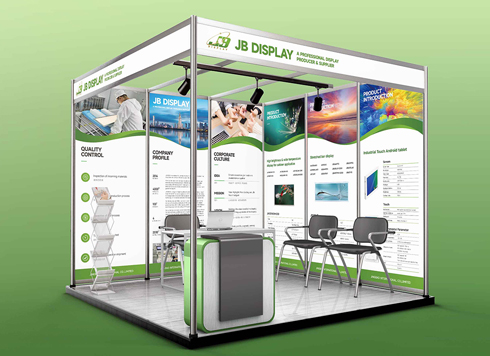 Booth Poster Design for Professional Monitor Product Suppliers
The standard exhibition booth poster projec ...
-
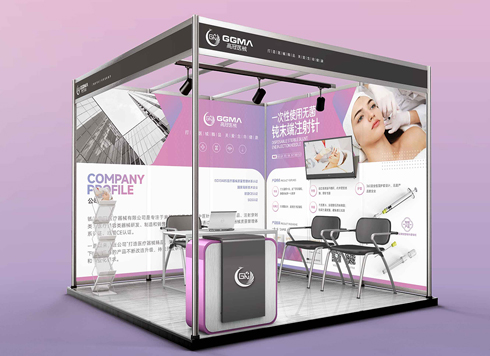 Design of Standard Exhibition Booth Posters for Beauty Instruments
Carefully designed a standard exhibition bo ...
-
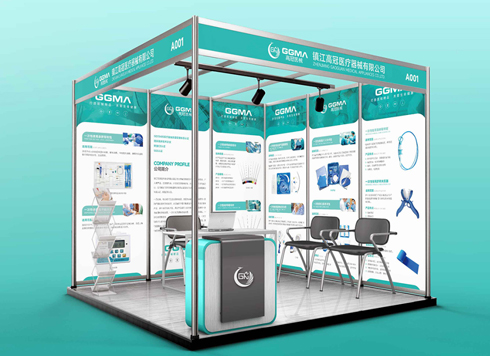 Design of Exhibition Posters for Medical Device Standards
XiYue is designing an exhibition booth post ...
-
 Collection of Brochure Design Cases in 2024 (Cover Series 02)
Our brochure design projects focus on diver ...
-
Should You Ask for Source Files When Outsourcing Graphic Design? How Much Extra Does It Usually Cost?
Date: Aug 28, 2026 Read: 52
-
Should You Deliver Source Files in Graphic Design? Which Formats Avoid Trouble?
Date: Aug 16, 2026 Read: 65
-
Evaluating and Selecting Graphic Design Projects: From Requirements Definition to Delivery Acceptance
Date: Aug 8, 2026 Read: 55
-
The logo is centered in the circular button, so why does it still look off to one side? Should I nudge it manually, or is something wrong with the file?
Date: Oct 15, 2026 Read: 0
-
Same logo looks clear in a brochure—why does it blur on a shipping box? Can switching the file to a box version save it?
Date: Oct 14, 2026 Read: 3