



How to Approach Publication Layout Design: A Complete Guide from Process to Acceptance
Publication layout design is a systematic method of organizing text, images, whitespace, and color into pages according to reading logic. The core criterion is: can readers understand the content hierarchy without distraction? Common practice in 2026 is to first establish grids and style specifications, then conduct visual experiments, rather than directly opening software to typeset page by page.
Core Objectives and Judgment Criteria for Publication Layout Design
The layout is the first layer of packaging for publication content. It directly affects page-turning frequency, reading speed, and willingness to continue reading. A book with chaotic layout, even with excellent textual content, can easily cause reader fatigue. Therefore, layout design should be treated as an independent professional discipline.
To judge the quality of layout design, consider the following four dimensions, which cover the complete chain from content to execution:
- Clear information hierarchy: There is a clear distinction between titles, subtitles, body text, and captions, allowing readers to locate key points at a glance.
- Consistency across spreads: The body text, headers, footers, and page numbers remain stable, without inconsistent proportions from page to page within the same book.
- Harmonious image and text block coordination: Images follow the same grid for bleeds or margins and do not arbitrarily overflow boundaries.
- Feasible print execution: Font embedding, bleeds, safety margins, and color modes are all preset according to the printer's requirements.
It should be noted that layout design is not a decorative creativity contest. When content is primarily long-form text, stability and readability outweigh visual impact; for art books or magazines, more whitespace and creative grids can be added, but the layout must align with the content's goals.
How to Execute a Complete Layout Design? A Four-Step Implementation Process
Based on 2026 project delivery practices, a complete layout design typically progresses through four stages: research, architecture, typesetting, and delivery. Each stage has clear inputs and outputs. The recommended "four-step process" helps clients control timeline and communication costs.
- Step 1: Content Inventory and Reading Scenario Definition. After receiving the manuscript or copy, first count the amount of text and number of images, and confirm the reading scenario (shelf browsing, exhibition browsing, or digital-first). This step determines the text block size, font size, and color scheme direction.
- Step 2: Establish Grid and Style Specifications. Set margins, columns, baseline grid in the software, and define fonts and sizes for titles, body text, and captions. At this stage, output a one-page test proof and confirm the direction with the client on paper.
- Step 3: Full Book Typesetting and Visual Review. Typeset the content page by page, handling spreads, captions, orphans, and hyphenation. After the initial draft, print several sample pages to check the actual print effect, what is displayed on a digital screen does not equal the effect on paper.
- Step 4: Pre-Press Check and File Delivery. Confirm bleeds, trimming, folding, binding methods, embed fonts, and export PDF/X-1a or a version that meets the printer's requirements. Also retain editable source files for future revisions.
The completion criteria for each step differ: Step 1 ensures no information is missing; Step 2 ensures the first 10 pages of the book have consistent style; Step 3 ensures no floating lines or misalignments; Step 4 ensures the printer's preflight passes. If any step is skipped, subsequent rework costs will multiply.
Common Deliverables and Acceptance Criteria
A complete publication layout design typically includes both print files and digital files. Print files are used for printer output, while digital files are for online release or archiving. When accepting, you must not only look at the screen effect but also print physical proofs.
- Cover and back cover files: Include bleed and spine, provided at print dimensions.
- Interior layout source files: Editable AI or ID files, with fonts converted to outlines or embedded.
- PDF/X-1a pre-press files: Color mode is CMYK, resolution is 300dpi.
- Digital files: Such as EPUB or PDF, for digital reading scenarios.
- Design specification document: Notes margins, font sizes, color values, and grid rules for future expansion.
Acceptance criteria can be summarized as: the text block is consistent on every page, bleed and safety margins are correct, fonts are fully embedded or outlined, images have no blur or color deviation, and printed proofs have no obvious misregistration. Any failure to meet these standards should be considered unqualified and requires revision.
Common Misconceptions and Pitfalls
In years of delivery, clients often fall into the following misconceptions, which can cause project delays or reduced quality of the final product.
- Directly using sample images as final: Sample images may only be 72dpi and will be blurry when printed. Design requires 300dpi images.
- Ignoring font licensing: Some fonts are for personal use only; commercial use in publications requires purchasing a license. In formal projects, budget for font costs.
- Setting layouts with RGB values: Print uses CMYK; colors that look vivid on screen may not be printable. Calibrate in CMYK mode.
- Repeatedly modifying the grid specification: The grid is the foundation of the entire book; mid-project adjustments will cause all pages to be re-laid out. Therefore, the grid must be finalized before starting production.
An illustrative counterexample: a client repeatedly requests font changes for the body text after the initial draft, switching from a sans-serif to a serif font, then to a calligraphic style, resulting in re-typesetting all letter and line spacing across the book, doubling the timeline. The correct approach is to select the font in the first phase and have the printer produce a proof for confirmation.
Comparison and Applicability of Basic and Full-Service Offerings
Based on design scope, commissions are typically divided into two categories: basic and full-service. These differ significantly in cost, timeline, and applicability.
- Basic version: Covers cover and interior layout design, including grid, body font, and caption specifications. Timeline is approximately 10-15 working days. Suitable for books with complete manuscripts that do not require illustrations.
- Full-service: Adds topic planning, image or illustration creation, font licensing, print supervision, etc. Timeline is approximately 30-45 working days. Suitable for magazines, art books, corporate publications, and other content that requires planning.
The basic version typically does not include illustration creation and font copyright purchase; these costs need to be budgeted separately. The full-service version allows the design team to allocate resources uniformly, but requires a longer communication period. This is the core trade-off between the two. If the budget allows, the full-service option reduces the client's coordination burden; if the content is already complete, the basic version is more efficient.
Applicable Scenarios and Boundaries
Not all content requires publication layout design. Typical scenarios worth investing in include: books with collectible value, client-facing art books, annual reports requiring strict brand guidelines, and magazines that need cross-media distribution.
There are also clear boundaries for unsuitable situations: for simple internal documents, a Word template is sufficient; for purely digital reading without print needs, directly generating HTML layouts is more appropriate; if the content is only about ten pages and has no layout requirements, commissioning a separate layout design has limited cost-effectiveness.
In the 2026 environment, parallel publishing of e-books and print books has become the norm. Layout design should consider adaptability to electronic screens, but it is not necessary to create dual versions for every project. Clients can decide whether to cater to both based on their actual distribution channels.
FAQ
What is the typical cost of publication layout design?
Pricing is influenced by the number of pages, content complexity, and the designer's experience. It is common in the industry for the basic version to be charged per page and the full-service version per project. It is recommended to ask the designer for an itemized quote, which helps compare costs when adding services later.
How long does a publication layout design take?
Typically, the basic version requires 10 to 15 working days, and the full-service version requires 30 to 45 working days, depending on the completeness of the manuscript and the number of revisions, excluding sample printing and shipping time.
How many revision rounds are typically limited?
Common industry practice allows two to three rounds of revisions after the initial draft, with extra charges for additional rounds. It is advisable to clearly state the scope and number of revisions in the contract to avoid endless fine-tuning.
Who provides image assets?
The design team usually provides recommendations for image composition and color correction, but high-resolution image assets and illustration copyrights must be purchased separately by the client or as part of the full-service package. Some design teams can also procure them on your behalf, with costs billed separately.
How to measure the effectiveness of layout design?
It can be measured indirectly through reading completion rate, reader dwell time, and reprint frequency, but the direct standard is whether the printed proof meets the acceptance checklist, not the "feeling" on screen.
If you are preparing a book, art book, or magazine, it is recommended to first sort out the content structure and printing scenarios, then decide whether to choose the basic version or full service. In 2026, a qualified layout design should make the reading experience of a book almost seamless, while leaving room for subsequent digital release. If the project is primarily long-form text with a limited budget, start with the basic version of cover and interior templates; if complex illustrations and brand guidelines are involved, the full-service option is safer. For functional development or digital interaction needs beyond layout design, seek separate technical partnerships.
-
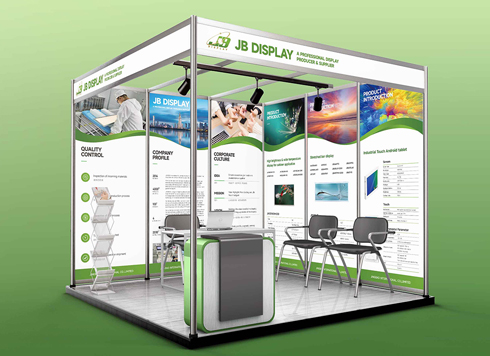 Booth Poster Design for Professional Monitor Product Suppliers
The standard exhibition booth poster projec ...
-
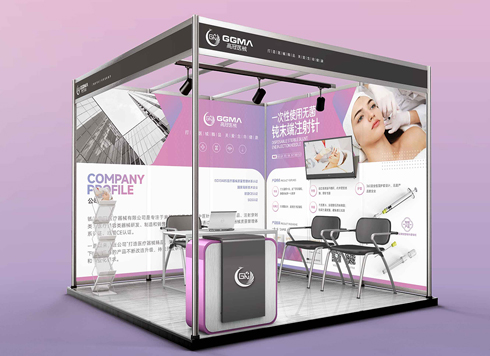 Design of Standard Exhibition Booth Posters for Beauty Instruments
Carefully designed a standard exhibition bo ...
-
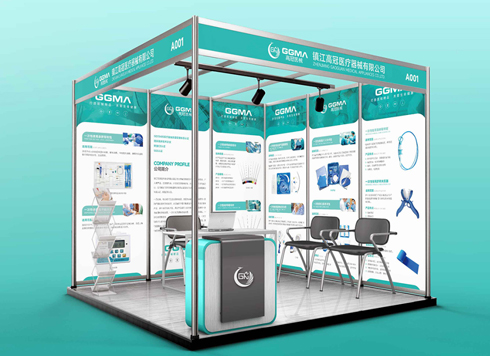 Design of Exhibition Posters for Medical Device Standards
XiYue is designing an exhibition booth post ...
-
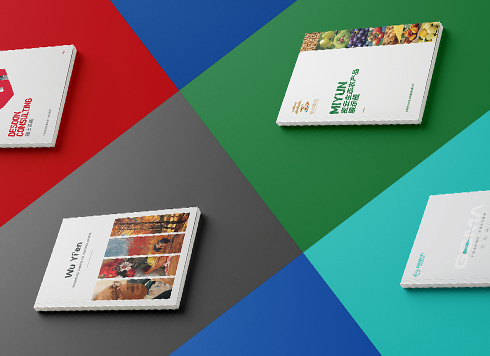 Collection of Brochure Design Cases in 2024 (Cover Series 02)
Our brochure design projects focus on diver ...
-
Is Template Layout Enough for Publication Design? What's the Difference from a Designer?
Date: Aug 31, 2026 Read: 34
-
Book Layout Design Quotes Can Vary Severalfold, and After Five or Six Revisions You're Still Not Satisfied—Where's the Problem?
Date: Aug 19, 2026 Read: 36
-
How to Review Publication Layout Design: Focus on Type Area, Letter Spacing, and Prepress Proofing
Date: Aug 14, 2026 Read: 39
-
How to Approach Publication Layout Design: The Complete Workflow from Goals to Delivery and Acceptance Criteria
Date: Aug 8, 2026 Read: 53
-
Same Packaging with Three Flavors, Only the Color Band and Flavor Text Changed: Is It Reasonable for a Design Company to Charge as New Work?
Date: Sep 19, 2026 Read: 6