



Graphic Design Project Delivery Guide: From Requirement Confirmation to Acceptance
The success of a graphic design project depends not on the designer's individual inspiration, but on establishing a closed-loop process from requirement confirmation to acceptance delivery. Industry practice in 2026 shows that breaking a project into four stages—requirement confirmation, solution design, feedback revision, and acceptance delivery—effectively controls costs and timelines while reducing rework. This article provides a practical delivery guide for corporate buyers and independent designers, clarifying the inputs, outputs, and check criteria for each step.
1. Four-Step Delivery Loop: Why Process, Not Creativity?
The four-step method treats design as a managed project rather than a one-time output of inspiration. The four stages are interlocked, each with clear inputs, outputs, and checkpoints.
- Requirement confirmation: Define objectives, audience, style, budget, and timeline.
- Solution design: Produce initial drafts, mood boards, or mockups to guide direction decisions.
- Feedback revision: Iterate based on a prioritized list, controlling the number of revision rounds.
- Acceptance and delivery: Check deliverables against the checklist to ensure files are usable in real scenarios.
This process suits most graphic design projects with clear deliverables. In 2026, many companies shift from pure outsourcing to a hybrid "internal + external" collaboration model, but the core process remains unchanged—only communication tools and file formats are upgrading.
Step 1: Requirement Confirmation—Turning Vague Ideas into an Executable Design Brief
Requirement confirmation is the starting point and often the most compressed phase. Project delays or rework usually stem from misaligned requirements. In 2026, the common practice is to use a written design brief that specifies project background, target users, brand tone, deliverable list, milestones, and budget range.
A qualified design brief should include five elements: design purpose, audience characteristics, style references, must-have elements, and explicit prohibitions. Without these, the design process becomes a guessing game.
- Design type (logo, poster, brochure, packaging, etc.) and usage scenarios
- Target audience and core message
- Style references (provide 3–5 directions, not just a single work)
- Dimensions, formats, and delivery file requirements
- Budget range and timeline
Judgment criterion: If you hand the brief to a stranger designer, can that person ask accurate questions within 15 minutes? If not, the information is not specific enough. A common counterexample: sending only a reference image and saying "something like this" easily leads to off-target design directions.
Step 2: Solution Design and Initial Draft Presentation—Using Mockups to Reduce Misunderstanding
The core of the design phase is not making things look good but using visualization to quickly validate directions. Mature teams usually provide low-fidelity sketches or mood boards first, rather than delivering finished work directly. When presenting initial drafts, provide at least two or three directions with an explanation of the thinking behind each; for smaller projects, at least one main solution plus a backup.
Each initial draft should answer three questions: Which requirement point does it address? What emotion does it convey? How does it differ from the current brand state? A counterexample: directly asking the designer to copy a competitor may ignore brand differentiation and lead to excessive similarity.
Step 3: Feedback Revision—Using Structured Feedback to Converge the Revision Cycle
Revision is an area that easily gets out of control. It is recommended to use grouped feedback: classify revision comments into must-change, should-change, and optional-change levels, and specify the corresponding design elements. Update version numbers and record a revision summary after each round. Saying "it feels wrong" is not actionable, while "the heading font is too small and lacks contrast with the background" is an effective revision instruction.
Feedback format: location (which element), issue (the gap between current effect and expectation), suggestion (how to adjust or provide a reference sample). The criterion for convergence: if the number of new issues does not significantly decrease over two consecutive feedback rounds, the requirements may have changed, and reconfirmation is needed.
Step 4: Acceptance and Delivery—File Specifications Determine Whether the Project Can Be Used
Acceptance is not just saying "OK" after a look; it is checking item by item against the design brief. The delivery checklist includes source files, exported files, font files, usage guidelines, and copyright statements. Missing source files or unclear font licenses leave hidden risks.
For print, CMYK, bleed, and crop marks are required; for screen, RGB and adapted versions in different sizes are needed. The criterion for qualified delivery: a third party can use the files directly without asking additional questions. A counterexample: sending only a JPG with no source files means any subsequent adjustment requires a redesign.
Applicability and Boundaries
The four-step closed loop suits commercial design projects with clear deliverables, such as corporate brand materials, promotional posters, and packaging design. However, if the project is as small as a business card or is urgent and to be completed within a day, the requirements can be simplified into a short paragraph, but key information still needs confirmation.
It is not suitable for exploratory, purely artistic creation, or workshops requiring real-time interaction. These scenarios are better suited to agile iteration, allowing design to be adjusted on the fly. The industry consensus in 2026 is that process serves goals, not constrains inspiration. If the budget is very limited, you can reduce the number of solutions, but requirement confirmation and acceptance cannot be omitted because they directly affect rework costs.
Comparison of Internal Teams vs. External Agencies
The cost, timeline, and suitability of the two models differ significantly. Internal teams are calculated on monthly salary or annual packages, suitable for long-term, high-frequency needs; external agencies quote per project, suitable for one-time deliverables. Common project timelines in 2026: brand VI design takes about 20–40 working days, posters/flyers about 3–7 working days. In terms of cost, internal teams suit companies with high monthly design demand (e.g., more than five small design projects per month), while external agencies are better for one-off projects.
- Cost: Internal teams use annual labor costs amortized, with per-project cost decreasing as demand frequency rises; external agencies quote per project, usually including management fees and profit.
- Timeline: Internal teams respond quickly (half a day to 1 day), but creativity may be limited; external agencies need upfront research, usually adding 2–5 working days, but bring cross-industry experience.
- Suitability: Internal is suitable for mature brands; external is suitable for brand upgrades or repositioning.
- Risk: Internal is vulnerable to personnel turnover; external requires attention to copyright handover.
If the project timeline is tight and the budget is limited, a hybrid model can be adopted: core design handled internally, while visual extension or illustration is outsourced. Regardless of the approach, intellectual property ownership should be clearly defined in the contract to avoid future disputes.
FAQ
How long does a graphic design project typically take?
Brand VI design takes about 20–40 working days, while posters or flyers take about 3–7 working days. The exact time depends on the number of revisions and feedback speed.
How do I judge whether the design quality is acceptable?
Check item by item against the design brief: whether the core message is conveyed, whether the style direction is followed, and whether files are output per specifications. Missing any one means it is not acceptable.
How to communicate when the designer says "I can't change it"?
First understand the technical or copyright limitations, then negotiate alternative solutions. Ask the designer to provide an explanation rather than directly accepting or rejecting.
When the budget is limited, which stages can be cut?
You can streamline the number of solutions, for example, providing only one main option, but requirement confirmation and acceptance cannot be omitted because they directly affect the number of revisions and final results.
How to choose a reliable design team?
Confirm whether they have a clear process document and whether they are willing to sort out requirements at the project outset. The quotation should include revision counts and copyright ownership terms.
-
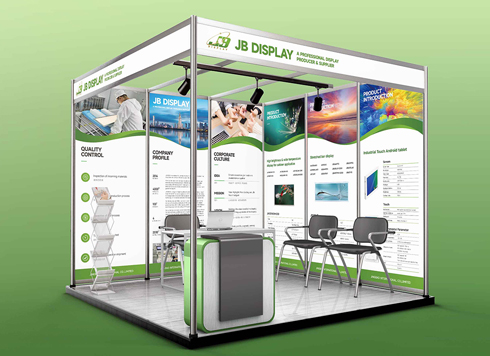 Booth Poster Design for Professional Monitor Product Suppliers
The standard exhibition booth poster projec ...
-
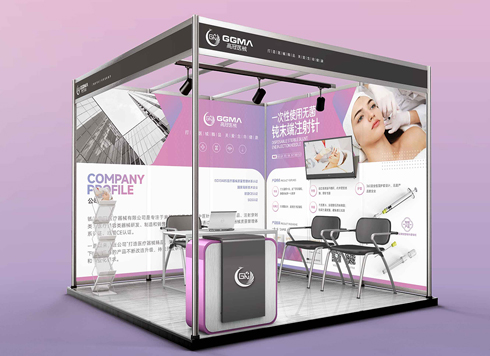 Design of Standard Exhibition Booth Posters for Beauty Instruments
Carefully designed a standard exhibition bo ...
-
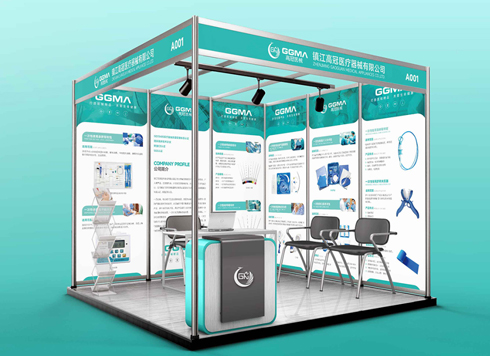 Design of Exhibition Posters for Medical Device Standards
XiYue is designing an exhibition booth post ...
-
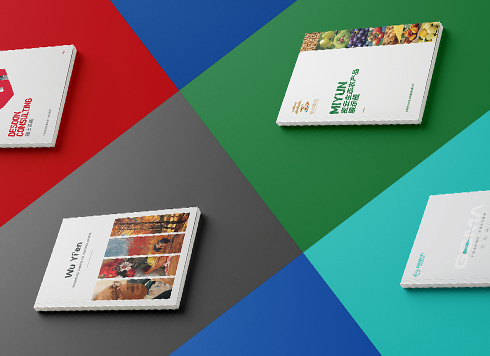 Collection of Brochure Design Cases in 2024 (Cover Series 02)
Our brochure design projects focus on diver ...
-
What Does "Premium Feel" Really Mean When Clients Say It in Graphic Design?
Date: Aug 23, 2026 Read: 39
-
How to Run a Graphic Design Project: A Guide to Process, Pricing, and Acceptance
Date: Aug 10, 2026 Read: 45
-
AI can already make posters, so which parts of graphic design still require humans?
Date: Aug 21, 2026 Read: 52
-
Graphic Design Style Keeps Changing: Is It the Designer or Unclear Requirements?
Date: Aug 17, 2026 Read: 40
-
Why Do Graphic Design Projects Require Constant Revisions and Rework? The Problem Usually Lies in Which Stage?
Date: Aug 11, 2026 Read: 48