



Standardized Workflow for Graphic Design Projects: A Full-Chain Guide from Requirements to Delivery
Efficient delivery of graphic design projects hinges on establishing a standardized workflow. In 2026, common practice breaks work into five phases: requirements confirmation, creative conception, design execution, internal review, and client delivery, each with clear deliverables and checkpoints. This method reduces rework rates by over 40%, especially suitable for medium-sized design teams of 3-10 people.
Requirements Confirmation Phase
Requirements confirmation is the foundation to avoid later deviations. Designers need to collect the following information in sync with clients or stakeholders: project background, target audience, usage scenarios, style preferences (keywords or reference images), deliverable list and formats, and timeline. Using a standardized requirements form (e.g., an online form) enhances information completeness.
- Key Deliverables: Requirements document (including reference images, dimensions, color preferences).
- Checkpoint: Signed confirmation by both parties or email confirmation to avoid future disputes.
- Common Pitfall: Ignoring usage scenarios—e.g., only providing a logo design requirement without specifying it will be used in black-and-white printing, leading to wrong color choices.
Creative Conception Phase
This phase translates requirements into visual directions. It is recommended to output 2-3 differentiated proposals (e.g., varying in style, composition, or color scheme), each with a brief explanation (design rationale). In 2026, tools like Midjourney are commonly used for reference images, but designers must ultimately ensure feasibility.
- Key Deliverables: Proposal sketches/moodboards and design descriptions.
- Checkpoint: After internal review, select one or two directions to refine, avoiding scattered resources and time.
- Evaluation Criteria: Is the direction consistent with the brand tone? Does it consider end-display effects?
Design Execution Phase
After selecting a direction, proceed to detailed production. Establish file naming conventions (e.g., ProjectName_V1_20260115.ai), layer grouping rules, and global control over fonts and colors (to avoid individual adjustments later). Export multiple formats as needed (PNG, JPG, PDF, SVG, etc.).
- Key Deliverables: Source files (including layers and effects) and exported preview images.
- Checkpoint: Self-check checklist (dimensions, bleed, resolution, text outlines, etc.).
- Common Pitfall: Disorganized layers leading to wasted time during client revisions; failure to check RGB/CMYK mode causing print color discrepancies.
Internal Review Phase
After the designer completes the first draft, it must go through cross-review within the team. Key focuses: visual consistency (color, spacing, fonts), clarity of information hierarchy, technical specifications (bleed, cut lines), and compliance with standards. Use online annotation tools (e.g., Markup) to record feedback.
- Key Deliverables: Review comments table or annotation screenshots.
- Checkpoint: All feedback must be marked as "resolved" before proceeding to the next step.
- Comparison: Internal review vs. direct client delivery—the former adds 1-2 days but reduces client complaint rates by about 60%.
Client Delivery and Acceptance
Include a "Delivery Note" (containing file list, formats, usage suggestions, contact information) with the final delivery. If the client requests changes, distinguish between "reasonable modifications" (e.g., typos, size adjustments) and "out-of-scope requests" (e.g., adding new pages). The former are free, while the latter require negotiation on timeline and cost. In 2026, common practice is to allow two rounds of minor adjustments.
- Key Deliverables: Final file package (including source files, previews, font/asset descriptions).
- Checkpoint: Client email or system confirmation of acceptance, serving as basis for project payment.
- Boundary: Not suitable for explorative projects with completely uncertain creative directions (consider signing a creative consulting order first).
Balance Scale Judgment Criteria: Good Workflow vs. Bad Workflow
A good workflow is like a balance scale, balancing efficiency and quality; a bad workflow loses balance on both ends. Here is a four-dimensional comparison:
- Information Completeness: Good workflow covers requirements, dimensions, formats, brand guidelines; bad workflow is just a verbal "make a poster."
- Feedback Mechanism: Good workflow has clear review milestones and responsible persons; bad workflow is "design as you go" with no termination signal.
- Deliverable Standards: Good workflow uses unified naming, layer grouping, and format lists; bad workflow has arbitrary naming and unstructured source files.
- Change Management: Good workflow limits revision rounds and defines scope; bad workflow has no limits, leading to project delays.
Frequently Asked Questions
Is the design workflow suitable for freelancers?
Yes, but it can be simplified. Focus on requirements confirmation and delivery acceptance; formal reviews in the middle can be omitted.
How many people should participate in the internal review phase?
At least one senior designer or design director; other members can attend as needed. Limit to 3 people to avoid scattered decision-making.
What if the client insists on not following the workflow?
Document the "risk of skipping workflow" in a contract or project brief and have the client sign it to clarify responsibility.
What adjustments are needed for remote collaboration in 2026?
Use online collaboration tools (e.g., Figma, Teams) for real-time syncing, and add daily stand-up meetings to communicate progress and avoid information lag.
Applicable Scenarios and Boundaries
This workflow is suitable for brand visual design, e-commerce detail pages, brochures, posters, and other routine deliverables. It is not suitable for purely creative exploration (e.g., art posters, experimental design) or extremely short cycles (e.g., urgent projects within 24 hours). For the latter, skip the internal review phase and have a senior designer review before delivery. Additionally, if the client has an established workflow, prioritize the client's workflow and use this one as a supplement.
Action Guide: Start by testing the five-phase method on a small project (e.g., a poster), recording time spent and rework at each phase. After three projects, adjust checkpoints and deliverables based on team habits. Avoid over-proceduralization; practices differ significantly between large teams (200+ people) and small teams (fewer than 5 people). This guide is more suitable for medium-sized teams (3-10 people), and Xiyue Company has verified its effectiveness in real projects.
-
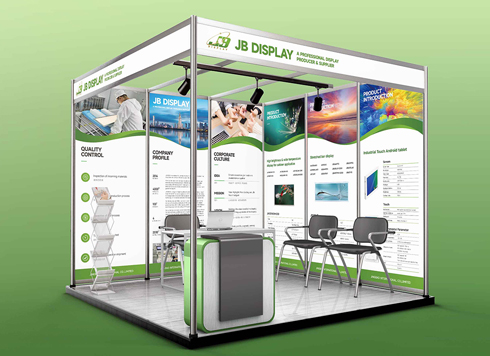 Booth Poster Design for Professional Monitor Product Suppliers
The standard exhibition booth poster projec ...
-
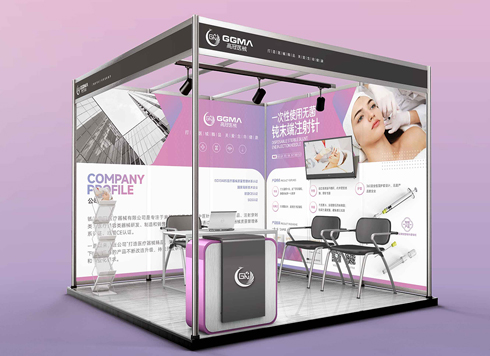 Design of Standard Exhibition Booth Posters for Beauty Instruments
Carefully designed a standard exhibition bo ...
-
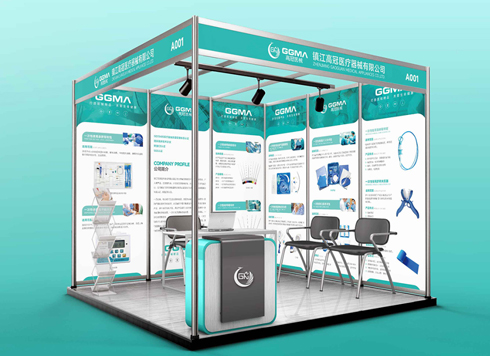 Design of Exhibition Posters for Medical Device Standards
XiYue is designing an exhibition booth post ...
-
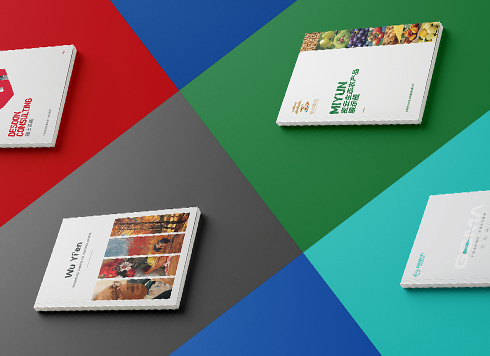 Collection of Brochure Design Cases in 2024 (Cover Series 02)
Our brochure design projects focus on diver ...
-
How to Design Ads/Posters: A Practical Workflow from Needs Analysis to Delivery Acceptance
Date: Aug 9, 2026 Read: 65
-
What Does "Premium Feel" Really Mean When Clients Say It in Graphic Design?
Date: Aug 23, 2026 Read: 58
-
Graphic Design Style Keeps Changing: Is It the Designer or Unclear Requirements?
Date: Aug 17, 2026 Read: 61
-
Why Do Graphic Design Projects Require Constant Revisions and Rework? The Problem Usually Lies in Which Stage?
Date: Aug 11, 2026 Read: 62
-
How to Run a Graphic Design Project: A Guide to Process, Pricing, and Acceptance
Date: Aug 10, 2026 Read: 62