


A Complete Guide to Prototyping: From Low-Fidelity to High-Fidelity Workflows and Delivery Standards
What Problems Does Prototyping Solve? What Does a Successful Prototype Look Like?
Prototyping is the process of validating user task flows, information hierarchy, and interaction feedback through operable mock-up pages before interface development. Its core problem to solve is: identifying logic flaws and experience blind spots at low cost before committing significant development resources. A successful prototype meets three conditions: clear task paths (users can complete core actions within three clicks), visual hierarchy aligned with content priority (important information is highlighted through position, size, and color), and complete feedback mechanisms (every action triggers a state change indicator).
Why Is Prototyping the Foundation of UI/UX Projects?
Interface design without prototypes easily falls into the "drawing trap" — designers focus only on visual aesthetics while ignoring real user scenarios. Statistics show that projects with thorough prototyping reduce requirement changes during development by over 40%. Prototyping enables stakeholders (product, development, testing) to reach consensus on the same interactive document, exposing information architecture issues more accurately than static visual drafts.
A Four-Step Approach to Prototyping
Step 1: Define Information Architecture and User Flows
Start without any visual elements, using card sorting to organize content categories, and draw user flow diagrams covering all possible paths (including error paths). Deliverables: site map + flow chart.
Step 2: Low-Fidelity Wireframes — Focus on Layout and Logic
Quickly build the functional layout of each page using grayscale wireframes, only with boxes, placeholder text, and arrows. Key validation: Is the navigation intuitive? Are form fields redundant? Recommended tools: Balsamiq, Figma's wireframe component library.
Step 3: Mid-Fidelity Interactive Prototype — Embed Basic Interactions
Add clickable links, dropdowns, modals, and other simple interactions on top of low-fidelity. Core checks: Can users complete the main task without thinking? Do error messages appear at the right moment? Use Figma's Prototype mode or Axure.
Step 4: High-Fidelity Visual Prototype — Integrate Design System
Insert real UI components (colors, fonts, icons) into the mid-fidelity structure, and add motion (micro-interactions, loading states). Note: High-fidelity should reuse components from an established design system to avoid redrawing. Deliver with an interaction specification document.
Prototyping Key Points for Different Scenarios
B2B Enterprise System Prototypes
- Emphasize data table filtering, sorting, and batch operation logic
- Must cover different role views for permission management
- Step-by-step guidance and validation feedback for complex forms
B2C Consumer Product Prototypes
- Content priority testing for home page information feeds
- Exception states in shopping cart and checkout flows (out of stock, coupon expiration)
- Complete closed-loop social sharing paths
In-Vehicle / Industrial Touch Interface Prototypes
- Emphasize touch hot zone gesture compatibility (tap, swipe, long press)
- Safety-first task interception: no long text editing while driving
Frequently Asked Questions
Do prototypes always need to be high-fidelity?
Not necessarily. If your goal is to validate user flow, mid-fidelity interaction is sufficient; if the team needs prototypes for user testing or pitch demos, high-fidelity is needed. High-fidelity is more costly but more accurately reflects visual perception.
What is the biggest difference between B2B and B2C prototyping?
B2B focuses more on efficiency and information density — prototypes must include complete data fields, filter conditions, and batch operations. B2C focuses more on emotional appeal and fluidity — prototypes need to simulate motion, loading feedback, and transition animations.
When should a design system be established for prototyping?
As soon as more than three reusable components (e.g., buttons, input fields, navigation) appear in the project, a basic design system should be created. Otherwise, inconsistency results from designing each from scratch. Start with atomic elements early and iterate later.
How to evaluate the quality of a prototype design?
Use a three-pass walkthrough: first, operate along the main task path; second, deliberately make errors (input invalid values, interrupt flow); third, check layout adaptation across different screen sizes. Acceptance criteria: all exception states have corresponding UI, and response time is under 0.3 seconds.
How to Judge Whether a Prototype Is Good or Bad
Evaluate from four dimensions: Completeness (page coverage ≥90%, including empty states and error states), Consistency (same interaction patterns for similar actions, e.g., all delete operations require confirmation), Testability (each clickable area has defined navigation or feedback), Reusability (components based on the design system for quick modifications). Developing from a substandard prototype increases project delay risk by 50%.
It is recommended to allocate over 20% of the total project time to the prototyping phase, preferably using Figma or Axure for collaboration. If your team needs to quickly validate complex scenarios (e.g., multi-role permission systems or in-vehicle gesture interaction), refer to Xiyue Company's previous prototyping experience in B2B enterprise systems and industrial interfaces. Regardless of the tool chosen, always adhere to the principle of "test logic first, polish visuals later" to avoid premature pixel-perfect obsession.
-
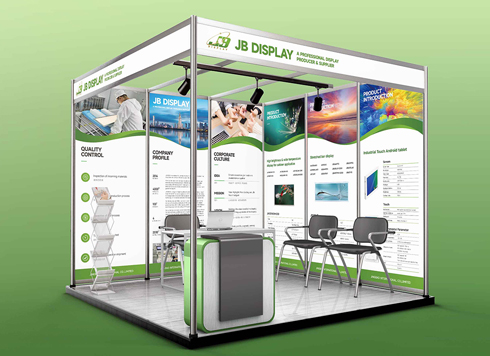 Booth Poster Design for Professional Monitor Product Suppliers
The standard exhibition booth poster projec ...
-
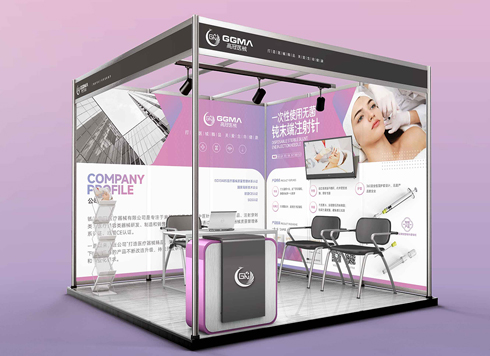 Design of Standard Exhibition Booth Posters for Beauty Instruments
Carefully designed a standard exhibition bo ...
-
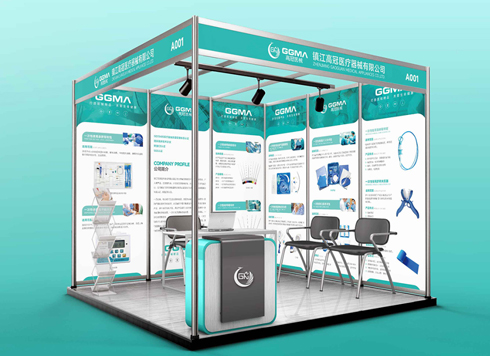 Design of Exhibition Posters for Medical Device Standards
XiYue is designing an exhibition booth post ...
-
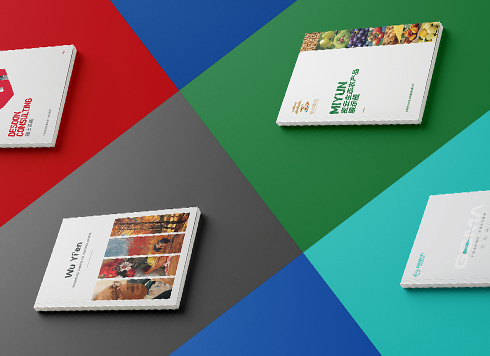 Collection of Brochure Design Cases in 2024 (Cover Series 02)
Our brochure design projects focus on diver ...
-
Graphic Design Project Delivery Guide: From Requirement Confirmation to Acceptance
Date: Aug 6, 2026 Read: 64
-
In-Store Guide Interface Design Guide: From Information Architecture to Delivery Acceptance
Date: Jul 30, 2026 Read: 106
-
Graphic Design Workflow: A Practical Guide from Requirement Alignment to Creative Delivery
Date: Jul 30, 2026 Read: 63
-
Marketing Mini-Game UI Design Guide: Core Process from Information Architecture to Acceptance
Date: Jul 29, 2026 Read: 83
-
Live Streaming Interactive UI Design Guide: Information Architecture, Interaction Logic, and Delivery Acceptance
Date: Jul 28, 2026 Read: 101