


If the opening budget only covers one round, should we do the storefront sign first or the full VI system first?
When the opening budget only covers one round, whether to do the storefront sign first or complete the full VI system first usually depends not on which quote is cheaper, but on how many types of materials need to be implemented in the next year and how many production vendors they will be handed to. Based on common delivery experience in 2026, if there are only two or three types of materials and the production vendor is fixed long term, producing the storefront sign first is more cost-effective; once the work spans packaging, storefront signage, uniforms and other processes and is outsourced to multiple production vendors, defining the foundational guidelines first and then producing usually leads to less rework. When quotes from providers differ substantially, the difference is mostly in scope and responsibility boundaries, not in how much better one party's design level is.
When quotes differ, first clarify whether you are buying guidelines or production
VI system design is not a brochure; it solves how the same brand remains consistent across different materials and different production vendors. The foundational system usually includes the logo, standard logotype, standard colors, secondary graphics, lockup guidelines, minimum usage size and prohibited usage examples; the application system translates into specific materials such as business cards, packaging, storefront signage, uniforms and vehicle bodies. Buying only production gets you a single finished item; buying guidelines gets you a method for subsequent replication.
Why this distinction matters: for clients with multiple stores and multiple production vendors, if they only look for production shops item by item, every change of printer or storefront installer requires re-explaining letter height, color values and clear space, and the communication cost will show within six months. Conversely, for one-off event materials, forcing a complete manual means the budget is spent on low-frequency pages that may not be used more than a few times a year.
- Criterion 1: Does the contract say delivery by page count or delivery as executable guidelines? With the same number of pages, only those that include dimensions, color values and templates have implementation value.
- Criterion 2: Who is responsible for coordinating with printers and storefront sign fabricators? Brand design companies usually handle guideline interpretation, while production shops usually only handle the single item they take on.
- Criterion 3: Are revision rounds and production rework clearly written? In the experience range, VI projects commonly have 2-4 revision rounds, and single-item materials commonly have 1-2 rounds.
Brand design companies, ad production shops and independent designers have different deliverables and responsibility boundaries
In 2026, common providers roughly fall into three categories: brand design companies, ad production shops, and independent designers working with print shops. The difference is not only in price but also in deliverable granularity and who is responsible for implementation results. Asking them with the same price comparison table makes it much clearer where the price difference goes.
- Brand design company: Delivers the foundational system, application guidelines, manual and some templates; typical project cycle is 4-10 weeks (experience range), and the full set commonly costs tens of thousands to more than 100,000 RMB (experience range), suitable for brands with multiple stores that need to outsource to multiple production vendors.
- Ad production shop: Delivers production of single-item materials such as storefront signage, inkjet printing, business cards and takeout bags; typical cycle is 3-7 days (experience range), and a single item commonly costs several hundred to several thousand RMB (experience range), suitable for scenarios with fixed materials, few stores and an immediate need to solve opening-day requirements.
- Independent designer plus print shop collaboration: Delivers guidelines plus print-ready files; the cycle is commonly 3-6 weeks (experience range), and fees are often charged by module; suitable for projects with an internal contact who can supervise processes, but it requires the client to have a basic understanding of printing and installation.
This comparison table is meant to be used by matching needs, not simply comparing price levels: first look at how many types of materials need to be implemented in the next year and how many production vendors they will be handed to. If there are few material types and the production vendor is fixed, a production shop plus a simplified guideline document can cover it; if materials span multiple processes such as packaging, storefront signage and uniforms, having a brand design company fix the lockup guidelines and color values leads to less rework.
Storefront sign or VI manual: which comes first depends on three things
Back to the specific opening situation, the sequencing question can be broken into three checkable lines rather than decided by feeling.
- Number of material types within one year: If there are only two or three types such as storefront signage, business cards and takeout bags, and categories will not expand in the short term, do the storefront sign first; if there will be five or six or more types such as packaging printing, uniform embroidery and vehicle wraps, define the foundational guidelines first, because different processes have different requirements for minimum size and color values.
- Number of outsourced production vendors: If you work with only one production shop long term, verbal instructions plus a simplified guideline document are usually enough; if you need to hand work to three or more parties at the same time, such as a printer, a storefront sign installer and a garment factory, the guidelines need to be written down first; otherwise the same instruction to do it like last time will be understood in three different ways.
- Whether anyone internally supervises production: If there is a dedicated contact who can check processes, the combination of an independent designer plus a print shop is feasible; without a dedicated person, giving the brand design company the authority to interpret guidelines is easier, at the cost of paying an additional guideline fee upfront.
When all three lines lean simple, a common approach is to spend 1-2 weeks first on a 6-10 page simplified guideline document (experience range), fixing the logo lockup, standard colors, minimum usage size and two types of templates for storefront signage and packaging, then let the production vendor produce materials; when all three lines lean complex, put the complete manual first and production later; the overall cycle commonly increases by 3-6 weeks (experience range), but this time is usually recouped later when changing production vendors.
For a VI system that can be implemented, which pages should be checked first during acceptance
When accepting a VI manual, the focus is not on whether the mockups look beautiful, but on whether a production vendor can use it to produce materials directly. Based on common project delivery habits, you can run through a review routine of three checks and one retention, because production vendor errors mostly concentrate on logo distortion, mismatched color values and templates missing dimensions, not on the creativity itself.
- Check lockup guidelines: Are horizontal, vertical and icon versions complete? Are the minimum usage size and clear space derived from actual printing, embroidery and storefront letter heights, rather than only a screen pixel value?
- Check color values and materials: Are CMYK, spot colors, reverse-out versions, and appearance on paper and film materials written separately? Packaging and storefront signage should not share one set of screen color values.
- Check application templates: Do high-frequency materials such as business cards, packaging fronts, storefront signage and uniforms include dimensions, die-cut templates and text safe areas? Mockups alone do not count as templates.
- Retain editable source files: Logo vector files, standard logotype, color value tables, application templates and font licensing list should be delivered together; if only a PDF is delivered, changing production vendors later often requires tracing the artwork again.
The acceptance standard can be very specific: hand the manual to a production vendor that did not participate in the project, and they can complete proofing without asking about logo proportions, color values and dimensions. If they cannot, the manual is still at the presentation layer.
Where delivery often gets stuck in practice: assets, processes and revisions
A common constraint looks like this: the client's budget is tight, only two weeks are left before opening, the only available assets are an old logo photographed with a phone and a few product images, the storefront sign needs installation, and packaging needs to go on a printing press. In our projects, the approach is to first collect a list of high-frequency materials, fix the foundational lockup guidelines and three types of templates for storefront signage, packaging and takeout bags, then let each production vendor make a sample and conduct an actual storefront measurement, and add the points that production vendors ask about most back into the guideline pages. The cost is two or three extra days of checking upfront and a tighter schedule; what is gained is that screen printing plates were not re-made, storefront letters were not incorrectly enlarged based on screen proportions, and opening materials were ready on schedule.
Clients most often get stuck at producing mockups first and adding guidelines later: packaging die-cut templates are not requested, storefront letter heights are not derived from actual dimensions, and rework happens only at proofing. In the experience range, this type of rework commonly adds 1-2 weeks, and it often happens right before opening, making it hard to compress.
- Common pitfall 1: Providing only a PDF and not vector artwork; when changing printers, the logo must be traced again, and proportions easily become distorted.
- Common pitfall 2: Providing only RGB color values; packaging printing and storefront inkjet printing each shift color differently, leaving no common basis for acceptance.
- Common pitfall 3: Listing only the font name without the licensing scope and substitute options; when outsourced production begins, a font change is requested.
- Common pitfall 4: Application templates lack die-cut templates and bleed; only after packaging and hangtags are finished do you discover that text runs over fold lines.
Suitable scenarios and boundaries
Situations suitable for starting with a complete VI system design first: opening new stores or launching new products within a year, materials need to be handed to multiple production vendors, both packaging and storefront signage need implementation, and there is no dedicated internal person supervising production. At this point, clearly writing the foundational guidelines and high-frequency application templates saves repeated communication and rework.
Situations where a complete manual is unnecessary should also be stated clearly: a single store only needs one storefront sign or one round of event materials; the production vendor is fixed long term and material types are very few; and the budget is mainly spent on printing and installation. At this point, a 6-10 page simplified guideline document (experience range) is usually enough; clearly writing the logo lockup, standard colors, minimum sizes and two or three types of templates is sufficient, and forcing a thick manual instead increases maintenance costs.
- Suitable: Chain stores, packaging that needs to go on printing presses, storefront signage that needs to be outsourced for installation, and brand name and sub-brand relationships that need to be fixed.
- Not suitable: One-off events, projects with no more than two or three types of materials, and projects with no follow-up replication plan.
- Boundary statement: The value of VI system design lies in subsequent replication, not in the thickness of the manual; when there is no replication need, producing by single item is more cost-effective.
Frequently asked questions
If we do the storefront sign first and later find that the VI system does not match, do we have to remove it and redo it?
Most letter height and color value deviations can be corrected by local letter changes or patch film, without removing the entire sign. A safer approach is to have the party that will later take on the VI work check the storefront letter height and logo lockup once before placing the order; the cost is only waiting one or two extra days.
An ad production shop says it can also produce the VI manual along the way; can that save money?
When materials are fixed and there are few stores, having a production shop make application templates can save communication; however, the foundational lockup guidelines and color values should still be defined by a brand designer, otherwise changing production vendors can easily cause mismatches, and the money saved may be paid back in rework.
With only three weeks left before opening, is there enough time for a complete VI system?
Based on the typical experience range in 2026, within three weeks it is more suitable to do a simplified guideline document plus two types of templates for storefront signage and packaging; a complete foundational system plus about ten application templates commonly takes 4-8 weeks, and forcing a compressed schedule usually squeezes out proofing and actual measurement steps.
Is it acceptable to accept only a PDF manual during acceptance?
Not recommended. At minimum, collect the logo vector files, standard logotype, color value tables, application templates and font licensing list; if only a PDF is collected, later size changes or production vendor changes will require tracing the artwork again, and proportions can easily become distorted.
If you are comparing quotes, first list the materials to be produced in the next year, the number of production vendors to outsource to, and the packaging processes in a checklist, then ask each party to quote separately by foundational guidelines, application templates and implementation coordination; the price difference will be much clearer. If you only need one-off materials for a single store, doing the storefront sign first and pairing it with a simplified guideline document is usually enough; based on 2026 delivery habits, you can also trial two or three types of high-frequency materials first, then decide whether to expand into a complete VI system design.
-
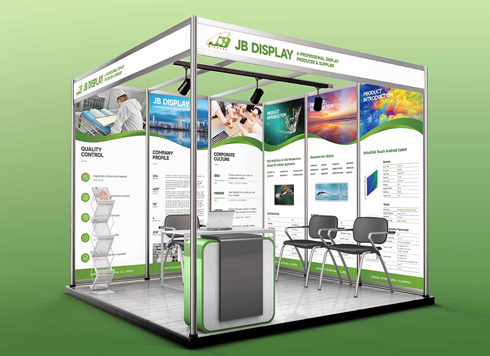 Booth Poster Design for Professional Monitor Product Suppliers
The standard exhibition booth poster projec ...
-
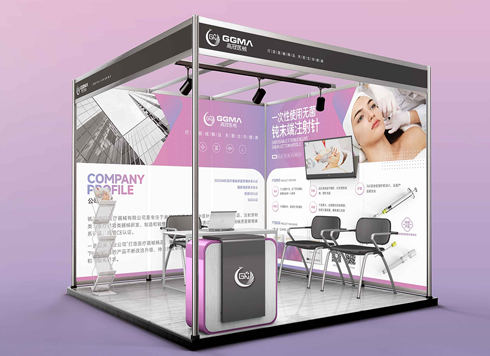 Design of Standard Exhibition Booth Posters for Beauty Instruments
Carefully designed a standard exhibition bo ...
-
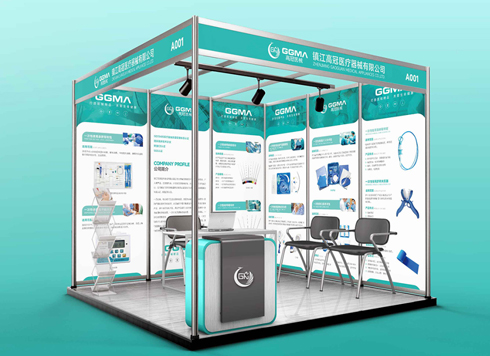 Design of Exhibition Posters for Medical Device Standards
XiYue is designing an exhibition booth post ...
-
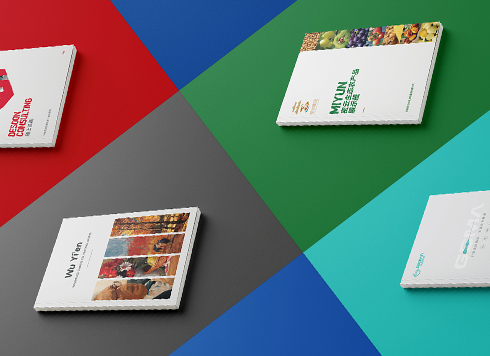 Collection of Brochure Design Cases in 2024 (Cover Series 02)
Our brochure design projects focus on diver ...
-
Highway billboard enlarged from a store poster: the producer says it is big enough—what standard should stop the main headline?
Date: Nov 5, 2026 Read: 0
-
The table won’t fit the text block and the editor says just shrink it—when should you stop?
Date: Nov 4, 2026 Read: 3
-
If the logo is finalized and I only received a PDF, and we need to switch printers for packaging next month, can I still ask for the source files now?
Date: Nov 2, 2026 Read: 14
-
Brochure laid out as A4 but finished size is large 16mo: scale the design down or ask the printer for a separate A4 sheet?
Date: Nov 1, 2026 Read: 15
-
Does the main packaging headline font need a separate commercial license—should the designer swap it out or should the brand buy it?
Date: Oct 31, 2026 Read: 25