



Highway billboard enlarged from a store poster: the producer says it is big enough—what standard should stop the main headline?
Whether a highway billboard can be seen clearly during the few seconds as a car passes usually depends less on how detailed the artwork is than on viewing distance and effective reading time. Based on experience ranges common in 2026 outdoor advertising delivery, at vehicle speeds of 60–100 km/h, the effective reading time for a single billboard is often 3–5 seconds; main headline letter height can be roughly estimated at 1/200 to 1/300 of the viewing distance; and the information a whole board can realistically carry is usually only one short line plus one logo. Enlarging a store poster proportionally and putting it on a billboard is a practice with relatively high rework risk.
Why is a store poster scaled up proportionally often unreadable on a billboard?
A layout that feels comfortable on a screen does not necessarily work on the road. Store posters are usually viewed at 1–3 meters, and people can stop to look; highway billboards are often viewed from more than 100 meters, people are carried past by cars, and the artwork stays in the field of view for seconds. These two conditions mean the same layout cannot be reused directly.
The more practical difference is information density. Close-view materials can carry price, specifications, store address, and QR code; once long-distance materials cram all of these in, every item becomes smaller, and in the end perhaps none can be read. In common 2026 practice, a billboard should first decide “what to say only,” then discuss “how to lay it out”; reversing the order clearly raises rework risk.
- Viewing distance: close-view materials 1–3 meters; outdoor billboards often more than 100 meters; the letter-height requirement differs by an order of magnitude.
- Viewing time: store posters can hold attention for more than ten seconds; billboards typically 3–5 seconds, and often only one chance.
- Environmental interference: outdoors there is backlight, rain and fog, and obstruction by trees and buildings; contrast usually matters more than refinement.
- Trial-and-error cost: changing the artwork on a billboard involves printing, installation, and site scheduling; the cost is usually higher than reprinting a poster.
A nameable decision framework: the three-layer long-distance reading method
To give “how many pieces of information to keep” a discussable basis, delivery work often uses a framework—the three-layer long-distance reading method: divide artwork information into three layers by “see—understand—act,” and set word-count and letter-height limits for each layer. The reason for this division is that vehicle speed means people have only one chance; if the first layer cannot be read, the later two become void, so priorities need to be fixed in advance rather than weighed casually during layout.
- Recognition layer (within 1 second): brand logo or product subject, carrying the main visual weight of the artwork. Do not make the logo too small; from a distance its shape should be recognizable, not dependent on reading letters.
- Understanding layer (2–4 seconds): one main line, experience range 5–9 Chinese characters, usually no more than 12 characters. Avoid puns, abbreviations, and coined words; people in cars have no spare capacity to ponder.
- Action layer (optional): one short instruction or one memorable search term. If this layer does not fit, cut the whole layer; do not force it in by compressing letter height.
Content outside the three layers—price tables, specifications, store lists, QR codes—does not go into the artwork by default; it is handled by a landing page or nearby stores. The pass/fail check is fairly direct: shrink the draft to 1/6 the size of a phone screen and look at it; if only a blob of color remains and the main line cannot be recognized, the hierarchy has not been achieved.
How do letter height and word count translate to a specific draft?
Letter height does not need to be precise to the centimeter, but it needs a checkable range. Under common 2026 delivery practice, main headline letter height can be estimated at 1/200 to 1/300 of viewing distance: at a viewing distance of about 100 meters, main headline letter height is commonly 40–60 cm; at 200–300 meters, commonly 1–1.5 meters. This range is only a starting point; final adjustment still depends on site orientation, speed limit, and obstruction.
For letter height of other elements in the artwork, it is advisable not to go below 1/3 of the main headline; elements below this ratio easily become noise at long viewing distances. At the same time, distinguish the different trade-offs between two types of billboards:
- Brand-image type: low information volume, usually only a logo plus one short line; letter height can be large, and color contrast comes first; replacement cycle is commonly six months to one year; acceptance checks whether the brand is recognizable from a distance.
- Promotion-notice type: one more line for timing or benefit, with the main line still kept within 12 characters; replacement cycle is commonly 2–6 weeks; acceptance checks whether the main line and timing information can be read within 5 seconds.
- Shared baseline for both types: no thin fonts, no outlines or heavy drop shadows, no small text over complex photos; white text on a dark background should be one size larger than black text on a light background.
At the file level, output method should also be aligned. Print output commonly builds the artwork at the actual finished size and outputs at 30–72 dpi (experience range; follow the producer’s requirements), but what really determines sharpness is the pixel count of the original material and the shooting distance. When a phone photo is placed on artwork several meters high, the problem is often not the dpi setting but the source material.
Same board, two layout approaches: experience comparison
In delivery, what is more worth checking is the difference between options, not just whether one version looks good. The following are typical ranges; specific rounds and timelines vary with client decisions, site scheduling, and the producer’s production schedule.
- Option A: logo plus one short line: main line kept to 6–9 characters, with a short action word if necessary; design revisions commonly 1–2 rounds, print production and installation commonly 1–3 weeks; after going live, artwork changes due to poor legibility are relatively rare.
- Option B: selling points, price, and QR code all included: artwork information usually exceeds 5 items; revisions commonly 3–5 rounds, and production time is commonly 1–2 weeks longer due to repeated confirmation; after going live, the risk of partial reprinting or artwork changes rises, and a second installation requires another scheduling slot.
- Comparison conclusion: on the same board, what Option B saves by “doing less of a landing page” often does not offset the cost of revisions and a second launch; as an experience range, long-distance sites are more reliable when information is compressed to no more than 3 items.
Three types of issues that often stall on-site delivery
A common situation in projects: the client provides a vertical e-commerce main image or store poster, asks for it to be changed to the extra-wide ratio of a highway unipole billboard, close to 1:3, the original image has low pixel count (commonly in the range of one to two thousand pixels wide for a phone main image), and also wants three lines of selling points and a QR code crammed in. The usual approach is first to rearrange the hierarchy by viewing distance, keep only the logo plus one 6–8-character main line, move the rest of the information to a landing page, and ask the client to reshoot or replace the image; in delivery, this kind of rework commonly means 1–2 extra rounds of communication and one image reshoot or replacement, pushing the schedule back 3–7 days (experience range, depending on site scheduling), but it is usually far less costly than changing the artwork after launch because it cannot be seen clearly.
Another high-frequency source of rework is the safe area. Billboards often have frames, trusses, and pole obstruction, and the edges and a lower section of the artwork are easily eaten by guardrails, trees, and buildings. Before delivery, check the obstruction range against actual photos of the site; reserve margins on all sides according to the actual structure, not merely by routine bleed allowance.
- Insufficient material: first confirm the final output size and viewing distance, then decide whether to reshoot, replace the image, or switch to graphic treatment.
- QR codes and phone numbers: at long-distance sites they mostly cannot be scanned or remembered, unless the site is an area where people linger.
- Gradients and detail: large-area gradients easily show banding in print, and small text over gradients is very likely to be unreadable.
- Approval and scheduling: outdoor sites usually require advance approval; design finalization time should be planned backward, and it is unwise to schedule on a same-day-finalize, same-day-launch rhythm.
Applicable scenarios and boundaries
The three-layer long-distance reading method applies to outdoor print advertising aimed at “seeing and remembering,” such as billboards along highways, rooftop ads, hoarding ads, and static images on large screens in commercial districts. It is not suitable for scenarios that need to carry specifications, terms, price tables, or complex guidance; such content is better placed in close-view materials or on a landing page.
- Suitable for: brand exposure, regional notices, event previews 2–4 weeks in advance, and long-term image sites.
- Not necessary: small events running only a few days; campaigns aimed at precise conversion and source tracking; scenarios where the site itself has people lingering for long periods and is very close.
- Boundary statement: if one board needs to explain brand, product, price, time, and address at the same time, it is usually not suitable as a single billboard.
Common questions
Can passersby really scan a QR code on a billboard?
At long-distance sites most cannot be scanned; scanning is usually comfortable only within 1–3 meters. It is worth keeping only in areas where people linger, such as parking lots and entrances, and the size should be enlarged to close-view standards.
Does a thinner font for the main headline look more premium?
At long viewing distances, thin strokes are compressed or even disappear; common practice is to switch to a weight of medium-bold or above. To look premium, rely on white space and color, not on thinning strokes.
What size and resolution should a billboard design file be?
Building the artwork at 1:10 or 1:1 of the actual finished size is acceptable; output resolution is commonly 30–72 dpi, subject to the producer’s requirements; what determines sharpness is the pixel count of the original material.
How many pieces of information are appropriate on one billboard?
Common practice is one main line plus one logo, with at most one more timing or benefit point; beyond three items, within the 3–5 second viewing time they easily become decoration.
How long does it usually take from final artwork to launch?
The experience range is 1–3 weeks, including print production, transport, and installation; sites involving approval need to start earlier, and specifics should be checked against the site owner’s and producer’s schedules.
If you are about to revise a version, do two things first: based on the site speed limit and viewing distance, compress the main line to within 12 characters; then shrink the draft to 1/6 of a phone screen and see whether it is still recognizable. For print output, safe area, and installation scheduling, follow the producer’s requirements and verify against actual site photos; the party handling execution usually participates in site review before final artwork. Promotions that need to carry a large amount of information are better completed on close-view materials.
-
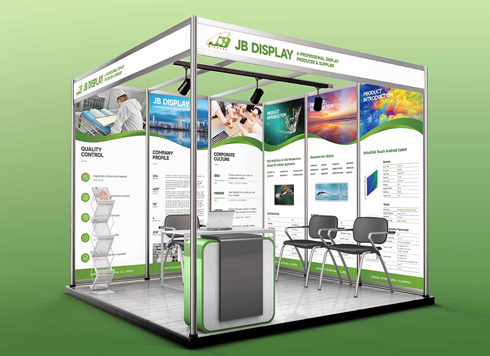 Booth Poster Design for Professional Monitor Product Suppliers
The standard exhibition booth poster projec ...
-
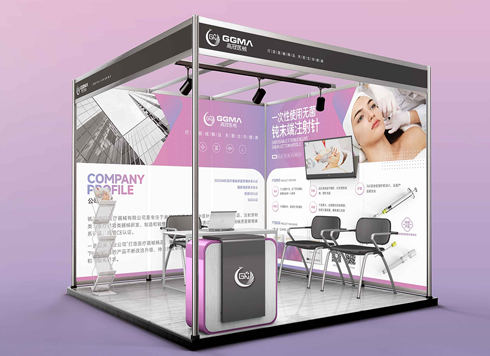 Design of Standard Exhibition Booth Posters for Beauty Instruments
Carefully designed a standard exhibition bo ...
-
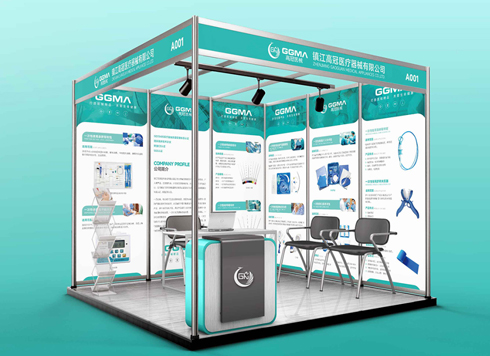 Design of Exhibition Posters for Medical Device Standards
XiYue is designing an exhibition booth post ...
-
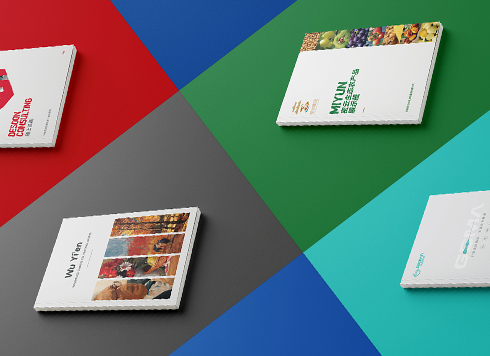 Collection of Brochure Design Cases in 2024 (Cover Series 02)
Our brochure design projects focus on diver ...
-
The table won’t fit the text block and the editor says just shrink it—when should you stop?
Date: Nov 4, 2026 Read: 3
-
If the opening budget only covers one round, should we do the storefront sign first or the full VI system first?
Date: Nov 3, 2026 Read: 8
-
If the logo is finalized and I only received a PDF, and we need to switch printers for packaging next month, can I still ask for the source files now?
Date: Nov 2, 2026 Read: 14
-
Brochure laid out as A4 but finished size is large 16mo: scale the design down or ask the printer for a separate A4 sheet?
Date: Nov 1, 2026 Read: 15
-
Does the main packaging headline font need a separate commercial license—should the designer swap it out or should the brand buy it?
Date: Oct 31, 2026 Read: 25