



Same Packaging with Three Flavors, Only the Color Band and Flavor Text Changed: Is It Reasonable for a Design Company to Charge as New Work?
Start with the conclusion: When one product comes out in multiple flavors, if the packaging key visual has already been finalized and only the color band, flavor name, and flavor thumbnail are replaced, it is usually counted as series extension or revision, not as a new set; but once the key visual framework, packaging structural die-cut, information architecture, or brand primary color is restructured, it should be counted as a new module or entirely new packaging. The criterion is not how many characters were changed, but whether the design workload, prepress file reuse rate, and printing risk have materially changed. In common packaging commissions in 2026, locking the key visual first and then doing flavor extensions usually saves at least one round of rework compared with doing it the other way around.
For Series Flavor Packaging, What Changes Is Not Really Just a Few Words
The core of series extension is to distinguish flavors with recognizable variables under the same packaging key visual framework. Variables usually include the color band, flavor name, flavor icon, small color blocks, and supporting graphics. What stays unchanged is the box structure, brand mark position, net content and barcode area, and overall information hierarchy. Clients easily mistake it for a new design, often because design agencies quote by 'design', while printers charge by 'plate'; once the two sets of terms are mixed, the cost can look like it has multiplied several times.
- Common cases counted as series extension: key visual framework unchanged, structural die-cut unchanged, information hierarchy unchanged, only flavor recognition elements replaced.
- Cases often misjudged as new work: flavor color band position changed, brand mark proportion adjusted, structural window size changed.
- Cases that should be treated as new work: box structure adjusted, target audience repositioned, brand primary color changed, regulatory information area restructured.
- Things easily missed: converting flavor name text to outlines, labeling color values, checking barcode position, unifying printer color-matching standards.
To Decide Whether It Is an Extension or New Work, Look at These Four Layers First
To judge the workload of series packaging, you cannot just ask 'how many places were changed.' It is better to look layer by layer, from visuals to structure, then information and prepress files. Each step down to a deeper layer raises both workload and risk.
- Key visual framework: whether the main composition, brand mark position, and supporting graphics are retained. If only the color band and flavor name are changed, it is usually an extension.
- Structural die-cut: whether the box type, window, handle, and insert change. Once the die-cut changes, the dieline, bleed, registration, and proofing all need to be redone.
- Information architecture: whether the position and font-size hierarchy of net content, ingredient list, barcode, and manufacturer information remain the same. If the information architecture is restructured, it should be counted as a new design.
- Prepress deliverables: whether output only requires changing one layer, or every flavor needs re-imposition and fresh color matching. If files cannot be reused, the workload is close to new work.
Among the four checks, the fourth is the easiest to overlook. Many clients think it is 'just a color change,' but without unified color value labeling and outlined text, the printer has to match color separately for each flavor, and prepress communication costs rise noticeably. Based on 2026 project delivery habits, series packaging should retain at least one reusable master file before finalization.
Experience Ranges for Quotes, Timelines, and Revision Rounds
The cost difference between series extension and independent new design mainly comes from research, creative work, structural development, and the number of file deliverables. The following are experience ranges; they vary with category, box complexity, printing process, and whether structural design is included, and cannot be taken directly as fixed quotes.
- Series extension: commonly 5% to 15% of the main design fee as the increment per flavor, an experience range; typical timeline is 1 to 3 working days per flavor; typical revisions are 1 to 2 rounds.
- Independent new design: commonly RMB 3,000 to RMB 15,000 per flavor, an experience range; gift boxes or projects including structural development are higher; typical timeline is 1 to 3 weeks per flavor; typical revisions are 3 to 5 rounds.
- Structural die-cut redevelopment: structural design fee is commonly charged separately; proofing fee is commonly several hundred to over a thousand RMB per flavor, an experience range.
- Series guidelines: organizing the color band, flavor name, minimum font size, and barcode position into a one-page guideline reduces communication time for future flavor additions.
The key is not memorizing specific numbers, but writing the quoting basis into the contract or commission form: what counts as extension, what counts as new work, how revisions beyond a certain number of rounds are billed, and whether source files include the series master. Once this is clear, adding flavors is less likely to cause repeated back-and-forth.
Delivery Reality: Lock the Master First, Then Extend Flavors
A common constraint in projects: the client gives only three flavor names and three color values, and asks for six packaging dielines within a week, but the key visual is not finalized and the structural die-cut is not confirmed. A more stable approach is to first lock the key visual framework and structural dieline, then extend the series color bands; for each flavor, replace only the color band layer, flavor name, and flavor thumbnail, and archive the master. If the order is reversed, once the structure changes, all six flavor layouts must be rearranged; the cost is usually 2 to 3 rounds of rework and an overall delay of about one week, which falls within the typical range.
The experience from such projects is: flavor extension is not drawing six designs from scratch, but controlling variables on one master. The earlier the master is locked, the lower the marginal cost of adding flavors later; if the master is not locked, every added flavor later feels like doing it all over again.
Acceptance and Boundaries: When It Is Not Suitable to Treat It as Extension
Acceptance for series packaging cannot rely only on a single design mockup; you should place three to five flavors side by side. A single design looking good does not mean the series works, especially because once the color band hue deviates, it can look like a different brand on shelf. During acceptance, it is advisable to check series consistency first, then single-SKU compliance, and then prepress file completeness.
- Series consistency: place them side by side and check whether the color band lightness and saturation are at the same level, and whether the flavor name font weight and italic angle are consistent.
- Single-SKU compliance: check whether the position and font size of net content, ingredient list, barcode, and manufacturer information follow official documents or platform rules.
- Print feasibility: check whether the color band falls within a color gamut that can be printed stably, and whether thin lines and small text will be filled in or lost.
- File completeness: check whether the master file, color value table, outline instructions, die-cut drawing, bleed lines, and proof approval are complete.
Suitable for extension: adding flavors to the same product line, changing color bands at the same specification, changing flavor icons with the same structure, and e-commerce sets reusing the main packaging. Not suitable for extension: gift boxes and main packaging sharing one structure, online shipping boxes and offline shelf packaging sharing one key visual, brand upgrades changing the primary color, or completely different target audiences. Boundary statement: to decide whether it is an extension, first look at whether the structural die-cut and information architecture change, not just at how many colors were changed.
If clients force a project that is not suitable for extension into an extension, the common costs later are repeated prepress revisions and structural proofing being redone, making the overall timeline longer. Conversely, if a design agency quotes a standard extension as a completely new design, it also removes the cost advantage for long-term series products.
FAQ
For the same product in three flavors with only the color band and flavor name changed, is the quote usually for extension or new work?
It is commonly counted as series extension, with the increment per flavor at about 5% to 15% of the main design fee, an experience range; if the structure or information architecture changes, it should be quoted separately as a new design.
How many revision rounds for series packaging fall within the typical range?
Typically 1 to 2 rounds, an experience range; if the key visual is not finalized or the color band standard is not unified, it can easily increase to more than 3 rounds. Locking the master before extension is more stable.
Should flavor color bands use spot colors or four-color printing, and which one should acceptance be based on?
Base it on the proof and printed color card; screen colors are for reference only. Spot colors suit large color bands that require stability, while four-color printing suits cost-sensitive small-area color bands.
For packaging that has already been finalized, does adding one flavor require a new die-cut?
Usually not. As long as the box type, window, and insert remain unchanged, the original die-cut can be reused; only if the structure changes is a new die-cut and proofing confirmation required.
When multiple flavors are placed side by side on shelf, how do you judge whether the packaging design is acceptable?
Place them side by side and check whether hue, lightness, and flavor name hierarchy are unified, so flavors can be quickly distinguished without seeming like different brands; only when each SKU has complete information and a scannable barcode does it pass.
Before adding flavors, first lock down four things: the key visual framework, structural die-cut, information architecture, and color value standards, then have the design agency quote by series extension. This suits cases where a finalized master already exists, the structure is unchanged, and the information hierarchy is unchanged; if the structure, brand positioning, or regulatory information area needs changes, it is advisable to establish it as a new design project to avoid later rework. Reserve timelines and revision rounds according to experience ranges, and write the boundary between extension and new work clearly in the contract.
-
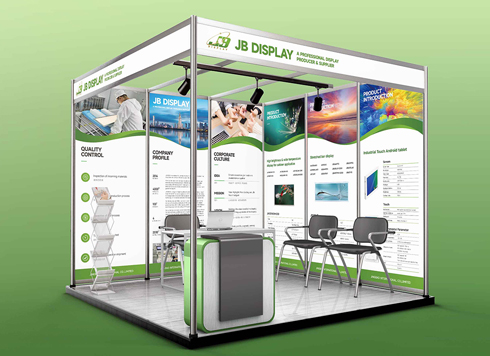 Booth Poster Design for Professional Monitor Product Suppliers
The standard exhibition booth poster projec ...
-
 Design of Standard Exhibition Booth Posters for Beauty Instruments
Carefully designed a standard exhibition bo ...
-
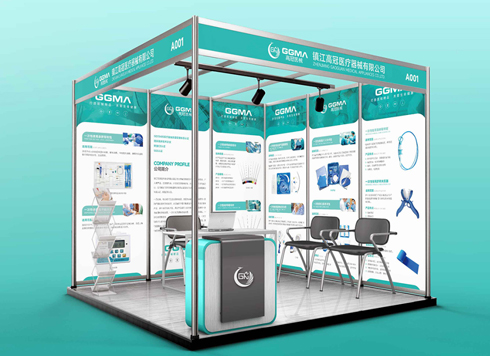 Design of Exhibition Posters for Medical Device Standards
XiYue is designing an exhibition booth post ...
-
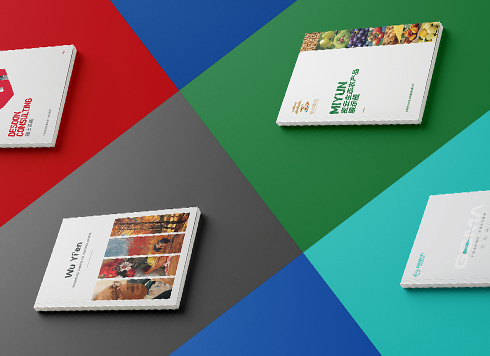 Collection of Brochure Design Cases in 2024 (Cover Series 02)
Our brochure design projects focus on diver ...
-
A horizontal key visual needs to run on vertical screens, and the cropped vertical version keeps feeling off-center—which version should be reviewed first?
Date: Sep 18, 2026 Read: 10
-
After a magazine layout vendor switch, headers, page numbers, and captions still don’t line up—which file should acceptance review first?
Date: Sep 17, 2026 Read: 10
-
Brand Color Looks Different on Packaging Bags and Store Light Boxes: Which Should Be the Acceptance Standard?
Date: Sep 16, 2026 Read: 14
-
The logo looks sharp on your phone — why does it blur when printed on pen barrels or embroidered on uniforms?
Date: Sep 15, 2026 Read: 15
-
Brochure spread image prints with a missing chunk in the middle—is it not enough gutter allowance or the wrong binding method?
Date: Sep 14, 2026 Read: 17