



Why Do Actual Materials Still Look Inconsistent Even After the VI and Manual Are Handed Over?
After the VI system is completed, actual materials may still be inconsistent. The problem is usually not that the Logo looks bad, but that the deliverables lack 'executable rules.' A direct way to test this: ask someone who was not involved in the project to design a business card strictly following the manual. If they have to decide sizes and color values themselves, the specifications are not yet ready for real use. Based on project delivery experience in 2026, this article offers three validation criteria, a five-step acceptance checklist, and guidance on deciding whether to add templates or strengthen specifications.
Root of the Chaos: Four Things Missing from the Deliverables
What we call 'inconsistent VI' is often not because the executors are lazy, but because the 'production tools' were not fully provided at the source. Common omissions include:
- Master files are not vector: only JPG/PNG are provided, so enlarging or recoloring can blur, and every later application has to be re-traced.
- Color values only include RGB: no CMYK or Pantone numbers, so screen color differs from printed color, leaving printers to guess.
- No prohibited-use examples: minimum sizes, safe spacing, and background restrictions are not documented, allowing designers to improvise.
- Application templates are only mockups: there are no production-ready editable files with final dimensions and bleed, so everything must be re-laid-out before printing.
If two or more of these issues exist, the later confusion was already seeded at delivery. It cannot be blamed entirely on careless executors.
Three Hard Criteria to Test Whether the VI Can Actually Be Implemented
Instead of endlessly reminding people, directly test three things during acceptance:
- Newcomer test: Ask a colleague who knows the software but was not part of the project to create a business card using the manual. If they keep asking about sizes, fonts, and margins, the rules lack clear boundaries.
- Print loop: All colors should have both RGB and CMYK values, with spot colors marked as Pantone. Then run one proof so color-difference responsibility is clear.
- Application templates: The basic version should at least cover business cards, letterheads, and document covers; the full version should provide templates with real dimensions and bleed. Only templates that can be sent directly to the printer count as qualified.
If these three criteria are passed, rework will be significantly reduced. Based on project experience in 2026, the typical timeline for the basic VI version is 2–4 weeks, and for the full version 6–12 weeks. A typical proofing cost per item is several hundred yuan.
Case in Point: Missing a Set of Print Color Values Leads to Off-Color Business Cards and Storefronts
In 2026, a chain restaurant client had a basic VI with Logo, standard typography, and standard colors in place, but the standard colors were only specified in RGB. After the business cards were printed, the colors were seriously off, and the storefront and packaging also developed similar problems. Only after supplementing CMYK and Pantone values and running one more proof on coated paper did the reprints stabilize.
The direct cost was about one-third more than the original budget. The typical market range for such supplemental template work: a single template costs several hundred to 2,000 yuan; if more than ten templates are needed, the total price approaches the difference between the basic and full VI, making it better to start with the full version.
How to Choose Between Basic Version, Full VI, and Execution Manual: Look at What Collateral You Need
Do not start with the name; look at what you are going to produce:
- Basic version (typical 2–4 weeks): suitable for small businesses with limited materials; covers Logo, standard typography, standard colors, and basic combinations. Application templates are few; each additional template costs several hundred to 2,000 yuan.
- Full VI (typical 6–12 weeks): suitable for continuous operations with multiple stores or packages; covers about 20–40 application items and includes production files prepared in one pass.
- Execution manual: not a separate version but a package that turns specifications into a process with extensive prohibited-use examples and ready-to-use files; it is useful when distributing to many production partners.
If in the next six months you will only need business cards and menus, the basic version plus a few individual templates is enough; if you are about to roll out a chain storefront, go with the full VI. Based on 2026 consulting experience, many clients who say they 'need VI' actually only need a basic identity system plus a few key material templates.
Five-Step Acceptance Checklist: Turning 'Usability' into a Concrete List
- Count the vector master files: Logo and standard typography should have AI, EPS, or PDF sources.
- Verify dual color values: every color has both RGB and CMYK, with spot colors marked as Pantone.
- Check font licenses: fonts must be commercially usable; either outline the fonts or include the licenses.
- Validate application templates: set up at final product size with bleed and replaceable text.
- Run a trial print: proof on a common material, compare with the actual colors, then finalize.
This checklist can be attached to the contract and ticked item by item during acceptance, preventing problems from being discovered only at press time.
Scope and Boundaries: VI Is about Consistency, Not Creativity
VI suits situations where multiple departments and suppliers need to stay consistent. If you only have one or two fixed materials, a basic Logo specification is enough; there is no need to create a pile of unused files just to claim you 'have a system.'
At the same time, recognize that VI solves 'inconsistency,' not 'ugliness' or 'poor sales.' If visuals are not attractive or conversions are low, return to strategy and creativity. Material management is the final step of VI implementation; a manual alone is not enough, because production-ready templates and acceptance checkpoints must be linked together.
Frequently Asked Questions
Do I always need a full set of application templates for a VI project?
Not necessarily. If you are only switching among fixed layouts like business cards and letterheads, basic specifications plus a few templates are enough. When it involves packaging or signage, missing templates makes style drift likely. The experience range for adding a single template is several hundred to 2,000 yuan; if you need more than ten items, the full VI can be more economical.
Is starting with the basic version and adding templates later cheaper than going straight to full VI?
The initial cost will be lower, but when you add more than ten templates, the total could approach the price difference for the full VI. A typical range: several hundred to 2,000 yuan per added template. It is better to list the materials you will need in the next six months before deciding whether to make the full investment in one go.
Should a VI manual include 'what not to do' examples?
Yes, they should be written. Prohibited-use examples and safe spacing best reduce errors, such as minimum Logo size, background restrictions, and reverse usage. When 'what is not allowed' is clear, executors and suppliers will not improvise.
How can I tell whether the VI is actually usable?
Ask someone who knows design software but was not involved in the project to create a business card and a poster strictly from the manual. If the results match the specifications, the VI is executable; if they repeatedly ask about fonts, color values, and margins, the rules still lack boundaries.
When a supplier does not follow the VI, is it the designer's fault or the client's fault?
Most of the time, the production files were not fully provided during delivery. When only JPG and RGB are given, suppliers have to fill in with approximate values. It is recommended to include vector masters, CMYK/Pantone values, and editable templates in the contract, and attach an acceptance checklist to be ticked item by item.
Add the five-step acceptance checklist to the contract appendix and tick each item before paying the final balance; this will reduce most material rework. But remember: the value of VI lies in consistency, not creation; brand direction or aesthetic issues must be solved at the strategy level.
-
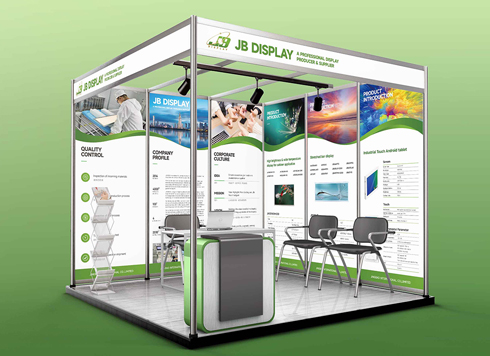 Booth Poster Design for Professional Monitor Product Suppliers
The standard exhibition booth poster projec ...
-
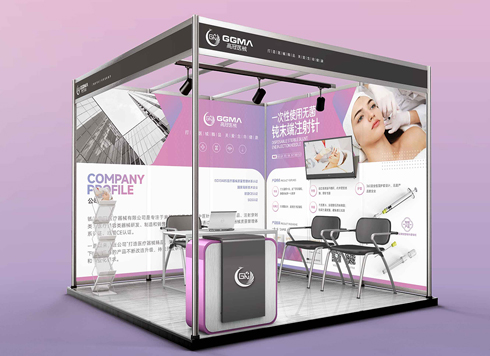 Design of Standard Exhibition Booth Posters for Beauty Instruments
Carefully designed a standard exhibition bo ...
-
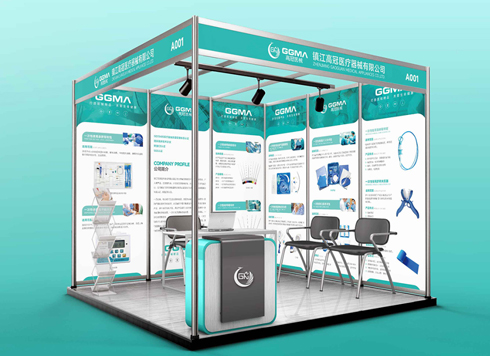 Design of Exhibition Posters for Medical Device Standards
XiYue is designing an exhibition booth post ...
-
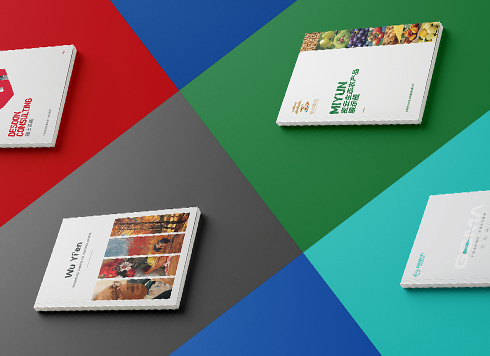 Collection of Brochure Design Cases in 2024 (Cover Series 02)
Our brochure design projects focus on diver ...
-
Brochure spread image prints with a missing chunk in the middle—is it not enough gutter allowance or the wrong binding method?
Date: Sep 14, 2026 Read: 2
-
If the printer provides the die, will packaging design still charge for structural drawings?
Date: Sep 13, 2026 Read: 6
-
Poster QR code won't scan: is it too small or too close to the edge?
Date: Sep 12, 2026 Read: 11
-
Page number rules are set, so why do the manuscript's table of contents and body still not match?
Date: Sep 11, 2026 Read: 14
-
Brand Logo Design Only Delivered as a JPG? Which Source Files Should You Request from the Designer?
Date: Sep 9, 2026 Read: 20